If you’ve ever worked in fiber optic infrastructure long enough, you’ve probably encountered a “quick fix” gone wrong. I’m Mara, and I’ve been selling fiber optic connectors out of our small, family-run warehouse for 12 years. Most days, I walk customers through picking the right LC-UPC or SC-APC connector for their project, but nothing sparks a call like this: “Mara, I hooked up my single mode router to a multimode patch panel and now nothing works—what did I do?” Fiber Optic Connectors
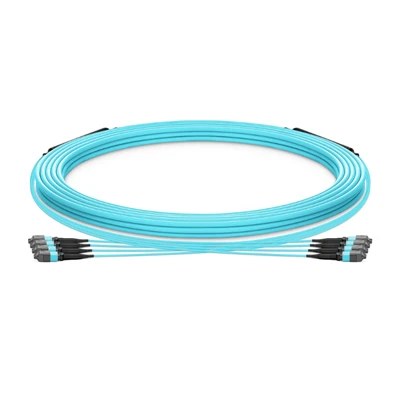
This question stumped me in my first year. I’d learned in college that single mode (SM) and multimode (MM) fiber are totally different, but I didn’t fully grasp how often installers take shortcuts or mix up connectors because they look identical. The LC connector we stock, for example, is small, has a similar shape, and uses the same-sized ferrule (well, almost) for both types. A customer might grab a handful from a bin, not checking the tiny marking on the side, and connect them without a second thought. It’s a common mistake, but it’s not just “wrong”—it’s a problem that messes up performance, equipment, and even your budget.
First, let’s get down to the basics of how SM and MM fiber actually work. Singlemode fiber was built for long-distance, high-speed signals. Its core is super tiny—usually 9 microns wide—so light travels in one straight path, using a laser as its light source. That laser produces a narrow, coherent beam that barely spreads (called dispersion) even over miles, so it can carry 10G, 40G, even 100G signals for kilometers. Multimode fiber, on the other hand, has a much wider core—50 or 62.5 microns—built for shorter distances, using an LED as its light source. The wider core lets multiple light paths (or “modes”) travel at once, which is great for a 10G network inside a single office, but those modes spread and collide quickly over distance, limiting MM to roughly 550 meters for 10G, compared to 10 kilometers for SM.
Now, connectors are the link between the fiber and your equipment. The ferrule—the little ceramic part that holds the fiber end—is the key difference here. SM connectors have a much smaller ferrule, right at 1.25mm, to fit that tiny 9-micron core. MM connectors also use 1.25mm ferrules for LC, but wait—no, actually for SC, MM is often 2.5mm, same as SM. That’s where the confusion starts. For LC connectors, the ferrule diameter is the same, but the hole size inside the ferrule (where the fiber sits) is totally different. SM’s 9-micron core fits a 125-micron outer cladding, so the ferrule’s hole is 125 microns. MM’s 50-micron core also uses a 125-micron cladding, so you’d think the ferrule holes would match, but no—SM’s fiber is polished to a flat, ultra-smooth surface, while MM’s is polished a little differently, and the way the core aligns when mated is off. When you plug an SM connector into an MM port, the two cores don’t line up. The SM core is tiny, so it could sit right next to the MM core, or half-inside, depending on the connector’s polish. That creates massive insertion loss—meaning most of the light signal never makes the jump between fibers. I’ve seen this test on a light meter: an intentional SM-to-MM connection reads at 15dB loss, while a good same-type connection reads at less than 0.5dB. That’s a 97% signal drop.
It’s not just signal loss, though. There’s also something called modal noise, which is a big issue for MM. When you have multiple light modes bouncing around inside MM fiber, a mismatch with an SM connector can cause those modes to scatter chaotically. This creates inconsistent signal strength—one second your connection works, the next it drops out for no reason, even if your light meter says loss is low enough. I had a customer last year who installed a new 10G MM backbone in a school building, and for weeks, their WiFi would cut out during the school day, but work fine at night. Turns out their installer mixed up two connectors: one was a SM LC, the other an MM LC. The classroom lights and electrical equipment were creating electrical interference that messed with the scattered modes, making the dropout pattern. Once they swapped to matching connectors, the problem was gone.
What’s worse? Sometimes the damage isn’t immediate. If you’re using a laser-based SM source (like a SFP+ module) and plugging it into an MM port, that high-powered laser can actually damage the MM fiber over time. The MM core is designed for LED-level light, not the intense SM laser beam. The beam can cause micro-cracks in the MM glass or overheat the connector’s ferrule, leading to permanent signal degradation or even a complete fiber break. I once got a call from a small ISP who’d plugged a SM SFP into an MM switch port. They noticed slow speeds at first, then one morning, half their neighborhood lost internet. When they inspected the fiber, the MM core had literally burned through in a spot where the SM laser was focused. They had to re-run 500 meters of fiber, which cost them thousands in labor and parts—all because of a $0.25 connector mix-up.
Wait a second, though—what if you use an adapter? A lot of people think, “I’ll use a hybrid LC adapter to connect SM and MM, that should work.” I get that logic. Adapters that let you mate different types of connectors exist, right? But even a hybrid adapter doesn’t fix the core size or alignment problem. It might make the physical connection, but it still doesn’t line up the fibers correctly. I tested this last year in our warehouse: I took an SM LC connector and an MM LC connector, plugged them into a hybrid adapter, and ran a light test. The insertion loss was over 12dB—way too high for any business-grade network. Hybrid adapters are designed for when you need to connect two different types of connectors (like LC and SC), not different fiber types. You’ll only get signal with that, not good signal.
So what should you do if you realize you’ve mixed up connectors? First, stop using the connection right away. Don’t keep testing it, because if it’s an SM laser connected to MM, you could be damaging your equipment or fiber. Grab your fiber’s marking—every fiber has a color code or a printed label. SM is usually yellow, MM is orange or aqua (for OM3/OM4). Then check your connectors: all our SM connectors are labeled with a yellow dot on the ferrule, and MM have an orange dot. If your bin doesn’t have that, call a supplier like us—we mark all our inventory clearly so you don’t have to guess.
Here’s the thing I tell every customer: shortcuts in fiber work don’t pay off. We’ve built our business on giving installers the right tools, even when it means taking an extra minute to label bins or explain the difference. A $0.50 connector can save you from $1,000s in repairs and downtime. I’ve installed my fair share of fiber networks, and I still double-check every connector I grab for a job. It’s easy to glance over, but that one quick look can make all the difference.

If you’re working on a project and aren’t sure what connectors you need, or if you’ve had issues with mixed SM/MM connections, don’t stress. Reach out to our team—we’ve helped installers from small office setups to large data centers fix these exact problems for years. We can help you identify the right connectors, test your current connections, and make sure your network runs smoothly without those costly mistakes. When it comes to fiber connectors, getting the right part is half the battle. Let us help you win that battle.
Fiber Optic Cable Hardware References
- Federal Communications Commission. Fiber Optic Cabling Standards for Local Area Networks. Washington, D.C.: FCC Publications, 2021.
- International Electrotechnical Commission. IEC 60793-2: Optical Fibres – Part 2-1: Product Specifications – Generic Specification. Geneva: IEC, 2019.
- Telecommunications Industry Association. TIA-568-C.0: Generic Telecommunications Cabling for Customer Premises. Arlington, VA: TIA, 2012.
- Hecht, J. Understanding Fiber Optics, 6th ed. Indianapolis: Pearson Education, 2015.
Shenzhen Dimi Telecommunications Co., Ltd.
As one of the most professional fiber optic connectors manufacturers and suppliers in China, our products have good reputation in the market. Please rest assured to wholesale advanced fiber optic connectors made in China here from our factory. Also, custom service is available.
Address: China
E-mail: sales@dimifiber.com
WebSite: https://www.dimi-fiber.com/
