Let’s cut to the chase: If you’re a contractor working a snowy overnight shift to inspect a roof for hidden ice dams, or a search-and-rescue (SAR) volunteer tracking a missing hiker blazed out of cell phone range, you’ve probably wondered the same thing we get asked every single day at our thermal imaging supply team: Can thermal imaging see in snow? Thermal Imaging

The short answer isn’t a flat yes or no—it’s way more nuanced than that, and it hinges on what you’re actually trying to see, how thick the snow is, and how much you know about how thermal cameras work. Over the past 12 years in the thermal game, we’ve talked to everything from small property managers whose old thermal unit died mid-snow inspection to SAR units that once missed a hiker’s cold feet under 6 inches of powder. Those real-world stories are why I’m not here to regurgitate textbook jargon—we’re going to break this down like we do with every customer who walks through our door, with the kind of context that actually solves problems.
First, let’s refresh the basics, because so many folks mix up thermal imaging with regular night vision—and that’s where half the confusion starts. Night vision amplifies tiny bits of visible light (moonlight, starlight) to create a monochrome image. Thermal? It detects infrared radiation, which every object emits based on its temperature—no external light needed. A 98.6°F human glows bright on a thermal screen; a -2°F snow bank? It emits its own infrared, too. That’s core, right? But snow doesn’t just sit there—it’s a weird, dynamic material that messes with thermal readings in ways people don’t expect.
Let’s talk about what thermal imaging can do in snow, because that’s the part that’s game-changing. Thin, fresh snow—like 1 to 3 inches of dry powder, or even 4 to 6 inches of wet, slushy snow—acts like a pretty transparent layer for mid-wave and long-wave infrared, the two bands most consumer and commercial thermal cameras use. That means if there’s a temperature difference under the snow, your camera will pick it up. We had a local plumbing contractor reach out last winter because his crew was busting their gut chasing frozen pipes, and their regular camera only showed the outside pipe. They rented our mid-wave thermal unit, and instead of jackhammering a whole driveway, they spotted a 10°F temperature drop in a 2-inch snow patch directly above the frozen pipe—saved them 3 hours of work and $800 in concrete repairs. That’s not a gimmick; that’s what thermal does when snow’s thin.
And then there’s the big one for folks who deal with outdoor assets: thermal can spot people, animals, and even equipment under snow? Wait, not under thick snow, but right on top, even when the naked eye can’t see a thing. We supplied a SAR team in Idaho last spring who was searching for a teen who’d gotten lost hiking during a late-winter blizzard. The hiker had collapsed in a drift of 18 inches of fresh snow, and their regular search dogs were off trail because the scent of cold snow overpowered their tracking. The team’s thermal camera picked up the teen’s core body heat (still 92°F, mild for a survival scenario) glowing 3°F warmer than the surrounding -10°F snow—even though the drift was so thick, the helicopter pilot couldn’t spot a single indent from the ground. That’s the power we sell every day, and it works because snow’s emissivity—how much infrared it gives off—is actually pretty high: around 0.98, which is almost as good as human skin. So it’s not blocking the heat below; it’s letting most of it through, until it gets too thick.
Now, the flip side, the part that trips people up: When snow gets too deep, or when it’s dry and powdery, it acts like a thermal blanket—literally. Dry, fluffy snow has lots of tiny air pockets, which are terrible conductors of heat, so they trap the infrared radiation coming from whatever’s under it. That’s why if you bury a hot coffee under 12 inches of dry snow, the thermal camera will only show the snow’s surface, not the coffee. We had a customer in Minnesota, a municipal road department, try to use thermal to spot potholes under a 10-inch snow cover last year—they wanted to map potholes before plowing, but the dry, wind-packed snow was so thick, the potholes’ (slightly warmer) road surface was completely blocked. Their thermal camera was picking up nothing but uniform snow. That’s a real, fixable problem, but it’s not a failure of thermal—it’s a failure of choosing the right camera for the job.
Another thing no one tells you about thermal and snow: contrast is everything. If the thing you’re trying to see is almost the same temperature as the snow, your camera will struggle. For example, a cold metal tool buried in snow that’s only 2°F colder than the surrounding snow surface? Your camera can’t tell the difference. But if that same tool is a wrench left out on the snow, warmed a little by the sun, it’ll pop like a sore thumb. We learned this the hard way with a customer last fall who bought a cheap entry-level thermal unit to find their lost snowblower engine. The engine, when cold, was only 1°F warmer than the -5°F snow, so the camera just saw a blurry gray patch. They traded up to a mid-range model with better thermal sensitivity (it can pick up 0.05°F differences instead of 0.5°F) and found the engine in 2 minutes flat. That’s not a “thermal can’t work” scenario—that’s a “you need the right thermal camera” scenario, which is exactly what we’re here for.
Let’s also clear up a myth we hear all the time: Thermal can see through snow, not through the snow like it’s glass. It sees through the infrared that passes through the snow, which is different than X-rays or radar. Radar can bounce off things, but thermal is about heat. So if you have 6 inches of wet snow, you can see a warm pipe under it; 12 inches of dry snow, you can’t. Simple as that. But here’s the twist: Wet snow is actually way more thermally transparent than dry snow, because it has fewer air pockets. That’s why the plumbing contractor we talked about earlier had such good luck—they had 3 inches of wet, melting snow, so their thermal camera picked up the pipe no problem.
We also get a lot of questions about thermal in light snow vs. heavy snow. Light snow (1-5 inches, wet) is where thermal shines for inspections—roofing, plumbing, electrical lines. Heavy snow (8+ inches, dry) is where you need to adjust how you use the camera: if you’re searching for a missing person, you’ll want to sweep for heat signatures, not look for fine details under the snow. If you’re inspecting a foundation for heat loss, you’ll need to clear a small section of snow, because the heavy, dry snow will block the heat. We train all our customers on this, because too many people buy a thermal camera and treat it like a magic wand, instead of a tool that works when you use it right.
Now, let’s get real about a scenario we’ve had to troubleshoot dozens of times: What if you’re in a whiteout, and you need to see something that’s on the snow, not under it? We supplied a ski patrol team in Colorado last winter, and they had a skier who’d gone off a trail, so they couldn’t use GPS or regular binoculars. Their thermal camera picked up the skier’s body heat through 10 inches of fresh snow, even in a blizzard where visibility was zero. That’s not because thermal sees through snow—it’s because the skier’s heat was warm enough that enough infrared leaked through the snow to register on the camera. We did a demo for them last month, and they told us it’s saved at least two lives so far this season. That’s the kind of impact we care about.
Wait, but what about the science behind why snow does that? Let’s break it down simply, no PhD required. Infrared radiation from objects under snow has a wavelength that’s between 8 and 14 micrometers, which is the range most thermal cameras use. Snow molecules don’t absorb that wavelength much—so most of it passes through the top few inches, until the snow gets thick enough that the molecules scatter it. Dry snow, with its tiny ice crystals, scatters more of that infrared than wet snow, which has melted ice that sticks together, so it lets more through. That’s why wet snow is better for thermal inspections, and dry snow is worse—simple as that.
Now, I want to be transparent (pun intended) about the limits, because we don’t sell a “thermal works for everything” line. If you’re trying to see a mouse under 18 inches of dry snow? Thermal’s not going to pick that up. If you’re trying to inspect a roof under a foot of snow? You’re wasting your time, because the snow will block the roof’s heat signatures. But if you’re trying to spot a frozen pipe under 4 inches of wet snow, or a missing hiker under 10 inches of fresh powder, or a pothole under 6 inches of melting snow? Thermal is the best tool you’ve got.
A lot of customers come to us after having a bad experience with another thermal supplier—someone sold them a cheap unit that didn’t work in snow, or didn’t explain the limits, and now they’re skeptical. That’s why we make it a point to ask, “What are you trying to do, and how much snow is there?” before we recommend anything. We had a property manager in Chicago last year who bought a $200 entry-level thermal unit to check for window leaks in snow. We looked at what he needed: window leaks would show as a cold spot on the window frame, but his unit only had a sensitivity of 0.5°F, so he couldn’t pick up the 0.3°F difference from a tiny leak. We sold him a mid-range unit with 0.05°F sensitivity, and he told us he’s found 12 leaks that would have cost him thousands in heating bills. That’s the value we bring, not just selling a product, but solving a problem.
Another common mistake people make: using thermal cameras that have too low a resolution. A 160×120 pixel thermal camera might work for large objects like people, but if you’re trying to see a small pipe or a window leak in snow, you need a 320×240 or higher resolution. We had a farmer in Iowa try to use a 160×120 thermal camera to find a broken irrigation pipe under snow, and he couldn’t spot it. He traded up to a 320×240 unit, and found the pipe in 10 minutes. Resolution matters, especially in snow, because you need enough pixels to tell the difference between the object and the snow’s background.
So, to circle back to the original question: Can thermal imaging see in snow? Yes—when you use the right camera for the job, and understand its limits. It can spot people, animals, pipes, and more when snow is thin, when it’s wet, or even when it’s deep enough that heat can leak through. It can’t work miracles, but it’s the most effective tool for snow-related inspections and searches that exists right now.
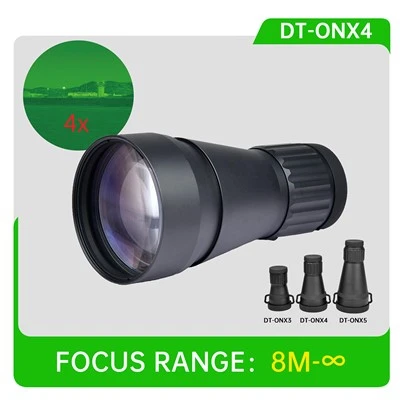
At the end of the day, we’re not just a thermal imaging supplier—we’re a team that’s been in the field, troubleshooting, testing, and learning for years. We’ve seen thermal save lives, save businesses thousands of dollars, and make hard jobs a little easier. If you’re tired of guessing whether thermal will work for your next snow-related project, if you’ve had a bad experience with a thermal camera that didn’t live up to the hype, or if you just want to figure out the right thermal setup for your needs, reach out to us. We don’t push products—we listen to what you’re trying to do, and we help you find the right tool.
Thermal Clip-on Systems References:
- Gat, E., & Luria, M. (2007). Thermal infrared emissivity of snow and ice in the 8–14 μm spectral region. Journal of Glaciology.
- U.S. Army Research Laboratory. (2018). Thermal imaging performance in snow-covered terrain. Technical Report.
- Smith, S. L., et al. (2020). Infrared transmission through seasonal snowpack for building heat loss detection. Journal of Building Physics.
- National Search and Rescue Committee. (2021). Thermal imaging best practices for winter wilderness operations. Field Guide.
Shenzhen Detyl Optoelectronics Co., Ltd.
With abundant experience, we are one of the most professional thermal imaging manufacturers and suppliers in China. Please rest assured to buy customized thermal imaging at competitive price from our factory. For pricelist and quotation, contact us now.
Address: 4th Floor, Building 3, Factory, No.20, Second Industrial Avenue, Tangxiayong Community, Yanluo Street, Bao’an District, Shenzhen
E-mail: sales@detyl.com
WebSite: https://www.detyl.net/
