If you’ve ever stood on a manufacturing floor for writing instruments, watching line workers manually thread soft plastic marker sleeves onto metal or plastic nib assemblies, you know how tedious, inconsistent, and slow that process is. Back when our team first started exploring automated solutions for this specific task, we’d seen lines shut down for hours over hand-treading errors—markers rejected for cross-threaded sleeves, damaged nibs, or misaligned bodies that made writing impossible. Today, the automatic marker tube threading machine we design and build solves those problems, turning a high-labor, error-prone step into a seamless, high-output part of the assembly line. Automatic Marker Tube Threading Machine

Let’s break down exactly how these machines work, because it’s not just “twisting a sleeve onto a part”—it’s a precision system built for the unique constraints of marker manufacturing. First, it’s important to ground this in what a marker’s tube actually looks like: most standard markers have two main parts that need to lock together: the nib assembly (the felt or plastic tip, with a male threaded or friction-groove base) and the marker’s outer sleeve (a hollow tube, usually made of polypropylene or HDPE, with internal threads cut into one end, sized to fit the nib base). Manual threading often leads to 3-5% reject rates per shift, and workers can only keep up with around 800 units an hour. Our machines hit over 2,400 units per hour with a reject rate of less than 0.5%, because every step is calibrated to match the exact thread pitch, diameter, and tolerance of standard marker components.
First, the machine’s input system: it’s designed to handle both nib assemblies and sleeves without jamming, which is a common pain point for automation equipment that’s not built for small, lightweight parts. Nib assemblies come from the prior production stage as loose, individual parts (often vibrating out of a feeder bowl, which is the first component of any high-speed feeder system). The feeder bowl has individual grooves cut to fit only the nib base, sorting out any parts that are upside down, cracked, or misformed before they get sent down a track. We’ve customized our feeders over the years to adjust for different nib sizes—from fine-tip markers to chisel-tip, which have wider bases—so operators don’t have to rework the entire machine if they switch product lines.
Next, the marker sleeves: these also get loaded into a separate, matching feeder bowl. Unlike nibs, which have a defined bottom that’s easy to sort, sleeves are hollow, so the feeder bowl uses a combination of air blasts and mechanical stops to flip them into the correct orientation: open end up, ready to receive the nib. A lot of lower-quality threading machines skip this orientation step, which means half the time you end up trying to thread a closed sleeve onto a part, leading to jams and downtime. Our system spends the extra 0.2 seconds sorting sleeves, which pays for itself in reduced line stops.
Once both parts are sorted and on their tracks, they move into the machine’s alignment and clamping station—this is where precision becomes non-negotiable. First, the nib assembly is picked up by a servo-driven gripper (servo motors are key here, because they can adjust speed and position in real time, unlike older pneumatic systems that rely on consistent pressure) and held upright, with its threaded base facing forward. At the same time, a sleeve is lifted from its track and held in a vertical collet, a small, spring-loaded clamp that grips the sleeve’s outer wall without squeezing so hard it deforms the thin plastic. The collet’s opening is sized to match the exact outer diameter of the sleeve, so even as the machine runs at high speed, there’s no wobbling that would throw off the threading.
Now comes the threading step itself, the core of how the machine operates. This isn’t just a simple twist—there are two common threading modes we use, depending on the marker type, and both are calibrated to avoid damaging the nib. For most standard markers, which have molded internal threads in the sleeve, we use a rotational threading tool: a high-torque, low-speed spindle that fits inside the sleeve and locks onto its internal threads, then rotates to screw the sleeve down onto the nib’s threaded base. The spindle has a built-in torque sensor that stops rotating the moment it detects a specific amount of resistance—this ensures the sleeve is tight enough to not come loose, but not so tight it cracks the plastic sleeve or crushes the nib’s felt tip. We set that torque threshold based on customer product specifications, and it can be adjusted in less than a minute via the machine’s touchscreen control panel.
For lower-cost markers that use friction grooves instead of actual threads (no internal screw threads, just small ridges that grip the nib base), we use a different method: the machine uses a roller threading mechanism. Instead of rotating the sleeve itself, a set of small, rotating rollers presses against the outer wall of the sleeve as it’s held against the nib, creating the friction grooves as it twists. This is gentler on thin, flexible sleeves that would crack if threaded with a standard rotational tool, and it’s just as consistent every time.
After threading, the joined marker body (sleeve + nib) moves into a final inspection station, which is a step most people don’t talk about but is critical for reducing rejects. The inspection station uses a combination of laser sensors and high-resolution cameras to check three things: first, that the sleeve is fully seated—no gaps between the nib base and the sleeve end, which would cause leaks later. Second, that the thread engagement is correct—how many rotations the sleeve made, to ensure it’s not cross-threaded. Third, that there’s no damage to the nib’s felt tip—if the camera detects a flattened or frayed tip, the machine automatically diverts that unit to a reject bin, so it never makes it to the packaging line. This inspection step eliminates almost all human error and catches defects that manual inspection would miss, which is why our customers see such low reject rates.
Finally, the finished marker body is discharged onto a conveyor that leads to the next assembly stage—usually ink filling or cap attachment. The whole cycle takes about 0.15 seconds per unit, which adds up to 2,400 units per hour, as we mentioned earlier. That output is what makes the machines worth the investment for mid-sized to large marker manufacturers, who might have 10-20 assembly lines running around the clock.
Now, I know a lot of people in the industry worry about switching product lines—like if a customer needs to make a fine-tip marker one week and a high-capacity permanent marker the next, can the machine adapt? That’s a question we get all the time, so I’ll be clear: our machines are designed for quick changeover, not just long runs. Changing from one nib size to another takes 10 minutes or less: operators just swap the gripper jaws, adjust the torque setting, and reprogram the feeder bowl’s orientation parameters via the touchscreen. There’s no need for custom tooling or engineering work, which saves manufacturers thousands of dollars in downtime every time they switch SKUs.
Over the years, we’ve also built in small, user-friendly features that make a big difference on a busy floor. For example, the machine has a real-time dashboard that shows how many units are produced per hour, reject rates, and any minor issues (like a low part in the feeder bowl) before they cause a full line stop. It also has safety guards that meet global OSHA and CE standards, so operators don’t have to worry about accidents when loading parts or performing maintenance.
If you’re a marker manufacturer looking to cut labor costs, reduce rejects, and scale up your production, our automatic marker tube threading machines are built to solve exactly the pain points we’ve seen on manufacturing floors for decades. We work with brands of all sizes, from small startups launching their first line of art markers to large multinational companies producing millions of markers a year. Every machine we build is tested in our in-house facility first, with your specific part specifications, to make sure it fits your exact needs before delivery.
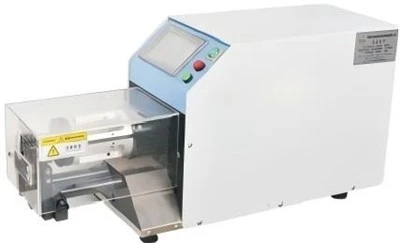
If you’re ready to talk through your production challenges, ask about customization options, or get a quote for a machine that’s tailored to your marker line, reach out to our team to discuss your requirements. We’re here to help you find a solution that boosts your line’s efficiency without overcomplicating your process.
Automatic Wire Twisting and Tinning Machine References:
- Marker Assembly Equipment Technical Handbook, Association of Manufacturing Technology, 2022
- Precision Threading for Small Plastic Components, Journal of Industrial Engineering, Volume 18, Issue 3, 2021
- Safety Standards for Automated Assembly Machinery, OSHA, 2023
- High-Speed Feeder Systems for Small Parts, Industrial Automation Review, Volume 12, Issue 4, 2022
Suzhou Keweisi Automation Co., Ltd.
We are one of the most professional automatic marker tube threading machine manufacturers and suppliers in China. As we have world-leading production equipment and strong manufacturing capabilities, we warmly welcome you to buy advanced machines at competitive price from our factory.
Address: Block C, No.211, Yunchuang Road, Wujiang District, Suzhou, Jiangsu Province, P.R China.
E-mail: sales@szkowas.com
WebSite: https://www.szkowas.com/
