If you’ve ever found yourself at a wastewater treatment plant (WWTP) or industrial sludge processing site dealing with the headache of excess, unmanageable sludge, you’ve probably crossed paths with centrifugal dewatering technology. And if you’ve started researching the right fit for your operation, you’ve likely noticed two popular options: mobile sludge dewatering centrifuges and trailer-mounted units. As a supplier that’s worked side-by-side with WWTP operators, environmental engineers, and industrial plant managers for over a decade, I’ve heard every confusion point between these two formats. Today, I’m breaking down the real, practical differences—not just the technical specs you’ll read in product manuals—to help you pick the right tool for your job. Mobile Sludge Dewatering Centrifuge
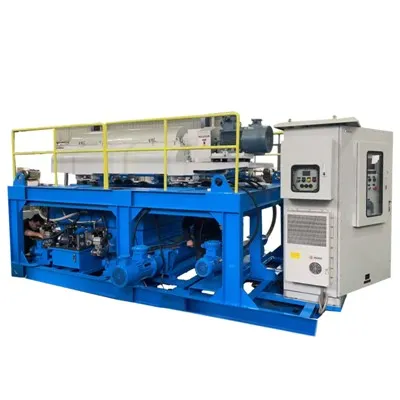
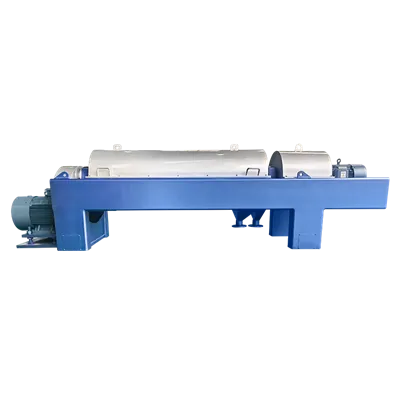
Let’s start with the basics, for anyone new to this space: a sludge dewatering centrifuge works by spinning thick, wet sludge at high speeds to separate solid particles from water. The resulting “cake” is much drier than raw sludge, so it’s cheaper to transport, easier to dispose of, and often can be repurposed (like for land application or composting). The only major variable between the two units we’re talking about is their physical mounting, but that small difference ripples through every part of how you use the equipment, from setup time to operational flexibility.
First, let’s dig into mobile units—this is the product line my team builds, so I’ll lean into real-world operator feedback here because that’s what matters most. When I say mobile sludge dewatering centrifuge, I’m not just referring to a machine that sits on a trailer; our units are built as self-contained, plug-and-play systems designed to move to job sites quickly, no specialized crews required. Let’s get specific: a typical mobile unit weighs between 12,000 and 18,000 pounds, fits on a standard flatbed truck or even a 20-foot shipping container, and requires no heavy hauling permits for most roads in North America and the EU. That’s a huge win for operators who work across multiple locations.
Last year, we had a customer in rural Ohio who runs three small WWTPs within a 40-mile radius. Every 10 days, raw sludge builds up at each site, and they need to dewater it to avoid violating environmental discharge limits. Before buying our mobile unit, they were hiring a third-party service that used a rented trailer-mounted centrifuge, which cost them $1,200 per stop and required scheduling up to two weeks in advance. Now, they drive our unit from site to site, set it up in 90 minutes or less, process 12 tons of sludge in 8 hours, and the total cost per stop is less than $300. That’s the kind of on-site flexibility only a mobile unit can deliver.
But don’t let the “self-contained” label fool you—our mobile units are fully operational right out of transport. They come with built-in chemical dosing systems, control panels, and power generators, so even sites with no access to three-phase power can run the unit without external hookups. The only connection needed at a job site is a sludge feed line and a water discharge point. For emergency response teams—like groups called in after a wastewater spill to contain and process excess sludge—this is non-negotiable. When a storm knocks out power or a main WWTP line fails, you can’t wait three days for a specialized trailer unit to show up. Mobile units get you processing sludge in hours, not days.
Now, let’s talk about trailer-mounted centrifuges, the other big player in this space. Trailer-mounted units are also designed to move, but they’re built heavier, more specialized, and not as self-contained as mobile units. A typical trailer-mounted centrifuge weighs 25,000 pounds or more, often requires a semi-truck to haul it, and may need special overweight permits if you’re moving it between sites. More importantly, most trailer-mounted units are not self-sufficient: they require external power, separate chemical dosing tanks, and often a dedicated operator to set up and level the trailer (many sites don’t have the smooth, level ground a heavy trailer needs, so you have to bring in mats or blocks to stabilize it).
I’ve seen trailer-mounted units work well for long-term, one-site projects. For example, a large municipal WWTP that’s upgrading its primary treatment system and will need consistent dewatering for six months might rent a trailer-mounted unit that’s sized for 50+ tons of sludge per day. The tradeoff here is that you’re tied to that site for months; moving it even a few miles would take a specialized hauling crew and a full day of setup. That’s a non-starter for the Ohio WWTP operators I mentioned earlier, who need to rotate between small, scattered sites.
The next key difference is throughput and scalability, and this is where the design of each unit really shows its purpose. Mobile centrifuges are typically built for medium to high throughput—our standard model processes 10 to 15 tons of dry sludge per hour, which is enough for sites with 5,000 to 50,000 population equivalents. But because they’re compact and self-contained, they’re not designed for 24/7, year-round operation at a single location. That’s not a flaw—it’s a feature. We design them to be durable for frequent transport, not constant, heavy-duty use. We even use corrosion-resistant steel for the drum and easy-to-change wear parts, so when they do hit the road, they hold up for years.
Trailer-mounted units, on the other hand, are built for continuous, high-volume operation. A 50-ton-per-hour trailer-mounted centrifuge is common for large municipal or industrial sites that process sludge non-stop. They have larger drums, more powerful pumps, and can run 24 hours a day for months on end with minimal downtime. The downside? If you only need that kind of throughput for a single project, tying up capital (or rental funds) in a high-volume trailer unit doesn’t make sense. A mobile unit can process enough sludge for 90% of small to mid-sized operations, and if your needs grow, you can rent an additional mobile unit for peak periods instead of investing in a permanent trailer.
Operational and maintenance costs are another make-or-break difference that most product specs gloss over. Let’s break this down with real numbers from our customers. For a mobile unit, fuel costs are about $150 to $200 per 8-hour shift, since it has an onboard generator. Maintenance costs average $1,200 per month, with wear parts (like the drum seals and conveyor blades) needing replacement every 1,500 hours of operation. The only external labor needed is one operator, who can run the unit alone.
For a trailer-mounted unit, you’ll pay for external power (often $300 to $500 per shift if you don’t have access to low-cost utility power), chemical dosing systems that are rented separately, and a team to level and stabilize the trailer every time you move it. Maintenance costs run around $1,800 per month, and because the unit is larger, repairs take longer and cost more to source parts. On top of that, most trailer units require two operators to set up and run them, adding to labor costs.
Flexibility for access is another difference I’ve seen trip up operators. Mobile units fit through standard 8-foot gates, can navigate dirt roads and uneven ground (we add adjustable stabilizer legs that can level the unit on slopes up to 10 degrees), and can park in small, unused areas at job sites. Last year, we had a customer processing sludge at a small food processing plant in Pennsylvania that only had a 6-foot-wide gate and a 20-foot parking spot. A trailer-mounted unit would never have fit, but our mobile unit slid right in and started processing sludge in under two hours.
Trailer-mounted units, by contrast, need at least 10 feet of clearance and smooth, paved ground to be leveled and secured. If your job site is on a farm, a rural WWTP, or an industrial area with limited access, a trailer unit just won’t work. Even if you can get a large trailer through the gate, you’ll still need a flat, stable surface to avoid safety risks during high-speed spinning—something many small sites can’t provide.
Now, let’s talk about edge cases where one unit might be clearly better than the other. If you’re a large municipal WWTP processing 100+ tons of sludge per day, with a permanent power grid and a dedicated sludge processing bay, a trailer-mounted unit (or even a stationary centrifuge) is the way to go. It’s built for heavy, continuous use, and you don’t need to move it often. But if you’re an emergency response team, a small municipal WWTP with multiple sites, an industrial contractor working on a temporary project, or a food processing plant that only needs sludge dewatering for peak production seasons, a mobile unit is the smarter choice.
I’ve seen too many operators make the mistake of buying or renting a trailer unit because they think it’s “more powerful,” only to realize they can’t access their job site, or that paying for unused capacity for a 50-ton-per-hour unit is draining their budget. That’s why our team always takes the time to ask questions before a customer buys or rents: how many sites do you work at? What’s the average throughput per job? Do you need to respond to emergencies? How much access do your job sites have?
For example, a customer last year who ran a series of construction sites that produce small amounts of sludge from concrete washing and drilling mud thought they needed a large trailer unit. After walking them through the options, we found that their average job required 2 to 3 tons of sludge processed per day, and most construction sites only have narrow access roads. A mobile unit that processes 10 tons per hour was perfect for them—they could set up in 90 minutes, process all sludge at each site, and move on without needing to coordinate a large haul or pay for unused capacity.
At the end of the day, the difference between mobile and trailer-mounted sludge dewatering centrifuges boils down to two core needs: mobility and throughput. Mobile units are built for flexibility, speed, and access to scattered or remote job sites, with enough power to handle most small to mid-sized operations. Trailer-mounted units are built for high-volume, long-term operation at a single, accessible site, with the capacity to handle much larger sludge loads.
If you’re tired of paying for third-party sludge disposal services, struggling to process excess sludge at multiple locations, or dealing with equipment that can’t fit your job sites, I’d be happy to walk you through our line of mobile sludge dewatering centrifuges. We’ve worked with hundreds of operators across industries—from wastewater treatment to construction to food processing—to find solutions that fit their specific needs, and we offer flexible rental and purchase options to match every budget. Don’t let excess sludge derail your operations. Reach out today to talk through your project, ask questions, and get a custom quote.
Oily Sludge Centrifuge References
Sludge Dewatering Technologies: A Review of Centrifugal Systems for Municipal and Industrial Applications. Water Environment Federation, 2022.
Portable and Mobile Dewatering Solutions for Distributed Wastewater Treatment. Journal of Environmental Engineering, Vol. 148, No. 5, 2022.
Trailer-Mounted vs. Stationary Centrifuges: Operational Cost Comparison for Small to Mid-Size WWTPs. Proceedings of the Annual Water Infrastructure Conference, 2023.
Lishui Yuanrong Environmental Protection Equipment Co., Ltd.
As one of the most professional mobile sludge dewatering centrifuge manufacturers and suppliers in China, we have world-leading production equipment and strong manufacturing capabilities. Please feel free to buy customized mobile sludge dewatering centrifuge from our factory. Also, quotation is available.
Address: Lot 6-1, Block 15, Wanyang Zongchuang City, Lishui, Zhejiang, China
E-mail: 361184920@qq.com
WebSite: https://www.yrhdc.com/
