If you’ve ever walked past a tall building under construction, you’ve probably glanced at those boxy metal contraptions gliding up and down the facade—those are construction hoists, also known as material hoists or personnel hoists. At my company, a supplier specializing in safe, code-compliant construction hoists, I’ve spent 15 years talking to site managers, safety officers, and crane operators, and one question comes up more than any other: Are construction hoists required to be inspected? The short answer is yes, but the “why, when, and how” is what keeps worksites safe, and it’s not just a suggestion—it’s a non-negotiable part of global construction safety regulations. Construction Hoists

Too often, I see new site teams cut corners on inspections to hit tight deadlines, or even assume their hoists are “fine” because they worked the day before. Last year, I spoke with a safety director at a mid-sized commercial construction firm who told me they’d skipped a routine annual inspection on a hoist that’d just completed three months of steady use. A faulty brake line went unnoticed, and by the time the hoist reached the 12th floor mid-morning, the brakes failed. No one was hurt, but the incident shut down the site for two weeks, cost them $200,000 in delays, and resulted in OSHA fines that could’ve been avoided with a single inspection. That story isn’t unique—it’s exactly why inspections aren’t just a paperwork box to check.
Let’s start with the basics: Construction hoists aren’t the same as passenger elevators in office buildings. They’re workhorses, designed to haul 5,000 pounds of rebar, scaffolding, and 12 workers up 50 stories, 12 hours a day, in weather ranging from 100-degree summer heat to freezing winter ice. Every trip exposes their components to wear: cables stretch, brakes wear down, guide rails shift with building settling, and electrical connections corrode from dust and moisture. Without regular checks, that wear turns into a hazard.
Regulations around hoist inspections vary slightly by region, but they all follow the same core principle: inspections are mandatory, at set intervals, and carried out by qualified people. In the U.S., OSHA’s 29 CFR 1926 Subpart CC (Cranes and Derricks in Construction) lays out clear rules: a new or re-assembled hoist must get a “commissioning inspection” before first use, then a “formal inspection” every 12 months, plus weekly “functional checks” by the site’s designated operator. The EU’s EN 1449-1 standard is similar, mandating quarterly inspections for high-use hoists and annual third-party audits. Even in smaller markets like Southeast Asia, national safety agencies now require pre-use inspections and annual third-party checks to reduce construction-related falls and equipment failures.
I want to break down these inspection types because many site managers mix them up, and that’s where mistakes happen. The pre-use check, done daily before the hoist turns on, is quick: test the emergency stop, listen for unusual noises, check the cable for frays, and confirm the gate locks work. This is not optional—on a job I supplied a hoist to last year, the operator noticed a frayed cable strand during the morning check, and we replaced it in 90 minutes before any loads went up. That small, 10-minute check prevented a potential catastrophic failure.
Then there’s the periodic formal inspection, which is the big one. These are not done by the in-house site crew—they need someone certified to inspect construction hoists, someone who knows the exact torque specs for brake bolts, can test the hoist’s load capacity with a calibrated scale, and can check for hidden damage like internal cable corrosion or worn gear teeth. Last year, we sold a hoist to a residential tower site, and during the first annual inspection, the third-party inspector found that the guide rails had shifted 2 inches because the building’s concrete slab settled unevenly. If that had gone unaddressed, the hoist would’ve crashed into the building facade during a heavy load run. The inspection cost $1,200, but avoiding that crash saved the site $400,000 in repairs, delays, and potential injury claims.
I hear the pushback sometimes: “Our hoist is only used for materials, not people, so inspections don’t matter as much.” That’s a dangerous myth. Material hoists might carry heavier loads, but they’re just as prone to component failure. A 2022 study from the Global Construction Safety Association found that 18% of hoist-related incidents involve material-only hoists, usually from snapped cables or brake failures during heavy lifts. Personnel hoists have additional safety features—load limiters, secondary brakes, interlock gates—but even those features only work if they’re inspected regularly.
Another common mistake is relying on visual checks instead of functional testing. A hoist might look fine from the ground, but a hidden flaw in the brake system can appear during a load test, where the hoist is halted mid-trip with 125% of its rated capacity. I’ve seen hoists pass a visual check three times in a row, but fail the load test because the brake lining was worn down to the metal. That’s why formal inspections require functional testing, not just walking around the hoist.
Now, what about used hoists? If a site buys a pre-owned hoist (which many do to cut costs), inspections are even more critical. You can’t assume a used hoist has been properly maintained by its previous owner. When we supply used hoists, we always include a full pre-delivery inspection report, and we require the buyer to schedule a third-party formal inspection before putting it into use. Last year, a contractor bought a used hoist from a yard that claimed it was “in excellent condition,” but our pre-delivery check found a cracked main mast, and we had it replaced before delivery—saving them from a collapse 10 stories up.
I also want to talk about the role of equipment suppliers here. At my company, we don’t just sell hoists and walk away. We work with our clients to create inspection schedules tailored to their hoist’s usage. A hoist on a high-rise construction project, running 12 hours a day, needs more frequent checks than a hoist on a small retail build that runs 4 hours a week. We also provide training for site operators to do the daily pre-use checks correctly—many operators don’t know what to listen for, or how to spot a frayed cable hidden in the cable drum.
Beyond regulations, inspections save lives. The U.S. Bureau of Labor Statistics reports that between 2017 and 2021, construction hoist failures killed 47 workers in the U.S., and another 120 were seriously injured. Most of these incidents were traced to missed inspections: either no formal annual checks, or skipped daily pre-use assessments. That’s not a number any construction company wants to be part of. Deadlines are important, budgets are tight, but a $1,500 inspection is nothing compared to the cost of a human life, a shutdown, or a OSHA fine that can run up to $156,000 for serious violations.
Let’s clear up one more myth: some people think if a hoist has a current inspection sticker from another site, it’s good to go at their new site. That’s not true. Every site has different conditions—wind loads, the slope of the ground, the type of building the hoist is attached to—so an inspection from one site doesn’t apply to another. Even moving a hoist from the bottom of a building to the top mid-construction requires a re-inspection, because the way it’s anchored changes.
For site managers just starting out, here’s a step-by-step to make inspections work for you, not against you. First, assign a dedicated safety officer to track inspection deadlines—set calendar alerts for daily checks, quarterly inspections, and annual formal audits. Second, work with a certified third-party inspector who specializes in construction hoists, not just general crane inspectors (hoists have different components than tower cranes). Third, keep detailed records of every inspection—OSHA and other regulators require you to keep these for at least three years, and they’ll come in handy if there’s ever an incident to prove you followed the rules. Finally, when you work with a hoist supplier, choose one that supports inspections—we always provide inspection checklists, training, and access to certified inspectors, so our clients don’t have to hunt for resources on their own.
At the end of the day, construction isn’t just about building structures—it’s about keeping the people who build them safe. Construction hoists are one of the most essential pieces of equipment on a worksite, but they’re also one of the most overlooked when it comes to maintenance. Inspections aren’t a hassle; they’re an investment. They keep your project on track, protect your team, and help you avoid costly mistakes that can sink a budget or a reputation.
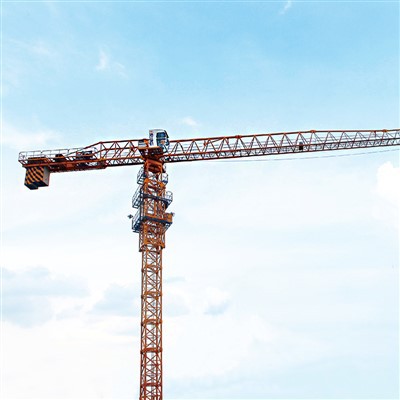
If you’re managing a construction site, evaluating a new or used hoist, or just want to make sure your current inspection process is up to code, we’re here to help. Our team can walk you through regulatory requirements, connect you with certified inspectors, or provide customized hoist solutions tailored to your project’s needs.
Topkit Tower Crane References
- Occupational Safety and Health Administration. 29 CFR 1926 Subpart CC: Cranes and Derricks in Construction.
- European Committee for Standardization. EN 1449-1:2020: Construction Hoists for Persons and/or Materials – Safety – Part 1: Hoists for Persons.
- Global Construction Safety Association. 2022 Annual Incident Report: Hoist-Related Injuries and Fatalities.
- U.S. Bureau of Labor Statistics. Census of Fatal Occupational Injuries, 2017–2021.
Zhejiang Construction Engineering Machinery Co., Ltd.
Zhejiang Construction Engineering Machinery Co., Ltd. is well-known as one of the leading construction hoists manufacturers and suppliers in China. If you’re going to buy high quality construction hoists made in China, welcome to get more information from our factory.
Address: A/F, Lianjin Building, 175 Zhaohui Road, Hangzhou, Zhejiang, China
E-mail: zjcmsale2@zjjj.com.cn
WebSite: https://www.zjcmcranes.com/
