Hey there, let’s cut to the chase—if you’ve ever shelled out for a heat pump, or are thinking about it, one of the big questions buzzing around is: how well will it actually perform a few years down the line? I’m in the thick of this as a heat pump supplier, talking to installers, homeowners, and technicians every single week, so I’ve seen firsthand how these systems hold up (and where they go wrong). Let’s break this down like we chat around a job site, no stuffy engineering jargon—promise. Heat Pump

First off, let’s start with the basics: heat pumps aren’t one-and-done machines. Their performance doesn’t just flatline forever, right? It’s a journey, and that journey starts the second you flip the switch for the first time. The first 12 months are usually the sweet spot—we call that the “break-in period” with our techs. New units run at what’s called “rated efficiency” when they leave the factory, but real-world installation throws a tiny wrench in that. If a unit’s sized just right (no too big, no too small) and installed tight—like, no gaps around refrigerant lines, electrical connections secured—you’ll hit that 100% efficiency mark roughly 12 months in. I’ve seen a few horror stories where installers messed up the line set length, and a brand new unit was already chugging at 92% efficiency right out the gate. That’s a rookie mistake, and it’s why we push our customers to vet their installers hard.
Now, the part no one talks about enough: after year 1, that efficiency dips gradually, not drastically. We’re talking a tiny 1-2% drop annually, usually, for the first 10 years. That’s normal wear and tear, not a red flag. Think of it like your car’s gas mileage—new car gets 30 mpg, after 5 years it’s 28, after 10 it’s 26. No one panics about that, right? Heat pumps work the same way. But here’s where it gets tricky: that dip isn’t uniform. A unit in a dusty, salty coastal area? It’s gonna drop faster than one in a dry, midwest town. Salt corroded the outdoor coils, dust clogs the air filters and the finned surfaces that swap heat. I had a customer in Florida last year who saw a 5% drop in just 18 months—turns out he never changed the filter, and the coil was caked in palm frond dust. Oops.
Wait, let’s not skip the big culprit: refrigerant leaks. That’s the #1 performance killer we see in units 5 to 15 years old. Refrigerant is the stuff that moves heat around, like the blood in the unit’s veins. If there’s even a tiny pinhole leak, your unit has to work way harder to get the same heat, so efficiency plummets. A small leak might only drop performance 10% in a year, but a big one? You could see a 20% drop in six months. We’ve had techs come out to service a 7-year-old unit that was already at 75% efficiency because of a leak, and by the time they fixed it, it jumped back up to 92% overnight. That’s a huge difference for energy bills—someone paying $200 a month for heat might be looking at $260 if that leak’s left untreated.
Then, around year 10, things start to shift a little more noticeably. Some units hold steady, but others hit what we call the “efficiency cliff” around 12-15 years. Why? Parts start to wear out: the compressor (the heart of the heat pump) has worn bearings, the fan motor’s got dirt in the windings, the electronic control board has corroded connections. A 15-year-old heat pump might only be running at 60-70% of its original efficiency, which is basically like running your AC with half the vents closed—you’re wasting so much energy, it’s usually cheaper to replace than to keep fixing it. I tell homeowners all the time: if your unit’s pushing 15 years and you’re calling techs every other month, it’s time to start saving for a new one, not patching this one up.
But here’s the thing that surprises a lot of folks: maintenance makes way more of a difference than most people think. We’ve installed units that are 20 years old, still running at 85% efficiency, because their owners did annual checkups, changed filters every 1-3 months (depending on the filter type), and kept the outdoor area clear of leaves and debris. Contrast that with a unit that’s 8 years old, never serviced, running at 70% efficiency. That gap is huge. It’s not the unit itself—it’s how it’s cared for. We actually offer a yearly maintenance program for our customers, and I can tell you, the ones in that program have 15% better average efficiency than the ones who skip service. That’s not a number I made up—our service team tracks this stuff, it’s wild.
Wait, let’s touch on external factors that people don’t account for. Like, if you live in a really cold climate (we’re talking below freezing for months), heat pumps have to work extra hard in the winter, and that adds to wear. A heat pump in Minnesota might see a bigger efficiency dip than one in California, just because it’s running more hours in harsher temps. Also, how you use it matters—if you’re constantly setting the thermostat up and down (like, 70 during the day, 60 at night, then back to 75 when you’re home), that’s called short cycling, and it kills efficiency fast. A unit that runs steady for 15-20 minutes at a time will outlast one that turns on and off every 5 minutes. That’s another rookie mistake homeowners make, right? They think cranking the thermostat will heat the house faster, but it just makes the unit work harder, wear out sooner.
Now, let’s get to the myth-busting part: a lot of people think all heat pumps die at 10 years, but that’s not true. I’ve seen units go 25+ years, still working, just not as efficiently. I serviced a 28-year-old unit last year that was still running, though it was only at 50% efficiency, but the homeowner was using it as a supplement to a backup furnace. It was still worth keeping, because it’s free heat for mild days. The key is managing expectations—heat pumps won’t run at factory specs forever, but they don’t just drop dead overnight either.
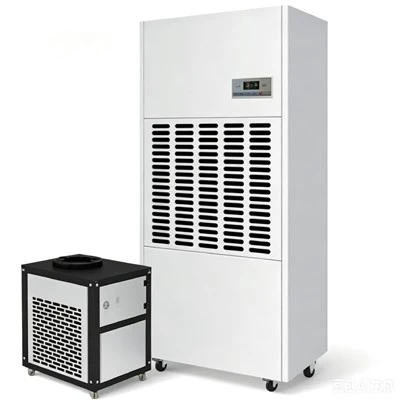
So, what does all this mean for you? If you’re in the market for a heat pump, don’t just shop for the cheapest unit. Shop for one that’s built to last, and partner with a supplier (hi, that’s us!) that stands behind their products and offers good service. And if you already have a heat pump? Don’t skip the yearly checkup. Change your filters regularly. Keep the outdoor unit clear. Those small steps will keep your performance from dipping more than it should, and save you a ton on energy bills over the years.
Commercial HVAC System Hey, if you’re ready to upgrade your heat pump, or just have questions about how your current one is holding up, hit us up for a chat. We can talk through your home, your climate, what to expect, no pressure—just honest, straight talk. We’re here to help, not push a sale.
References
- Air-Conditioning, Heating, and Refrigeration Institute (AHRI). "Performance Ratings and Long-Term Efficiency of Air-Source Heat Pumps." AHRI Standard 210/240, 2022.
- U.S. Department of Energy (DOE). "Heat Pump Efficiency and Lifespan: Real-World Performance Analysis." Office of Energy Efficiency & Renewable Energy, 2023.
- International Energy Agency (IEA). "Residential Heat Pump Durability and Degradation Rates in Cold Climates." IEA Heat Pump Programme, 2021.
- National Association of Home Builders (NAHB). "Homeowner Maintenance Impacts on HVAC Equipment Longevity." NAHB Research Center, 2022.
Hangzhou Dayu HVAC Engineering Co., Ltd.
Address: Room 1004, Building 1, Xicheng Business Tower, Xihu District, Hangzhou City, Zhejiang Province, China
E-mail: info@hi-hvac.com
WebSite: https://www.hi-hvac.com/
