If you’ve ever walked through a precision machining shop, you’ve probably seen a hydraulic surface grinder humming along, shaving off micro-thin layers of metal to get parts dead flat. What you might not have noticed right away is that these grinders come split into two main types: horizontal spindle and vertical spindle. As someone who’s supplied hydraulic surface grinders for over a decade, I get asked this question every single week by job shop owners, tool and die makers, and even aerospace technicians. The line between the two isn’t just a matter of orientation—it’s a difference that changes how you work, what you can make, and how much you’ll pay to get there. Let’s break this down like we would over a coffee between old machining hands. Hydraulic Surface Grinder
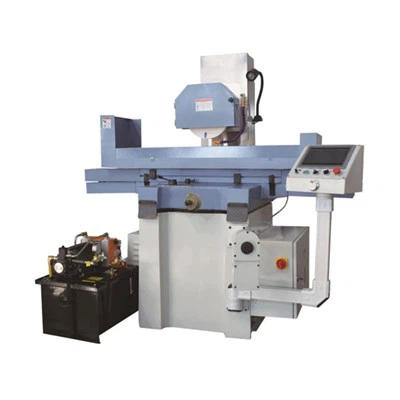
First, let’s start with the basics no one argues about: both machines rely on hydraulic pressure to feed the worktable, control the cross slide, and move the grinding wheel head. That hydraulics is what gives these grinders their smooth, consistent cut—no jerking, no uneven passes, just the steady pressure you need for flat, burr-free surfaces. But the spindle direction? That’s where the two worlds split, and that split matters more than you’d think.
A horizontal hydraulic surface grinder has its spindle mounted parallel to the floor, so the grinding wheel spins around a horizontal axis. This is the style most small job shops reach for first, and for good reason. The most common wheel for a horizontal grinder is a wide, thin abrasive wheel, usually several inches across and only a fraction of an inch thick. Because the wheel is wide, it can cover more of the worktable with each pass. If you’re grinding a 12-inch wide steel plate, a horizontal grinder will sweep across that entire width in a single traverse, instead of grinding side to side in tiny strips. That translates to faster cycle times for large workpieces—think a mold base for a plastic injection mold, or a set of hydraulic valve blocks that span a foot or more.
The horizontal setup also means the wheel cuts on its outer circumference. The edge of the wheel does the grinding, not the side. That gives this grinder a reputation for being precise on long, flat surfaces, and it’s way easier to dress the wheel flat consistently here. Dressing, for those who don’t know, is the process of truing up the abrasive wheel so it doesn’t have high or low spots that would leave a wave in your work. For a horizontal grinder, you can dress the wheel with a diamond dresser held against the outer edge, and that keeps the whole face of the wheel perfectly even across its entire width. It’s a forgiving machine for beginners, too—new operators don’t have to adjust their stance much, and the wide wheel spreads heat out evenly, reducing the chance of warping thin workpieces.
But here’s where the horizontal grinder falls short: side clearance and deep grinding. Because the wheel is wide and its sides aren’t designed for cutting, you can’t grind shoulders, slots, or any feature that requires the edge of the wheel to get close to a side wall. If you’re trying to grind a 0.5-inch deep slot in a aluminum part, a horizontal wheel will just burn the side walls or leave a jagged edge. The maximum depth of cut for a horizontal grinder is usually only a few thousandths of an inch per pass. It’s perfect for finishing flat surfaces, but if you need to create features that go up or down from the main surface, horizontal isn’t your answer. And don’t even think about grinding a workpiece with a height that’s bigger than the diameter of the wheel. If your part is 6 inches tall, a 4-inch diameter horizontal wheel can’t reach the top half—simple as that.
Now let’s flip to the vertical hydraulic surface grinder. Its spindle stands straight up, perpendicular to the floor, so the grinding wheel spins around a vertical axis. The wheel here is much thicker than the horizontal variety, usually only a few inches wide but several inches tall. Instead of cutting on the outer circumference, this machine’s wheel grinds on its side face. That changes everything.
The biggest advantage of a vertical grinder is its ability to cut in any direction. Because the side of the wheel is the working surface, you can grind shoulders, slots, grooves, and even contour edges without flipping the workpiece. That makes it ideal for parts that have multiple features on the same surface, like a gear blank that needs a flat face and a recessed hub, or a custom mold insert with angled edges. The side loading also means you can take deeper cuts—some vertical hydraulic grinders can remove a hundredth of an inch or more per pass, cutting down on total cycle time for parts that need material removed, not just finished to a smooth spec.
Vertical grinders also handle taller workpieces way better. If you have a 10-inch tall block of tool steel that needs both the top face and the side faces ground, a vertical wheel’s height lets you reach up to the full height of the part, no extra setups required. That’s a huge win for reducing fixturing time—every extra setup is a chance for error, and for large parts, it’s also a chance to damage the part when you move it.
But vertical has its downsides too, and they’re the reasons some shops swear by horizontal and vice versa. The wheel on a vertical grinder is narrower than a horizontal wheel of the same diameter, so it can’t cover as much area in one pass. Grinding a 12-inch wide plate on a vertical machine means you have to make multiple overlapping passes, which adds time. The side load also means the heat concentrates in a smaller area of the workpiece, so you have to be more careful with coolant flow to avoid warping thin parts. Dressing a vertical wheel is trickier, too—you have to dress the side of the wheel instead of the edge, and a tiny mistake in the dresser angle will leave slanted cuts that ruin your work. It’s a less forgiving machine for new operators, and the whole setup usually costs 20 to 30 percent more than a comparable horizontal hydraulic grinder.
Now, let’s talk about when to pick which. I see shops make the wrong call all the time, either buying a vertical when they never need to grind a slot, or sticking with horizontal and fighting through extra setups for multi-feature parts. If 70 percent of your work is finishing flat surfaces: mold bases, valve plates, large gauge plates, or sheet metal parts, a horizontal is the sweet spot. It’s faster, cheaper to maintain, and easier to train people on. I’ve had job shops with 30 employees run the same horizontal hydraulic grinder for 15 years with only routine servicing, no major breakdowns.
But if your shop does work that needs features: aerospace turbine blades with flat faces and angled edges, custom tooling with slots and shoulders, medical implants with complex profiles, or any job that requires more than just a flat surface, a vertical is worth the investment. The reduced setup time alone will pay for itself on jobs that need multiple grinding operations. I worked with a tool and die shop last year that was running 10 different job types, half of which needed slot grinding—they were spending 4 extra hours a week flipping workpieces and adjusting setups, and buying a vertical grinder cut that time down to 30 minutes a week.
There are also hybrid options these days, but they’re not for everyone. Some modern hydraulic surface grinders let you swap horizontal and vertical spindles, but they’re more expensive, less precise than a purpose-built machine, and harder to maintain. For most shops, sticking to one type is better.
One thing I always remind customers is that the hydraulic system is just the power source—it’s not the difference between the two machines. A cheap horizontal grinder with a bad hydraulics will cut worse than a premium vertical grinder with solid pressure control. The spindle orientation, the wheel design, and the ability to handle different workpiece geometries are what set them apart. I’ve seen shops buy a vertical grinder thinking it’s better just because of the spindle, only to realize they’re wasting money on features they’ll never use. And I’ve seen small shops buy a horizontal grinder and outproduce bigger shops because they matched the machine to their work.
At the end of the day, it comes down to your specific workload, your operator skill level, and your budget. If you’re not sure which one fits, don’t guess. Too many people base their decision on what the guy down the street has, instead of what they actually need to grind.

If you’re looking to upgrade your hydraulic surface grinder or just want to talk through what works for your shop, reach out to us. We’ve been supplying these machines for years, and we’ve helped hundreds of shops pick the right one for their needs—no sales pressure, just straight talk about what will save you time and money. Whether you need a horizontal for large flat parts or a vertical for complex features, we can walk you through the specs, pricing, and how to get the most out of your machine.
Surface Grinding Machine References:
- machining.org. "Surface Grinding Basics," 2022
- Modern Machine Shop. "Selecting the Right Surface Grinder for Your Job," 2021
- ASME B5.9-2019, "Standard for Machine Tools – Surface Grinders"
- Manufacturing Engineering and Technology, Kalpakjian, S. and Schmid, S.R., 7th Edition, 2019
Wuxi Mingxu Machinery Equipment Co., Ltd.
As one of the most professional hydraulic surface grinder manufacturers and suppliers in China, we’re featured by quality products and good price. Please rest assured to buy the best hydraulic surface grinder for sale here from our factory. Also, custom service is available.
Address: No. 5-5 Jinke Wealth Plaza, Changjiang North Road, Xinwu District, Wuxi City, Jiangsu Province
E-mail: yingyingmxjd@163.com
WebSite: https://www.mingxu-china.com/
