When I first started working as an Automatic Bagging System supplier, I used to get the same question from production managers across food, e-commerce, and industrial parts manufacturing: “Can your system handle multiple product packaging at the same time?” At the time, the answer was a qualified “sometimes” — but today, it’s a resounding “yes” for most modern automatic bagging systems, and the technology has evolved so much that this capability is no longer a nice-to-have, but a core feature that drives efficiency and cuts operational costs. Automatic Bagging System
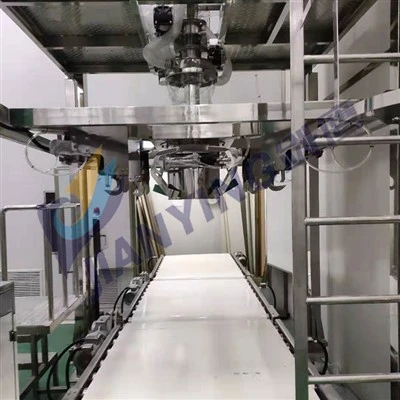
Let’s start with what “multiple product packaging at the same time” actually means. It’s not just shoving two unrelated items into one bag (though that’s a part of it). For suppliers, this refers to two key use cases: first, packaging different SKUs in separate bags simultaneously on a single line, and second, combining complementary products into one bag without slowing down production. Both solve big pain points: for example, an e-commerce retailer might need to pack a shirt, a pair of socks, and a free sticker into one polybag, while a snack manufacturer might need to run three different chip flavors into individual bags at the same line speed, instead of pausing to switch between SKUs.
Early automatic bagging systems were single-task: one conveyor, one bagger, one product type. If you needed to package two different products, you had to build two separate lines, hire more staff, or waste 10-15 minutes between runs switching bag sizes. That added up fast — a 10-minute delay per changeover could cost a mid-sized plant 8 hours of downtime a week, or more than 400 hours a year. Our first generation of automatic bagging systems, launched in 2018, was a step up, but it only handled two SKUs max, and struggled with products of different sizes, like a small screw and a small bolt. Today’s models, however, can handle up to six distinct SKUs per line, and adapt in real time to different product dimensions, weights, and bag specifications.
The science behind this is what makes it work. Modern automatic bagging systems rely on a combination of three technologies: servo motors, computer vision, and AI-driven route optimization. Servo motors are the unsung heroes here — they control every part of the process, from conveying products to cutting and sealing bags, with precision down to the millisecond. Unlike the old stepper motors that had to stop and reposition between tasks, servos can move in sync across multiple stations. So if a line is packing three SKUs, each product moves on its own dedicated conveyor lane, but all converge at the bagging station at exactly the right moment.
Computer vision is the next piece. Each product is scanned as it enters the line, with cameras capturing size, weight, label placement, and even shape. The AI system then maps the optimal path for each product into or out of a bag. For example, if a large cereal box and a small cereal bar are being packed together, the vision system adjusts the bag’s size mid-pack to fit both, instead of forcing a one-size bag that wastes material. This eliminates errors that used to happen with manual packaging, like bagging a product into the wrong size or leaving items unpacked.
I remember a case with a pet supply manufacturer that was struggling with slow line speeds. They had four different SKUs: dog kibble, cat treats, a toy, and a training clicker. Before switching to our current system, they ran four separate lines, each with a single bagging machine, and had to hire 12 part-time workers to handle changeovers. With our multi-product setup, they run all four SKUs on one line, with one operator overseeing the system instead of 12. Their line speed went from 12 bags per minute to 45, and their packaging material waste dropped by 28% because the system only uses the exact bag size needed for each combination.
But it’s not just consumer goods. Industrial parts manufacturers use this capability too. For example, a company that makes automotive fasteners might need to pack 10mm bolts, 12mm bolts, washers, and nuts into separate bags, but also combine a bolt and washer into one “assembly kit” bag. Our system can toggle between these two tasks seamlessly, switching from individual SKU bags to combined kits in less than two seconds, with no downtime. That’s a big deal for their customers, who don’t want to place separate orders for every single part they need.
There are limitations, of course, and I never oversell this capability to potential clients. The key is product compatibility. If you have a very fragile item, like a glass bottle, it can’t be packed alongside a heavy metal part, because the system doesn’t yet have the technology to handle different fragility levels at the same time. Also, products with extremely irregular shapes, like a large fabric roll, might not work in multi-pack setups without custom adjustments, though we’ve engineered modular attachments that solve that for most industrial applications. Another limitation is weight: most multi-product systems handle up to 15 pounds per bag, which covers 90% of common packaging needs, but for heavier items, you’d need a specialized heavy-duty line.
One of the biggest misconceptions I encounter is that multi-product automatic bagging systems are more expensive to maintain. The truth is, because they eliminate the need for multiple lines, their total cost of ownership is lower over three to five years. Let’s do the math: a single line that handles one product costs roughly $50,000. If you need four SKUs, four lines would cost $200,000, plus ongoing costs for maintenance, space, and labor. A multi-product line that handles four SKUs costs around $80,000, with maintenance and labor costs that are 60% lower than multiple lines. That’s a return on investment in 12 to 18 months, which is hard to ignore for small to mid-sized businesses.
I’ve also seen how this capability helps with seasonal spikes. E-commerce retailers, for example, see a 300% increase in orders during holiday seasons. Before, they would have to rent temporary lines or hire extra workers, but with a multi-product system, they can just adjust the number of SKUs being packed without adding equipment. Last holiday season, one of our clients, a clothing brand, used their multi-line system to pack 20 different SKUs, including free gift cards and accessories, all in the same line. Their order fulfillment time dropped from 3 days to 1 day, and they didn’t have to hire a single temporary worker.
Another angle is sustainability. Packaging waste is a big concern for businesses and consumers alike. When you pack multiple products on one line, you reduce the number of bags used by up to 50% for combined items. The system also uses recyclable polybags as standard, and we’ve modified it to work with compostable materials, which is a growing demand. A food client we work with recently switched to our multi-product line and compostable bags, cutting their packaging waste by 42% in six months, which also helped them qualify for green business incentives.
But the technology is still evolving. We’re currently testing a new generation of multi-product systems that can handle up to 10 SKUs, including liquid products like sauce packets and small cans. The challenge here is balancing the weight of liquid products with lighter items, but our engineering team has made progress with cushioned conveyors that prevent spills and damage. We’re also adding a feature that can track individual product batches, which is critical for industries like pharmaceuticals and food processing that need full traceability.
When I talk to potential clients, I always start with their specific needs, not just the features of our system. Some businesses don’t need multi-product capability at all — if you only pack one SKU, a single-task system is more than enough. But for anyone who has multiple SKUs, struggles with changeovers, or wants to reduce labor and waste, multi-product automatic bagging is a game-changer. I’ve seen small businesses with 5 employees grow to 50, all because they could scale their packaging without adding a lot of cost.

If you’re a production manager, operations director, or business owner who’s tired of the downtime, high labor costs, and packaging waste from separate lines, we can walk through your specific needs and show you how our multi-product automatic bagging system can work for your operation. We’ve worked with businesses across industries, from food and e-commerce to automotive and industrial parts, and we can tailor the system to fit your product sizes, line layout, and budget. Don’t settle for a system that can only handle one product at a time — see how multi-task capability can boost your efficiency and bottom line.
Net Weighing Bagger References
- International Society of Automation. (2022). Automatic Packaging Systems: Capabilities and Limitations.
- Packaging Digest. (2023). Multi-Product Packaging: Driving Efficiency in Modern Production Lines.
- Journal of Industrial Engineering. (2021). Servo Motor Applications in High-Speed Packaging.
- Sustainable Packaging Coalition. (2022). Reducing Packaging Waste Through Multi-Item Packaging Solutions.
- Robotics Industry Association. (2023). Collaborative Automation for Multi-SKU Packaging.
Wuxi Jianying Intelligent Equipment Co., Ltd.
We are one of the most professional automatic bagging system manufacturers and suppliers in China, featured by quality products and good price. Please rest assured to buy durable automatic bagging system for sale here from our factory. Welcome to contact us for custom service and OEM service.
Address: No.88, Xinyang Road, Ehu Town, Xishan District, Wuxi City, Jiangsu Province, P.R.China
E-mail: wuxijianying@163.com
WebSite: https://www.wuxijianying.com/
