If you’re in the EV game, you already know how crucial the battery pack is—it’s basically the EV’s heart, right? But here’s a little secret most folks outside our circle don’t get: none of that battery tech works without solid, precision-stamped parts holding it all together. As a stamping supplier who’s been grinding in auto and EV parts for 12 years now, I’ve seen firsthand how cutting corners on these stamp parts leads to pack failures, recalls, and way too many late nights fixing mistakes. Today, I’m breaking down exactly what EV stamping parts are non-negotiable for a battery pack, why each matters, and how we do it to make sure they don’t let you down. Automotive & EV Stamping Parts
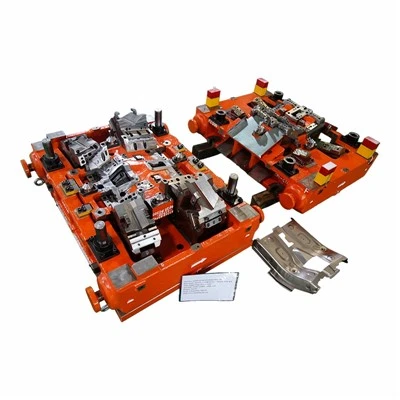
Let’s start with the most obvious stuff but also the most overlooked: the battery pack housing, also called the tray or enclosure. You can’t just buy a random metal box from a supplier—EV battery trays are a whole different beast than gas car part housings. For one, they have to take a beating from road debris, weather, and even minor crashes. And since the battery inside is super sensitive to heat and moisture, the tray can’t have even a tiny gap or a rust spot. Most of the time, we stamp these from aluminum alloy—wait, no, not just any aluminum—we use 6061-T6 because it’s strong enough to absorb impact yet light enough to keep the EV’s range up. Why stamping here? Because we can make complex, tight-tolerance edges in one go, which cuts down on assembly time for our customers. No more welding weird, uneven edges that leak later. And since stamping lets us scale fast, we can keep up with the EV makers cranking out 100k+ units a year without quality dropping.
Next up: busbars. If you’ve ever seen a battery pack, you know it’s a grid of individual cells all lined up. Busbars are the flat, thin metal strips that connect those cells in series or parallel—like the wiring that carries all that power from the cells to the motor. Stamped busbars are a game-changer here. Back in the day, people used to use cables, but cables waste space and add resistance. Stamped busbars are precision-cut, so they fit perfectly between cells without leaving gaps, and they have way less resistance, which means more power gets to the motor and less turns into heat. We stamp ours from copper, sometimes with a thin tin or nickel coating to stop corrosion. The key here is the thickness—we go as thin as 0.2mm sometimes, but only if the stamping process can keep it straight, no bends. If a busbar is off by even a millimeter, it can cause a short circuit, which is a death sentence for a battery pack. I’ve had a customer come to us once because their custom busbars were causing cell overheating—turns out their old supplier was cutting corners on stamping accuracy, so the contact points were too loose. Now they’re a repeat client, because we test every single busbar for continuity before it leaves our shop.
Then there are cell connectors, sometimes called tab connectors. Each individual lithium-ion cell has those little metal tabs sticking out the top and bottom, right? Cell connectors are the stamped parts that clamp those tabs to the busbars, holding everything tight. Again, precision is everything here. If the connector doesn’t grip the tab hard enough, the connection gets loose over time from vibration on the road, leading to power loss or even sparking. We stamp these from a nickel-plated steel, because nickel is good for conducting, and steel adds strength. A lot of people don’t realize that these small parts are actually responsible for 20% of the battery pack’s overall performance—loose connections mean lower efficiency, so the car can’t go as far on a charge. We use a double-stamping process for cell connectors: first, we punch the shape, then we form a small crimp tab that snaps onto the cell tab. That crimp is tested in our lab for pull strength—has to hold at least 50 lbs, no exceptions. No more failed connections at 50k miles because a cheap connector broke.
Another big one: thermal management components. Battery packs get hot—really hot—especially when you’re fast charging or driving up a hill. If the temp gets too high, the cells degrade fast, or even catch fire. So we make stamped parts that help keep things cool: heat sinks and cooling plate brackets. Wait, heat sinks aren’t just for computers—EV battery heat sinks are stamped from aluminum, often with fins that let air circulate around the cells. We stamp the fins in a way that they fit snugly between cell modules, so there’s no wasted space and maximum airflow. Then there are the brackets that hold the cooling lines in place—those have to be made to exact specs, because if a cooling line shifts, it can block airflow or get damaged. We also make stamped gaskets? No, wait, gaskets are usually rubber, but metal seal plates for the cooling system—those are stamped too. They have to be perfectly flat so they don’t leak coolant into the battery, which would short everything out. Last year, a client told us their old cooling plates were warping during installation, so coolant was seeping into the tray. Now we use a post-stamping stress-relief process to make sure every plate is flat within 0.05mm—no warping, no leaks.
Wait, don’t forget the end plates and side rails for the battery modules. The modules are groups of cells put together, right? End plates are the stamped metal parts that go on the ends of each module, clamping the cells tight so they don’t shift around during driving. Side rails are the ones that run along the sides of the module, connecting the end plates and mounting the module to the tray. These have to be strong but lightweight, again, to keep range up. We stamp them from aluminum or steel, depending on the customer’s needs. For example, a luxury EV might want aluminum to save weight, while a budget EV might go with mild steel to cut costs. The stamping process lets us adjust the shape easily—if a customer needs a module that’s a little wider, we just adjust the die, no big retooling. That’s one of the reasons we love stamping—flexibility for different EV models, from compact cars to big delivery vans.
And finally, the fuse holders and terminals. Fuses are non-negotiable for any electrical system, and battery packs need high-voltage fuses to protect against short circuits. Stamped fuse holders hold those fuses in place, making sure they don’t vibrate loose, and they’re stamped to fit exactly the fuse size the customer uses. Terminals are the parts that connect the battery pack to the rest of the car—like the big bolt that connects the positive and negative leads. We stamp terminals from heavy-gauge copper, often with a tin plating to prevent corrosion. These have to be super strong, because they carry all the current from the battery. We test every terminal for torque strength too—if a terminal can’t handle being tightened to the right torque, it’ll cause a loose connection that overheats.
Now, let’s talk about why stamping is the best method for these parts, not CNC machining or 3D printing. CNC is too slow for high-volume production, which EV makers need—they’re churning out millions of vehicles a year, so you need a process that can crank out thousands of parts a day without being expensive. 3D printing is great for prototyping, but the parts aren’t strong enough for long-term use in a battery pack—they can have tiny internal defects that lead to failure. Stamping, though, is a mature process that’s been used in auto for decades, and we’ve tweaked it specifically for EVs. We use precision dies that last for millions of hits, so each part is exactly the same as the last. No variations, no defects, no surprises.
I know a lot of EV startups skip the important parts to save money, but trust me, that’s a trap. A battery pack is thousands of dollars to replace, and bad stamped parts can lead to recalls, which are way more expensive than buying quality parts upfront. We’ve seen startups go under because they cut corners on these parts, and it’s never pretty. Our team has built a reputation for making parts that not only meet industry standards but exceed them. We work with both big auto OEMs and small EV startups, because we know one size doesn’t fit all—whether you need a custom tray for a 1,000-horsepower electric truck or a small busbar for a city car, we can stamp it.
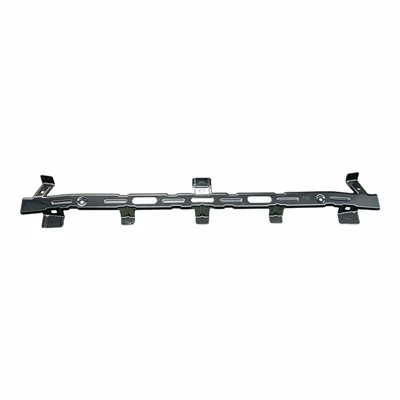
If you’re an engineer or a procurement manager working on an EV battery pack and you need parts that don’t let you down, let’s chat. We can send over samples, walk you through our testing processes, and even adjust our dies to fit your exact specs. No runaround, no hidden fees, just straight talk about what works for your project. Don’t risk your brand on parts that are made with cheap materials or sloppy stamping—reach out today so we can get your battery pack built right.
Single Stage Dies & Gang Dies References:
- International Organization for Standardization. (2021). ISO 12405-1:2021 Electrically propelled vehicles – Battery safety requirements for lithium-ion traction battery packs – Part 1: General requirements.
- Society of Automotive Engineers. (2022). SAE J2954: Wireless Power Transfer for Light-Duty Plug-In/Electric Vehicles and Alignment Methodology.
- Aluminum Association. (2020). Automotive Aluminum Application Guide: Battery Enclosures for Electric Vehicles.
- Wang, Y., et al. (2023). Thermal management of lithium-ion battery packs: Role of stamped metallic components. Journal of Power Sources, 562, 232789.
- Automotive Stamping Association. (2022). Best Practices for High-Precision Stamping of EV Electrical Components.
Dongguan Changdong Tool & Die Co., Ltd.
With abundant experience, we are one of the most reliable automotive & ev stamping parts manufacturers and suppliers in China. Please feel free to buy advanced automotive & ev stamping parts made in China here from our factory. Good service and quality products are available.
Address: No.56-B, Fumin South Road, Dalang Town, Dongguan City, Guangdong Province, China
E-mail: sales@cdstamping.com
WebSite: https://www.metalstampingdie.com/
