If you’ve ever dived into water desalination, industrial wastewater treatment, or even high-purity chemical separation, you’ve probably come across high-pressure membranes (HPMs) and the million-dollar question: “How much pressure do I actually need for these things?” As a high-pressure membrane supplier who’s spent the last decade troubleshooting installations, testing new membrane formulations, and talking to plant operators from Texas to Singapore, I can tell you this isn’t a one-size-fits-all answer. It’s not just about cranking up the pressure until water flows faster—too little pressure leaves you with ineffective separation, and too much will ruin your membranes faster than you can say “O-ring failure.” High Pressure Membrane

Let’s start with the basics so we’re all on the same page. High-pressure membranes here refer specifically to reverse osmosis (RO), nanofiltration (NF), and sometimes high-flow ultrafiltration (UF) that’s rated for pressures above 100 psi, right? The pressure is what drives water through the membrane’s tiny pores (or even the molecular gaps in dense RO/NF films) while blocking salts, pathogens, or contaminants. But here’s the thing: “needed pressure” isn’t a static number. It shifts depending on what you’re treating, how old your membranes are, the water’s chemistry, and even the temperature on the day you run the system.
First, let’s talk about the big ones: reverse osmosis. Your average seawater RO (SWRO) plant? That’s where most people get confused about pressure. Seawater has a naturally high osmotic pressure—around 350 to 400 psi, believe it or not. Osmotic pressure is the “suction” of salt molecules pulling water across a semipermeable membrane; to make water flow the other way (fresh, permeate), you have to apply pressure higher than that. So a standard SWRO system runs at 800 to 1000 psi? Wait, why more than just 400 psi? Oh right, that’s not just overcoming osmotic pressure. You also have to account for membrane resistance, flow loss from piping and modules, and the concentration polarization effect—where salts build up on the membrane surface over time, jacking up the effective osmotic pressure you need to beat. If you only ran 450 psi on seawater, you’d get almost no permeate, and what you did get would be way too salty to drink.
But that’s seawater. What about brackish water RO (BWRO)? That’s for groundwater or estuary water with lower salt content—osmotic pressure here is only 150 to 200 psi, so operating pressures are usually 225 to 400 psi. I once had a farm client in Arizona who tried to run their BWRO system at 180 psi because they thought “less pressure = less energy cost.” Oh, they saved a few bucks on electricity at first—but within six months, their membranes were coated in salt scale, and permeate flow dropped 40%. Why? They weren’t applying enough pressure to push water through the membrane at a rate that prevented salt from accumulating on the surface. That’s the concentration polarization catch: too little pressure, and you end up with scaling, fouling, and higher long-term costs than if they’d run the right pressure from the start.
Then there’s nanofiltration. NF is the middle kid between RO and UF—its pores are big enough to let monovalent salts (like sodium chloride) pass through, but block divalent salts (calcium, magnesium) and larger contaminants. Osmotic pressure for NF is lower than RO, so operating pressures are usually 100 to 300 psi, depending on what you’re treating. For example, if you’re using NF to soften hard water for a boiler, you can get away with 100 to 150 psi because you’re not dealing with high salt loads. But if you’re using NF for industrial wastewater that has heavy metals and high organic content? You might need 200 to 250 psi to keep flow rates high enough to prevent fouling. I worked with a textile plant a couple years back that switched from UF (which ran at 80 psi) to NF for dye removal. They tried running the NF at 120 psi, but the membrane got clogged with dye particles in three weeks. Cranking pressure up to 200 psi, though, kept the cross-flow velocity high enough to wash those dye particles off the surface, and membrane life jumped to over a year.
Now, let’s talk about what happens if you run too much pressure. A lot of operators think “more pressure = faster flow = better results,” but that’s a myth. For one, high pressure increases the chance of compaction—especially for thin-film composite (TFC) membranes, which are the standard these days. TFC membranes have a super thin polyamide active layer; too much pressure (above 1200 psi for SWRO, for example) can squeeze that layer into the membrane’s support layer, reducing pore size and lowering permeate flow long-term. I’ve seen a plant that tested a custom RO system at 1400 psi just to get extra flow—six months later, their permeate flow was down 25%, and they had to replace all 1200 elements. That cost them $150k, not to mention the downtime.
Too much pressure also wastes energy. RO systems account for about 15% of global desalination energy use, and unnecessary pressure is a big part of that. A 2022 study from the Water Research Foundation (I’ll get to the refs later) found that 20-30% of pressure used in many small-scale RO plants is excess—meaning operators are paying for electricity they don’t need. That adds up: a small municipal plant with 100 membrane elements might waste $10k a year on excess pressure. For industrial clients, that’s even more impactful.
Wait, but pressure isn’t just a fixed number for the life of the membrane. It changes as the membrane ages. New membranes are super smooth and have high permeance, so you don’t need as much pressure. After a year or two, fouling and scaling build up, so you have to increase pressure to maintain the same permeate flow. That’s called “delta pressure” or trans-membrane pressure (TMP)—TMP is the difference between the feed side and permeate side of the membrane, and it’s your key metric here. Most RO membranes are designed to run at a maximum TMP of 600 psi, but as they age, you might need to bump TMP up 50-100 psi to keep flow consistent. If you don’t, you get poor permeate quality; if you go over 600 psi, you risk permanent membrane damage.
Water temperature also messes with pressure requirements. Cold water is thicker, right? So water flows slower through membrane pores when it’s cold, meaning you need a bit more pressure to maintain the same flow. For every 1°C drop in temperature, you need about 1.5 psi more pressure. So if your feed water is 5°C (like in a winter treatment plant in Canada) instead of 20°C (room temp), you might need 22.5 psi extra pressure. I learned this the hard way early in my career: a client in Alaska ran their RO system the same pressure in January as they did in July, and their flow dropped 30% because the water was too cold. We adjusted the pressure, and their flow went back up without any issues.
Now, let’s break down real-world pressure numbers by application, because that’s what most guys asking this question actually need. No fluff, just what I tell every client when they call:
- Seawater RO (SWRO): 750–1000 psi. Peak performance is around 850 psi—any lower, and you’re not overcoming osmotic pressure plus polarization; any higher, and you’re wasting energy and risking membrane compaction.
- Brackish Water RO (BWRO): 225–400 psi. For low-salt brackish (under 5000 ppm TDS), stick to 225–275 psi. For high-salt brackish (10,000–15,000 ppm TDS), go 300–400 psi.
- Nanofiltration (NF): 100–250 psi. Softening? 100–150 psi. Wastewater treatment or heavy metal removal? 180–250 psi.
- High-Pressure UF (for solid-liquid separation, not just traditional UF): 100–150 psi. This is for tough sludge or emulsion separation—most UF runs at 50 psi, but high-pressure UF needs more to keep solids from clogging pores.
- Forward Osmosis (FO): If you’re using FO (a newer type), pressure is lower—only 50–150 psi, because it uses a draw solution instead of hydraulic pressure. But FO’s not as common as RO/NF yet.
Wait, but what about custom applications? I had a client a year ago who needed to filter a 30% sugar solution for a food processing plant. That’s a super high-solids, high-osmotic-pressure feed—we ended up using a specialized NF membrane rated for 1200 psi, because regular RO would have been damaged, and we needed enough pressure to push water through without the sugar fouling the membrane. That’s the thing: if your feed has unique chemistry (high solids, high TDS, organic contaminants), you can’t use the generic numbers. That’s why talking to a supplier who’s tested membrane chemistries for specific feeds is way better than guessing online.
A common mistake I see new operators make is ignoring cross-flow velocity (CFV) when adjusting pressure. CFV is the speed of the feed water flowing parallel to the membrane surface—it’s what washes away fouling and scaling. If you crank pressure up but keep CFV low, you’re just packing more contaminants onto the membrane, which shortens its life. It’s like trying to clean a clogged pipe by pushing more water through, but not flushing the gunk out. You need both: enough pressure to drive permeate flow, and enough CFV to keep the membrane surface clean. For most RO systems, CFV should be 0.1–0.3 m/s; if you’re below that, even the right pressure won’t save your membranes.
Let’s circle back to the energy angle, because it’s a huge cost factor for almost every client. A 2023 study from the International Desalination Association found that optimizing pressure alone can cut RO energy use by 15–20%. That’s not just a number—for a 10,000 m3/day SWRO plant, that’s $200k–$300k a year in energy savings. I worked with a plant in Saudi Arabia that was running their SWRO at 1100 psi (way over the ideal 850 psi) because they thought higher pressure = more output. We adjusted it to 850 psi, kept CFV consistent, and their output stayed the same, energy use dropped 22%, and membrane life went from 3 years to 5. That’s the sweet spot: enough pressure to meet your treatment goals, no more.
Now, let’s talk about when to test and adjust pressure. You shouldn’t just set it and forget it. Every month, check TMP (trans-membrane pressure) at the start and end of a run, measure permeate flow, and test feed water TDS. If TMP is rising faster than 5 psi per month, you’ve got fouling, and you might need to adjust pressure or do a clean-in-place (CIP). If permeate quality drops (higher salt passage), you’re probably running too little pressure to overcome osmotic effects. I always tell clients to log these numbers—after 6 months, you’ll have a custom curve for your specific system, which is way more accurate than any generic number.
Wait, what about small-scale systems? Like for a hotel or a small industrial site? The same rules apply, but the numbers are a bit different. A small BWRO system for a hotel’s drinking water might only need 250 psi, not the 350 psi a large municipal plant uses, because the feed water has lower TDS. And if it’s a small SWRO system for a remote cabin, you can run a bit higher (up to 900 psi) but you have to monitor TMP closely, because small systems don’t have the same pressure regulation as large ones.
I get it—this can feel overwhelming, especially if you’re new to membrane systems. You don’t want to guess pressure and waste money on energy or membrane replacements. That’s why our team tests every client’s feed water, runs small-scale membrane trials in our lab, and gives a custom pressure recommendation. We’ve worked with hundreds of clients across industries, so we know how pressure interacts with every type of feed—from seawater to pharmaceutical wastewater to food processing brines.
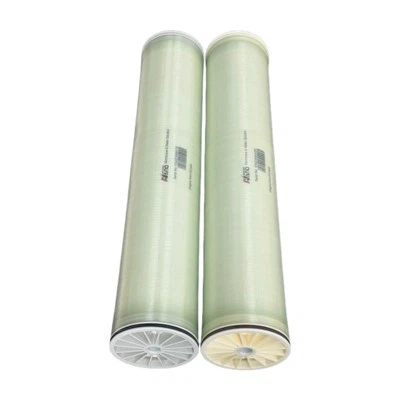
If you’re dealing with a membrane system that’s underperforming, or you’re looking to install a new high-pressure membrane system and want to nail down the right pressure, we can help. We’ll walk through your feed water specs, run trials if needed, and give you a clear pressure target that balances performance, energy cost, and membrane lifespan. No generic advice, no confusing jargon, just what works for your specific setup.
Disc Tube Membrane References:
- Water Research Foundation. (2022). Pressure Optimization for Reverse Osmosis Systems: Reducing Energy Use and Extending Membrane Life. WRF Project Report 4765.
- International Desalination Association. (2023). Global Desalination Energy Benchmarking: Pressure and Efficiency Trends. IDA Technical Paper 12-2023.
- Freeman, B. D., et al. (2021). High-Pressure Membranes: Material Science and Operational Considerations for Industrial and Municipal Applications. Journal of Membrane Science, Vol. 623.
- American Water Works Association. (2020). Nanofiltration and Reverse Osmosis Operator Manual: Pressure Requirements and System Design. AWWA Standard M57.
Hangzhou Nanoimp Environmental Technology Co., Ltd.
With abundant experience, we are one of the most professional high pressure membrane manufacturers and suppliers in China. Welcome to wholesale high quality high pressure membrane in stock here and get pricelist from our factory. We also accept customized orders.
Address: Road 25, Baiyang Street, Qiantang District, Hangzhou City, Zhejiang Province
E-mail: lena.hu@nano-sepmer.com
WebSite: https://www.nanoimp-membrane.com/
