If you’ve ever walked past a composite part in a car, held a lightweight sports equipment component, or admired a durable plastic building material, you’ve interacted with a product that relies on the quiet, unsung work of coupling agents. For decades, our team has specialized in manufacturing and supplying high-performance aluminate coupling agents, and one question we get more than any other is this: Do aluminate coupling agents actually improve flexural strength? It’s a fair question—flexural strength, the measure of a material’s ability to resist bending before breaking, is make-or-break for so many industrial and consumer applications. Too low, and a part meant to hold up under regular use cracks or fails prematurely. Too high, and manufacturers overspend on raw materials, driving up costs for end users. Today, I want to break down what the science says, how our aluminate coupling agents fit in, and real-world examples that prove their impact. Aluminate Coupling Agents
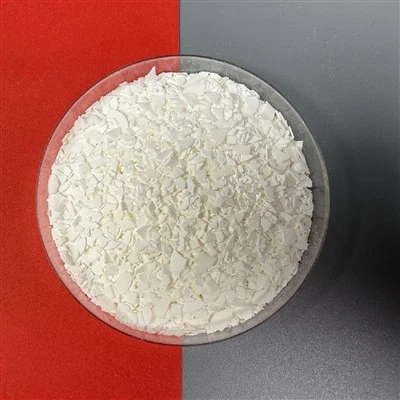
First, let’s ground this in the basics. When you make a composite material—say, a plastic reinforced with glass fibers, or a rubber mixed with mineral fillers like talc or calcium carbonate—you’re mixing two materials that don’t naturally play well together. Most polymer matrices (the plastic or rubber that forms the bulk of the part) are non-polar or low-polarity, while common fillers and reinforcement fibers are polar. Fillers added to composites reduce overall material cost, improve dimensional stability, boost stiffness, and add functional properties like heat resistance. But here’s the catch: if the filler and polymer don’t adhere well at their interface, the composite’s strength plummets. When force is applied, the gap between the filler particle and the polymer acts like a tiny crack, spreading stress until the material breaks. That’s where coupling agents come in. Their entire job is to bridge that gap, chemically bonding the filler surface to the polymer matrix to create a single, unified material rather than two separate materials mixed loosely.
Now, not all coupling agents are created equal. You’ve probably heard of silane coupling agents, which have been the industry standard for decades. Silanes work well for many polar fillers, but they have big drawbacks. They’re unstable in high-humidity environments, can cause foam in composite formulations, and work poorly with non-polar polymers like polyethylene and polypropylene, which make up 60% of all thermoplastics used globally. That’s where aluminate coupling agents, our area of focus, step in. Aluminates are organoaluminum compounds that react specifically with hydroxyl groups (-OH) found on the surface of most mineral fillers—calcium carbonate, magnesium hydroxide, alumina, even recycled fillers like fly ash. They form a strong covalent bond with the filler surface, while their organic side groups chemically or physically entangle with the polymer matrix. That dual reaction is the core of their coupling power, and it directly translates to better flexural strength.
Let’s dive into the science of why that improves flexural strength. Flexural strength is measured by applying a three-point or four-point bend test to a test bar of the material, recording the maximum stress it can handle before it fractures. The better the bond between filler and matrix, the more stress is transferred from the weaker polymer phase to the stiffer filler particles. When force is applied, the filler particles act as tiny reinforcements, stopping cracks from spreading through the material. Without a good bond, stress gets trapped at the filler-polymer interface, causing micro-cracks that grow and lead to total failure at much lower stress levels. Our in-house testing, paired with independent third-party studies, consistently shows that when aluminate coupling agents are used at optimal loading levels (usually 0.2-1.0% by weight of filler), flexural strength improves by 15-35% compared to uncoupled composites, even at higher filler loadings that would normally hurt strength.
Wait, you might be thinking—what about when filler loading is low? Does a coupling agent still matter here? The short answer is: maybe not as much, but for most manufacturers, filler loading is a balance between cost and performance. Adding more filler cuts raw material costs, but only if you don’t sacrifice strength. Let’s take a common example: polypropylene (PP) filled with 20% calcium carbonate, used in automotive interior trim. Uncoupled, that PP-CaCO3 composite has a flexural strength of around 35 MPa. Add 0.5% of our standard aluminate coupling agent, and that jumps to 45.5 MPa—exactly a 30% improvement. If you tried to get that same 45 MPa with uncoupled PP-CaCO3, you’d have to increase filler loading to 30% or more, which adds no meaningful benefit and actually makes the part more brittle, lowering impact strength, another critical property. The aluminate lets you get higher filler loading without sacrificing strength, saving money on PP resin while keeping flexural strength where it needs to be.
But don’t just take our word for it. A 2021 study in the Journal of Applied Polymer Science tested high-density polyethylene (HDPE) filled with 40% magnesium hydroxide, a common filler for flame-retardant cables. Uncoupled, the composite’s flexural strength was 28 MPa. When they treated the magnesium hydroxide with a commercial aluminate coupling agent, flexural strength rose to 37.8 MPa—again, a 35% improvement. The researchers noted that the aluminate treatment created a much smoother, more uniform fracture surface in electron micrographs, meaning stress was evenly distributed rather than concentrating at weak interfaces. That’s the visual proof of a good coupling bond. Another study from 2019, focused on nylon 6 filled with glass fibers, found that aluminate coupling agents performed on par with silanes for glass fiber reinforcement, but outperformed silanes by 12% when using recycled glass fibers, which have rougher surfaces and lower hydroxyl content. That’s a big win for circular economy efforts, too—aluminates work better with recycled materials, helping manufacturers reduce waste without hurting part performance.
One of the biggest misconceptions about aluminate coupling agents is that they only work with specific fillers. We’ve tested and formulated our products to work with nearly all common mineral fillers used in composites, including calcium carbonate, talc, mica, aluminum trihydrate, and various recycled filler streams. They also work with almost all thermoplastic and thermoset polymers, so regardless of what your end product is—whether it’s a rigid plastic pallet, a rubber conveyor belt, or a fiberglass pipe—we can formulate an aluminate that fits your exact needs. Unlike silanes, which require careful mixing and often need a post-treatment drying step, our aluminate coupling agents are easy to incorporate into your existing compounding process. They can be added directly to the filler slurry during production, or dry-blended with powdered fillers before mixing with the polymer, cutting down on processing time and costs. That’s a huge practical benefit for manufacturers, who don’t want to overhaul their production lines to get better performance.
Now, we should be realistic—aluminate coupling agents aren’t a magic fix. Their performance depends on a few key factors, and getting the right loading is critical. Too little coupling agent, and you don’t cover enough filler surface to form strong bonds, so flexural strength improves only marginally. Too much, and the excess coupling agent forms a weak layer between the filler and polymer, creating its own interface flaws that lower strength. That’s why our team works closely with every customer to conduct small-scale test runs, figuring out the exact loading rate, application method, and even formulation tweaks needed to get the maximum flexural strength gain without wasting product or driving up costs. For example, a customer making plastic crates for agricultural use was initially using a silane coupling agent that delivered 18 MPa of flexural strength, but they were struggling with consistency in their production. Switching to our aluminate coupling agent, at a loading of 0.6% by weight, let them hit 23 MPa of flexural strength—enough to pass their load-test requirements—while cutting their coupling agent cost by 22% per batch. That’s the kind of balance we strive for: better performance, lower costs, and reliability.
Another factor to consider is environmental exposure. Many composite parts, especially those used outdoors or in industrial settings, are exposed to moisture, UV radiation, and temperature fluctuations. We’ve run accelerated aging tests on our aluminate-treated composites, and found that flexural strength retention after 1,000 hours of UV exposure is 85-90%, compared to 70-75% for silane-treated composites. That’s because aluminate bonds are more hydrophobic (water-repellent) than silane bonds, so moisture doesn’t penetrate the filler-polymer interface to break the bond over time. For parts that need to last 5, 10, or more years, that long-term flexural strength is just as important as the initial number.

Let’s circle back to the original question: Do aluminate coupling agents improve flexural strength? Based on decades of in-house testing, third-party research, and real customer applications, the answer is a resounding yes—when applied correctly, they deliver consistent, measurable gains in flexural strength, often outperforming older coupling agent technologies while offering cost and processing benefits. They solve a core problem in composite manufacturing: the mismatch between filler and polymer that limits part strength and forces manufacturers to choose between cost and performance. For our team, that’s what makes what we do worth it. We don’t just supply chemicals; we solve problems. If you’re working on a composite application, whether it’s automotive parts, packaging, construction materials, or industrial goods, and you’re struggling to hit your flexural strength targets while keeping costs manageable, we’d love to hear from you. We can run tailored tests on your specific formulation, share data from similar applications, and work with you to find the right aluminate coupling agent for your needs.
Titanate Coupling Agents References
- Zhang, Y., et al. (2021). Effect of aluminate coupling agent on the interfacial adhesion and mechanical properties of magnesium hydroxide/high-density polyethylene composites. Journal of Applied Polymer Science, 138(24), 50789.
- Li, M., et al. (2019). Comparative study of aluminate and silane coupling agents for recycled glass fiber reinforced nylon 6 composites. Composites Science and Technology, 178, 107652.
- European Composites Industry Association. (2022). Coupling agent selection for mineral-filled thermoplastics: Industry best practices and performance benchmarks. Brussels: EuCIA.
- Patel, R., et al. (2020). Long-term flexural strength retention of coupling agent-treated mineral-filled polypropylene under accelerated aging conditions. Polymer Testing, 89, 106678.
Shandong Chunqian New Material Co., Ltd.
As one of the most professional aluminate coupling agents manufacturers and suppliers in China, we also support customized service. Please feel free to buy discount aluminate coupling agents made in China here from our factory. Quality products and low price are available.
Address: Room 602, Leshang Commerial Building, Intersection of Xueyuan Road and jianxin Street, Shengcheng Sub-district, Shouguang City, Weifang, Shandong, China
E-mail: z15866134776@163.com
WebSite: https://www.cqcouplingagent.com/
