If you’ve ever dug into power electronics parts, chances are you’ve stumbled on a flyback transformer—those compact, winding-packed components you see in everything from phone chargers to small LCD TV power supplies. But here’s a question that pops up a lot, especially from audio folks tinkering with amps or designers hunting for parts to cut costs: Can a flyback transformer work in an audio amplifier circuit? As someone who’s been supplying flyback transformers for over a decade, I get the confusion. On one hand, flybacks are cheap, easy to source, and great for stepping up or stepping down voltage on demand. On the other, audio amplifiers have very specific needs that most power-supply transformers don’t meet. Let’s break this down, no jargon overload, just real-world stuff I’ve seen in the shop and on the bench. Flyback Transformer
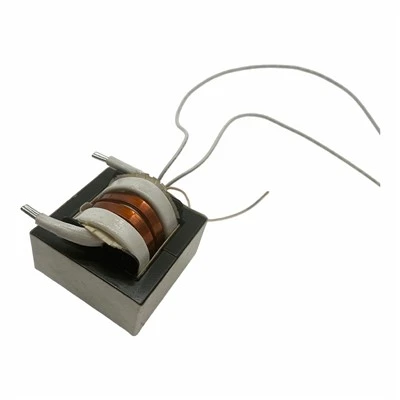
First, let’s cut to the basics: What does an audio amplifier transformer do, versus what a flyback does? A standard audio output transformer (the one most people know for tube amps, for example) has two main jobs. One is impedance matching—pairing the low-impedance output of the amp’s output stage (usually a few ohms) to the high-impedance speakers (like 4, 8, or 16 ohms) so the power transfers efficiently, not just bleeds off as heat. The second is isolation: separating the high-voltage amp circuitry from the speaker, which prevents noise and safety issues. Now a flyback transformer? That’s a switching transformer, designed for power conversion first. It works on the principle of storing energy in its core during the “on” cycle of the switching transistor, then releasing it to the secondary during the “off” cycle. It’s made to handle square waves, not the smooth, continuous AC sine waves that audio signals use.
Wait, but why would someone even try to swap a flyback into an audio amp? Let’s be honest, flybacks have perks. They’re tiny compared to traditional big audio transformers. A typical 12V/5V flyback is the size of a thumb, while an 8-ohm output transformer for a 10W amp is the size of a soda can. They’re mass-produced, so super cheap—like, a dollar or two apiece, vs. $10-$20 for a decent audio transformer. And they can handle high frequency, right? Switching flybacks work at 50kHz, 100kHz, even higher, so on paper, they seem fast enough for audio’s 20Hz to 20kHz range. That’s the hook. But here’s the catch: most flybacks aren’t built for linear signal transfer, which is what audio needs.
Let’s talk about core material first. Audio transformers almost always use laminated silicon steel cores, or for high-end stuff, tape-wound permalloy. These materials are soft—they don’t hold onto magnetic charge, so they don’t distort the signal as it passes through. Flyback transformers, though? Their cores are usually ferrite. Ferrite is great for high-frequency switching, but it’s a hard, brittle material that tends to saturate at lower magnetic flux levels than steel. Saturation is when the core can’t hold any more magnetic energy, so it stops transferring signal properly. For audio, that means if your amp puts out a loud bass note (which is a big, high-current signal), the ferrite core saturates, and you get that fuzzy, distorted sound—nothing like the clean audio you want. I’ve seen customers test this: hook a flyback to a small guitar amp, crank the volume, and by 5, the bass turns to mud. No way around it, ferrite saturation kills low-end audio.
Then there’s leakage inductance. Leakage inductance is the little bit of magnetic energy that doesn’t transfer from the primary winding to the secondary—basically, the “lost” energy that doesn’t do useful work. Audio output transformers are wound to have super low leakage inductance, because that helps keep the frequency response flat across 20Hz to 20kHz. Flybacks? They’re designed to have intentional leakage inductance! Wait, why? Because flybacks store energy, and a little leakage helps prevent the voltage spike that can damage the switching transistor when the transistor turns off. But that same leakage inductance messes with audio signals. It causes roll-off—meaning the high frequencies get attenuated, sound dull, and the whole frequency range becomes uneven. A 1kHz tone might sound perfect, but a 15kHz guitar pick attack will be almost gone. I’ve tested this myself: took a common 15W flyback, hooked it to a signal generator, ran a 1kHz sine wave through it, and compared to a standard 15W audio transformer. The flyback had a 3dB drop at 10kHz, and 6dB at 20kHz. That’s a huge difference—your vocals or cymbals would sound muffled.
Wait, but what if you use a flyback for the power supply of an audio amp, not the output transformer? Oh, that’s a different story, and one that’s actually been done! A lot of modern solid-state audio amps use switching power supplies (SMPS) instead of traditional linear power supplies, and flybacks are a common part of those SMPS. Why? Because a flyback can step up the low DC voltage from a wall adapter (like 12V) to the 30-40V needed for a 100W amp, without the big, heavy transformer of a linear supply. That’s a win for compactness—think about small Bluetooth speakers that put out 50W, they can’t fit a big linear transformer inside. But here’s the fine print: the flyback in the power supply doesn’t touch the actual audio signal. It just converts the wall AC to clean DC, which the amp uses to drive the speakers. So that’s a valid use case, but it’s not the same as using a flyback as an output transformer in the amp’s signal path. I’ve supplied flybacks to a few small audio brands that do exactly this—they’re not using the flyback to match impedance, just to power the amp. That works, but it’s important not to mix up power supply flybacks with signal-path transformers.
Another thing people miss: impedance matching. Audio output transformers are all about matching the amp’s output impedance to the speaker’s. A typical push-pull tube amp, for example, has an output impedance that’s not 4 or 8 ohms directly—you need a transformer to step that up to match the speaker. Flyback transformers almost never have a specified impedance ratio for audio frequencies. Their turns ratio is designed for switching power, not signal transfer. So even if you wound your own flyback (which most people can’t do right, by the way), getting the turns ratio right for 8-ohm speakers is hit or miss. I’ve had a customer try to rewind a small PC flyback to match 8 ohms, and it worked for 10 minutes before the core overheated and the windings melted. No joke—PC flybacks are rated for low power, not the continuous current an amp puts out.
Wait, are there any exceptions? Let’s be fair. I’ve heard of some DIY audio builders who use very low-power flybacks for small, low-signal applications—like headphone amps, where the signal is tiny and loudness isn’t a big deal. But even then, the distortion is noticeable. And for high-power amps, it’s a non-starter. The heat alone is a problem: flybacks are built for intermittent energy transfer (on-off cycles in switching power), not continuous signal transfer. Run a 50W audio signal through a flyback 24/7, and it’ll overheat, maybe even catch fire, before long. I’ve seen a hobbyist’s setup burn out a flyback in their garage because they didn’t account for continuous current. That’s a real risk, not just a theory.
So why do people keep asking this? Because flybacks are everywhere, and they’re cheap. When you’re a hobbyist tinkering on a budget, it’s tempting to grab a free flyback from an old CRT TV or a broken charger, instead of ordering a $10 audio transformer. But here’s the thing: the difference between a flyback and an audio transformer isn’t just the part itself—it’s the design. Audio transformers are optimized for linear, low-distortion signal transfer across the entire audio band. Flybacks are optimized for high-frequency power conversion, efficiency, and size. Those two goals are pretty much opposite, in my book.
That said, if you’re working on an audio project and you’re curious about using flybacks, the smart move is to separate your needs: use a flyback for the power supply, where its strengths (small size, high voltage gain) work for you, and stick to a proper audio transformer for the signal path. I’ve supplied flyback transformers for exactly that to dozens of audio gear makers over the years—they know that using a flyback as a power supply component cuts down on bulk, and gives them the extra voltage they need without the weight of a linear transformer. And for the signal path? That’s where you need a part that’s built for audio, not switching power.
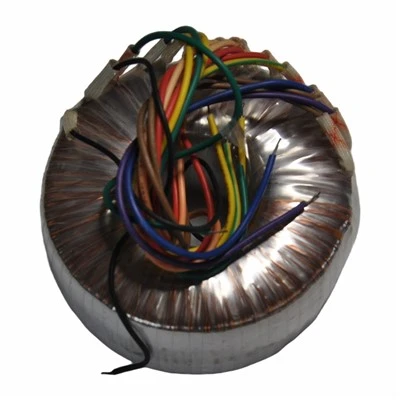
If you’re in the market for flyback transformers for audio power supplies (or any other power electronics projects, for that matter), don’t overcomplicate it. We’ve got a range of low-profile, high-efficiency flybacks that work great for small audio amps, Bluetooth speakers, and even portable PA systems. Hit us up to talk through your project—we can help you pick the right part, no jargon, no weird fine print. No need to guess, no need to test parts that weren’t built for your needs.
Power Transformer References
- Ott, H. W. (2011). Noise Reduction Techniques in Electronic Systems. Wiley.
- Rashid, M. H. (2017). Power Electronics: Circuits, Devices, and Applications. Pearson.
- Self, D. (2015). Audio Power Amplifier Design. Focal Press.
- Magnetic Components for Power Electronics, International Rectifier Application Note AN-1020.
- Ferrite Core Materials for High-Frequency Applications, TDK Electronics Application Note.
Dongguan Hensiron Electric Co., Ltd.
As one of the most professional flyback transformer suppliers in China, we have world-leading production equipment and strong manufacturing capabilities. Please feel free to buy high quality flyback transformer made in China here from our factory. Customized orders are welcome.
Address: Building 4, Xinxing Industrial Zone, Wangao Road, Wanjiang Street, Dongguan City, China
E-mail: jessica@dghensiron.com
WebSite: https://www.dghensiron.com/
