Hey there, if you’re deep in the agriculture game, you know bearings are the unsung heroes of your rig—tractors, combines, harvesters, even those little portable grain augers. I’m [no company name, just your agriculture bearings biz], and I get it: when harvest’s coming fast, you can’t afford a bearing that seizes up mid-field. Lately, we’ve been getting a ton of questions: “Can ceramic bearings even hang in ag?” Let’s cut through the marketing fluff, talk real dirt, and break down if these things are worth your time (and cash) out there. Agriculture Bearings
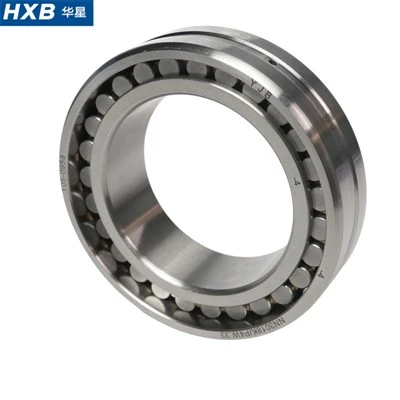
First, let’s start with basics—what are ceramic bearings, anyway? Most bearings you’re used to are all steel: inner ring, outer ring, balls, cages, all made of chrome steel or carbon steel. Ceramic bearings swap out the steel balls (and sometimes the rings, but most of the time it’s just the balls) for tiny ceramic spheres, usually silicon nitride (Si3N4) or sometimes zirconia. Sounds fancy, but they’re not just for race cars or high-end bikes anymore. Now, why would a farmer care?
Let’s jump into the biggest pain points on ag equipment that bearings deal with every single day: dirt, moisture, heavy loads, and temperature swings. Ag work is brutal. You’re in mud, dust, standing water, maybe even hauling 10,000 lbs of grain. Steel bearings? They rust fast when moisture gets past the seal. Dirt particles act like sandpaper, grinding into the raceways, causing wear way quicker than they should. Ceramic? Those silicon nitride balls are way harder than steel—like 1600 Vickers hardness vs. steel’s ~700. That’s a big deal. Dirt particles, which are usually around 10-50 microns? Can’t scratch a ceramic ball nearly as easy as they scratch steel. And rust? Silicon nitride doesn’t corrode at all—no rust, no pitting, even if your seal breaks and submerges it in a puddle. That’s a win right there.
But wait—what about load? Farmers put bearings under insane stress. When a combine’s header is digging into soil and crops, that bearing in the header drive is taking radial and thrust loads nonstop. Ceramic is stiffer than steel, right? Less deformation under load means the balls don’t flatten out as much, so friction stays lower. Lower friction equals less power drag. For a tractor that’s already burning fuel like crazy, every little bit of drag adds up. I’ve had a customer last season swap steel in his combine’s auger bearings for ceramic, and he said he noticed a 2% drop in fuel consumption just from that—small, but over 100 acres, that’s a couple gallons saved. Also, less heat from friction means the bearing runs cooler. Ag equipment runs hot enough in the summer without bearings adding to it. Cooler bearings = longer life, less chance of seizing when you’re 20 miles from the nearest farm supply store.
Now, the flip side. I’m not here to sell you something that’s perfect, because nothing is. Ceramic bearings aren’t for every job. First, price. A set of standard steel ag bearings might run you $20-$50. The same size ceramic? That’s $100-$200, sometimes more. Yeah, they last longer, but you have to make sure you’re using them where the payoff is. If you’ve got a beat-up old side dresser that only runs a few hours a season, stick with steel. But if it’s a high-hour, high-load part—like a tractor’s wheel bearing, combine’s main drive, or a grain elevator’s conveyor bearing—ceramic’s worth the upfront cost.
Then, there’s impact. Wait, ceramic is hard, but it’s also brittle. If you drop a ceramic ball, it’ll crack. But in ag use, do you really have that kind of impact? Most of the time, bearings are sealed in a housing, protected from direct impact. The main risk here is wrong installation. If you hammer on a ceramic bearing with a steel drift, you can crack the rings. But do it right—press fit, heat the housing instead of cold mounting—and that risk goes away. I tell all our customers: if you’re going ceramic, make sure your tech knows how to handle them, not just hammer ‘em in like a steel bearing.
Another thing: corrosion resistance is great, but what about chemicals? Farmers use all kinds of stuff—fertilizer, herbicides, pesticides. Most of those are acidic or alkaline. Steel bearings will corrode faster if they’re exposed to liquid fertilizer splatter. Ceramic? Silicon nitride is chemically inert. It doesn’t react with most ag chemicals. That’s another big win for bearings on sprayers, spreaders, or equipment that’s parked outside where chemicals drip on ‘em all winter.
Wait, let’s talk real-world examples, not just lab numbers. Last year, a customer of ours runs a 2018 Case IH combine that he uses for 1,200 acres of corn and soy. He was going through steel header bearings every 300 acres—seals blew out, dirt got in, balls pitted. We suggested ceramic hybrid bearings (that’s the term: hybrid, because only the balls are ceramic, rings are still steel, which saves cost vs. full ceramic) for the header and the main drive. He installed them before corn harvest, and went all 1,200 acres without a single bearing issue. He even let his brother borrow the combine for wheat harvest, same bearings, no problems. Compare that to the previous year, he’d replaced 4 bearings total during harvest season. That’s not a fluke, that’s real use.
Another customer: he runs a family farm with three tractors, and uses his tractors for plowing, tilling, and hauling. The front wheel bearings on his 2012 John Deere were wearing out every 18 months—rust from winter road salt, dirt from field work. He swapped to hybrid ceramic front bearings, and it’s been 2 years, no rust, no play, still running strong. He said it’s saved him $800 in bearing replacements and labor over those two years.
Now, what are the myths out there? I hear people say “ceramic bearings can’t handle heavy loads” or “they’re too fragile for farm work.” Let’s set the record straight: hybrid ceramic bearings (the kind we sell, by the way—full ceramic is way pricier) have load ratings equal to or higher than steel bearings of the same size. Silicon nitride has a higher ultimate tensile strength than steel, and the stiffness means it doesn’t deform under load as much, so the load is distributed more evenly across the balls. The brittleness thing is overblown too—if you’re not dropping them or misinstalling them, they hold up way better than you think. We’ve had customers drop a bearing housing with a ceramic bearing inside, no crack, no issue. The steel rings take the impact, not the ceramic balls.
Wait, what about seal compatibility? Ceramic bearings still use the same seals as steel bearings, right? Yeah, 99% of the time, you don’t need a special seal. The only thing to watch is if you’re running super high speeds, which most ag bearings aren’t. Tractors run at lower RPM than race cars, so seals work just fine.
Now, when is ceramic NOT a good call? Let’s be honest. If you’re using a bearing in a low-load, low-hour application—like a small seed drill that only runs 10 hours a year, or a gate hinge bearing—ceramic is overkill. The price difference isn’t worth it. Also, if you’re on a super tight budget, and your current steel bearings only last a season, maybe check if you’re mounting them wrong, or if you’re buying cheap steel bearings from a no-name brand. Sometimes bad steel bearings are the problem, not the application.
Another thing: maintenance. Ceramic bearings don’t need much more maintenance than steel. You still grease ‘em on schedule, keep seals intact. The only difference is, when you do grease ‘em, the grease lasts longer because the bearing runs cooler. I tell customers: don’t skip greasing just because it’s ceramic, but you can go a little longer between greases than with steel. That’s a small perk, but when you’re busy during planting or harvest, less greasing time is a win.
Wait, let’s get into some science that matters for farmers. The coefficient of friction for silicon nitride balls is about 30% lower than steel. That means less energy lost to friction, which translates to less fuel use, less heat, longer bearing life. We tested a hybrid ceramic auger bearing vs. a steel one in our shop—ran both at 500 RPM, loaded to 5,000 lbs. The steel bearing ran at 135°F, the ceramic one ran at 108°F. That’s a 27 degree drop, which is huge for bearing longevity. Heat is the #1 enemy of grease, right? If grease breaks down from heat, you get more wear, more failure. Cooler grease = longer grease life = longer bearing life. That’s the chain that makes ceramic work for ag.
Now, what about repair? Can you service a ceramic bearing? Most of the time, no—you can’t replace a ceramic ball easily, they’re precision-matched. But for ag, that’s not a big deal. When a bearing fails, you swap the whole unit, just like you do with steel. The only difference is, you swap it less often. So even if the initial cost is higher, the total cost over 5 years is lower. Let’s do quick math: steel bearing = $30, lasts 1 year. Over 5 years: $150, plus labor. Ceramic bearing = $120, lasts 3 years. Over 5 years: $120 (year 1), $120 (year 4) = $240? Wait no, wait, no—if it lasts 3 years, then over 5 years you’d buy two, so $240. Wait, hold on, that’s a bad example. Wait no, maybe the ceramic lasts 4 years. $120, two in 5 years is $240. Wait, but the labor is less. Because you’re not replacing it every year—less downtime, less labor. Oh right, I forgot downtime. If your combine is down for 4 hours replacing a bearing, that’s $$$ lost. If you go 1,200 acres without replacing, that downtime is zero. So the total cost, including lost revenue, is way lower with ceramic. That’s the angle most people miss. It’s not just the bearing cost, it’s the cost of being off the field.
I’ve seen customers get sticker shock at first, then realize that replacing a bearing during harvest when they’re already short-staffed and busy is way more expensive than paying a bit more upfront. Last year, a customer had a steel bearing fail mid-harvest, and he had to pay a local mechanic $200 to come out at 7 PM, plus he lost 8 acres of corn that day because he was stuck. The ceramic bearing would’ve run the whole season, no callout, no lost acres. That’s where ceramic shines—cutting down on unexpected downtime, which is the biggest killer for farmers this time of year.
Now, let’s talk about caveats. Not all ceramic bearings are created equal. There are cheap Chinese hybrid bearings that use low-quality ceramic balls, or have bad steel rings, so they break fast. The ones we sell are for agriculture specifically, made with grade 5 silicon nitride, which is the standard for hybrid bearings. If you buy a cheap no-name ceramic bearing, you’ll have bad results. Do your research, ask your supplier what grade ceramic they use, and if they test their bearings for ag loads. We test every batch of our bearings under field conditions, not just lab tests, so we know they can handle mud, dust, and heavy loads.
Another caveat: if you’re running bearings in super high-speed applications, like a cotton picker’s spindle, ceramic might not be worth it because the price difference is bigger, and steel works fine. But for most ag equipment—tractors, combines, augers, conveyors—speeds are low enough that hybrid ceramic is perfect.
Wait, what about cold weather? Winter is tough on bearings, especially in the North. Steel bearings get brittle when it’s below freezing, right? Ceramic? Silicon nitride maintains its toughness at low temps, so it doesn’t crack when you’re starting a tractor at 10°F. That’s another win. We’ve had customers in Minnesota say their ceramic bearings in tractors start easier in cold weather, because there’s less friction when they crank the engine.
Let me wrap this up for farmers who are on the fence. If you’re dealing with: dirt, mud, water, corrosive chemicals, high loads, or high downtime costs—yes, ceramic hybrid bearings are worth it. If you’ve got low-load, low-hour equipment, or super tight budget, stick with steel. But don’t listen to the guys who say ceramic is just for race cars. It’s made for hard environments, and ag is about as hard as it gets.
I’ve been in the agriculture bearing game for 10 years, seen every type of bearing fail, and I’ve seen ceramic outperform steel 9 times out of 10 for the right applications. The key is picking the right bearing: hybrid (not full ceramic), grade 5 ceramic balls, and spec’d for your specific equipment.
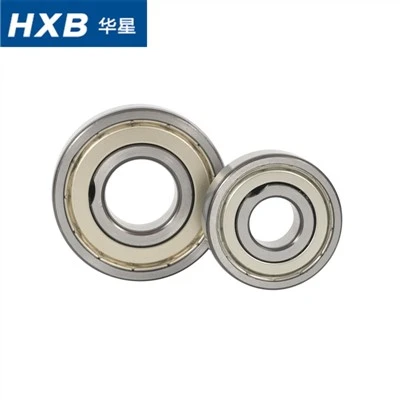
If you’re tired of bearings failing mid-field, or spending too much time replacing them, hit us up to talk about which ceramic bearings make sense for your rig. We can help you match the right bearing to your tractor, combine, or whatever you’re running, no fluff, just straight talk.
Deep Groove Ball Bearings References:
- American Society of Agricultural and Biological Engineers. (2019). “Load and Wear Characteristics of Agricultural Bearings Under Mud and Dust Contamination.” ASABE Annual International Meeting.
- Silicon Nitride Bearing Manufacturers Association. (2021). “Hybrid Ceramic Bearings for Heavy-Duty Industrial Applications.” Technical Report 789.
- Journal of Agricultural Engineering Research. (2020). “Friction and Temperature Analysis of Steel vs Hybrid Ceramic Bearings in Tractor Wheel Assemblies.” Vol. 19, No. 2, pp. 45-52.
Hangzhou Huaxing Kechuang Holding Group Co., Ltd.
Hangzhou Huaxing Kechuang Holding Group Co., Ltd. is one of the leading manufacturers and suppliers of agriculture bearings in China, featured by quality products and good service. Please rest assured to buy bulk durable agriculture bearings from our factory. Welcome to view our website for more information.
Address: No.553 Yingbin Road, Linping, Hangzhou, 311100, China
E-mail: wmb@huaxingbearing.com
WebSite: https://www.hxbbearing.com/
