Hey there! If you’re running a business that relies on aluminum alloy die casting, you know your mold’s strength makes or breaks your whole operation. Trust me, I’ve seen it firsthand—back when I first started as a mold supplier, we had a client whose mold cracked mid-production, wasting 10,000 pounds of molten aluminum and a week of lead time. That’s when I realized testing mold strength isn’t just a “nice-to-have”—it’s non-negotiable. Today, I’m breaking down how we test our molds, what you should look for as a buyer, and why skipping these steps will cost you way more in the long run. Aluminum Alloy Die Casting Mold
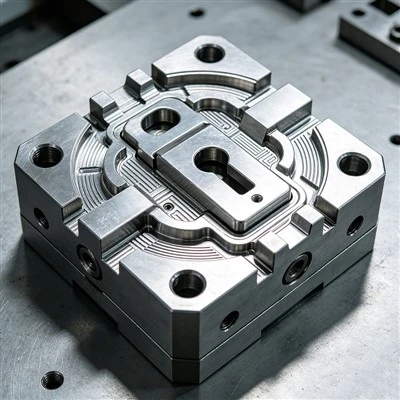
First off, let’s get one thing straight: aluminum alloy die casting molds take a beating. We’re talking about molten aluminum at 1,300–1,400°F, high injection pressures (sometimes up to 15,000 PSI), constant thermal expansion and contraction, and abrasive aluminum chips wearing down the die surfaces. A weak mold won’t just crack—it’ll cause flash, short shots, or even shut down your line unexpectedly. So, our testing process isn’t just checking if the mold “holds together”—it’s simulating exactly what it’ll go through on your shop floor.
Let’s start with the non-destructive tests we do first, before we even run a single shot. No need to ruin a good mold before you get to test it, right? The big one here is ultrasonic testing (UT). Wait, I know some of you groan at “tech jargon,” so let’s keep it simple: UT uses high-frequency sound waves to hunt for hidden flaws inside the mold—tiny voids, cracks, or porosity that you can’t see with the naked eye. Why does that matter? Those tiny flaws are like time bombs. A small void deep in the mold wall will expand when heated, leading to a big crack later. We send a UT probe over every critical area—like the injection cylinder, the cavity walls, and the ejection pins—to make sure there’s nothing hiding under the surface. We also use magnetic particle testing (MT) for surface flaws. If there’s a micro-crack on the mold’s outer edge, magnetic particles will stick to it so we can spot it. It’s way faster than grinding down the surface and guessing if a crack is there.
Next up, we do pressure testing. This is where we crank up the heat and pressure to simulate real production conditions—without using actual aluminum (yet). We fill the mold cavity with a special non-corrosive, high-temperature oil that matches the viscosity of molten aluminum, then pump it up to 120% of the maximum pressure the mold will see on your line. Why 120%? Because in real life, sometimes your press has a slight spike (like if the material is a tiny bit too hot, or the cycle time is off). If it survives 120% pressure, it’ll handle the normal stuff. We hold that pressure for 10 minutes, check for any leaks, any deformations, or any tiny cracks starting to form. Once that passes, we move to thermal shock testing—this is where the mold gets a taste of the heating and cooling it’ll go through. We heat the mold cavity to 1,400°F, then quench it with water to 100°F, over and over again. We do 500 cycles here (that’s like 2 weeks of non-stop production for some shops) to see if the thermal stress causes any fatigue. I’ve had clients who tried to skip this step before, and their mold failed after only 100 cycles—suddenly they’re paying for emergency repairs and lost output. So this step is non-negotiable for us.
Now, the fun part: actual die casting testing. But not just a couple of shots—we run 1,000 consecutive shots, monitoring every single variable. We track injection pressure, cooling rate, ejection force, and even the temperature of the mold and the aluminum. Why so many shots? Because the first few are just the mold settling. The real wear and tear starts after 500 shots. We’re looking for things like dimensional shift (if the cavity is deforming, the parts will be the wrong size), or if the mold is starting to leak (causing flash). We also check the mold surfaces for any signs of adhesion—aluminum sticking to the die, which can cause scratches that turn into big cracks over time. Last month, we had a client’s old mold that had adhesion issues; when we tested it, after 800 shots, the adhesion caused a 1mm crack in the cavity wall. If they’d kept using it, that crack would’ve spread, ruining a $5,000 mold.
Wait, but what if you’re a buyer, not a mold supplier? How do you vet a mold before you buy it? Let’s cut through the fluff here. First, ask for their test reports. Any reputable supplier should have UT, MT, pressure test, and thermal shock results—no excuses. If they say “we don’t do that, molds are just fine,” run the other way. Second, ask for their cycle test data. If they say they ran 1,000 shots, ask to see the part dimensional stats for each run. If the dimensions stay consistent, that means the mold isn’t deforming under load. Third, check if they’re using the right mold material. Most aluminum die casting molds are made from H13 tool steel, right? But not all H13 is created equal. We use double-vacuum refined H13, which has fewer impurities, so it’s stronger. If a supplier is using lower-grade steel, their molds will crack way faster—even if their “tests” say they’re good.
I get it, some buyers want to cut costs, so they go with a cheaper mold that skips these tests. But let’s do the math: a good tested mold costs, say, $12,000. A cheap untested mold is $8,000. But if that cheap mold cracks after 1,000 shots, you’re looking at $8,000 to replace it, plus $5,000 in lost production, plus the cost of scrap parts. That’s way more than the extra $4,000 for the good mold. I’ve had clients go with the cheap option three times, and each time they came back to us within two months. It’s not worth the headache.
Now, let’s talk about common mistakes we see, even from experienced buyers. One big one is only testing the mold’s strength once, when it’s new. But molds get weaker over time with every cycle. So we also do periodic in-service testing for our clients—like every 50,000 shots, we run a quick UT check to spot any early cracks. Another mistake is ignoring the ejection system. The ejection pins are part of the mold, too—if they’re not strong enough, they’ll bend or break, which can warp the mold cavity. We always test the ejection force during our initial tests, and we make sure the pins are made from a high-strength alloy too.
Oh, and let’s not forget about design factors. Even if you do all the tests, a bad design will make a strong mold fail. For example, sharp corners in the cavity cause stress concentrations—those are the first places cracks form. We spend time optimizing the mold design to reduce stress, and then we test that design with finite element analysis (FEA) before we even machine the mold. FEA is basically a computer simulation that shows how the mold will hold up under pressure and heat. It’s not a replacement for physical testing, but it helps us catch design flaws early, so we don’t waste time machining a mold that’s going to fail.
Let me share a recent example to make this real. A client makes automotive brake calipers—they needed a mold that could handle 200,000 shots a year. They came to us after their last supplier’s mold cracked at 120,000 shots. We went through our full testing process: UT found a tiny void in the cavity wall, which we fixed before pressure testing. We ran 1,200 thermal shock cycles, no issues. We did 2,500 consecutive die cast shots, and the part dimensions were consistent within 0.001 inches. We also did FEA on the stress points, and adjusted the cavity design to reduce stress. They’ve been using that mold for 18 months now, and it’s still going strong. They just told us they’re expanding their production, so they’re ordering two more molds from us. That’s the kind of result we want for every client.
At the end of the day, testing mold strength is about trust. You need to trust that your supplier has done the work to make a mold that will last, and you need to trust their test data. If you’re shopping for a new aluminum die casting mold, don’t just go for the lowest price. Ask questions, demand test reports, and understand exactly how the mold is going to perform under your production conditions.
By Material If you’re tired of molds that crack mid-run, waste material, and kill your production time, let’s chat. We can walk you through our testing process, answer all your questions, and help you get a mold that’s built to last. No sales fluff, just real talk from someone who’s been in this business for years and knows how important a strong mold is to your bottom line.
References
- American Die Casting Association. (2021). Die Mold Design and Testing for Aluminum Alloys. ADCA Technical Report Series.
- ASM International. (2019). Non-Destructive Testing of Tool Steels for Die Casting. ASM Handbook, Volume 17: Nondestructive Evaluation and Quality Control.
- Groover, M. P. (2020). Fundamentals of Modern Manufacturing: Materials, Processes, and Systems (7th ed.). Wiley.
Hangzhou Pullbull Technology Co., Ltd.
As one of the most professional aluminum alloy die casting mold manufacturers and suppliers in China, we also support custom service. Please feel free to wholesale advanced aluminum alloy die casting mold from our factory. Quality products and reasonable price are available.
Address: Rm 805 Gemini Build 1, #1785 JiangHan Rd, BinJiang, Hangzhou, China 310052
E-mail: markdan@menovo.cn
WebSite: https://www.pb-mold.com/
