If you’ve ever spent time on a job site winding up for a new substation build, or haggling with a municipal engineer over a tight equipment schedule, you’ve probably asked yourself a simple, frustrating question: “What does a 10 MVA substation transformer actually weigh?” I’m Jake, and for the past 12 years, I’ve run a small transformer supply operation—we source, inspect, and deliver these units to everything from rural solar farms to mid-sized city distribution hubs, so this isn’t just textbook math to me. It’s the difference between a delivery truck fitting down a country lane or getting stuck halfway, between a crane rental that makes a project go over budget or stays on track, and between a customer calling me at 2 a.m. panicking or at 9 a.m. ready to sign a PO. Substation Transformer
Let’s cut right to the chase: there’s no single number. A 10 MVA substation transformer’s weight isn’t a fixed stat stamped on a metal plate—it shifts based on a dozen choices engineers and end users make before the unit even hits the production line. But I can break down the math, the real-world examples I’ve hauled, and the unwritten rules every substation pro learns the hard way, so you’re not guessing when you call your trucking company or get a crane quote.
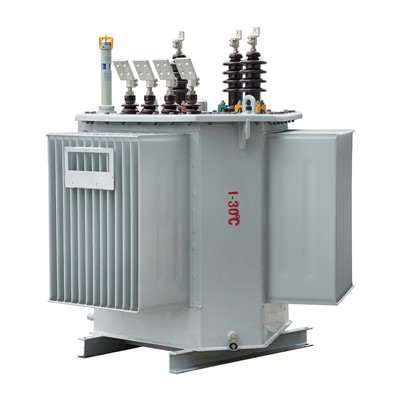
First, let’s start with the core parts that make up almost every oil-immersed substation transformer—99% of the units we supply are oil-immersed, because they’re cheaper, more reliable, and better at managing heat than dry-type units for medium-duty substation work. The transformer’s weight splits into two main buckets: the active parts (the core and windings that actually do the electricity conversion) and the tank, plus the stuff inside the tank: insulating oil, tap changers, bushings, and all the small hardware that keeps it sealed and working.
The active part is the most consistent piece, and it scales with MVA pretty reliably. For a 10 MVA unit, depending on voltage class, that core and winding assembly will weigh between 7,000 and 11,000 pounds. Wait—voltage class, right, that’s the first big variable I almost missed. A 10 MVA transformer stepping 34.5 kV down to 12.47 kV for a small distribution substation isn’t the same as a 10 MVA unit stepping 115 kV down to 34.5 kV to feed a county’s main distribution grid. Higher voltage means thicker insulation on the windings, a bigger core to handle the higher voltage stress, and heavier bushings that have to insulate those higher voltage lines. For example, a 10 MVA, 34.5kV primary unit’s active parts are around 8,500 pounds, while a 10 MVA, 115kV primary? That jumps to about 10,500 pounds. No magic there, just physics—higher voltage needs more material to keep the electricity from arcing out.
Next up is the insulating oil. This isn’t your car’s motor oil—transformer oil is specially refined to cool the core and windings, and insulate between parts that carry different voltages. For a 10 MVA substation transformer, you’re looking at 3,000 to 5,000 pounds of oil, give or take. Again, voltage class plays a role: higher voltage units need a bigger volume of oil to dissipate the extra heat and cover the larger winding area that’s spread out more inside the tank. A 10 MVA, 34.5kV unit uses roughly 3,800 pounds of oil, while that 115kV primary version uses about 4,800 pounds. That’s a huge chunk of weight—oil is almost half the total weight of smaller substation transformers, which is why I always warn customers not to skip a leak test before the unit leaves our yard. A small oil leak isn’t just a messy job; it’s lost weight, lost cooling, and a ticking time bomb for overheating.
Then there’s the tank, tap changer, bushings, and all the other hardware. The tank is the steel box that holds the oil and active parts, and it’s built to withstand a lot: it has to support the weight of all that oil, hold pressure if there’s a minor internal event, and stand up to being lifted, moved, and bolted down at the job site. For a 10 MVA unit, the tank weighs between 3,000 and 4,500 pounds. Again, voltage class: higher voltage units need thicker tank walls around the bushing ports, bigger mounting lugs to lift heavier units, and extra bracing to handle the higher electrical forces inside. Tap changers, the parts that adjust the transformer’s voltage as load changes, add another 500 to 1,500 pounds—load tap changers (the kind you adjust while the unit is energized) are way heavier than the cheaper off-load tap changers that require you to shut the unit down to adjust voltage. And don’t forget the bushings—those ceramic or composite parts that stick out the top or sides to connect the transformer to the power lines. A high-voltage bushing for a 115kV line can weigh 300 pounds each, and you need at least two primary and two secondary bushings, so that’s an extra 1,200 pounds right there, versus maybe 500 pounds for a 34.5kV bushing.
Let me add up the numbers for two real units I shipped last year to make this concrete. First, a 10 MVA, 34.5kV primary / 12.47kV secondary unit for a new subdivision substation in central Ohio. Its active parts: 8,500 lbs, oil: 3,800 lbs, tank + hardware: 3,200 lbs, tap changer: 700 lbs, bushings: 500 lbs. Total weight: 16,700 lbs, or about 8.35 tons. Now, a 10 MVA, 115kV primary / 34.5kV secondary unit for a solar farm interconnection in western Texas, the same year. Active parts: 10,500 lbs, oil: 4,800 lbs, tank + hardware: 4,200 lbs, load tap changer: 1,200 lbs, bushings: 1,200 lbs. Total weight: 21,900 lbs, or almost 11 tons. That’s a full 2.65 tons difference for the same MVA rating, just because of voltage class and tap changer type.
Wait, but what about other variables? What if you need a unit with a built-in lightning arrester, or a cooling fan upgrade for a hot climate, or corrosion-resistant coating for a coastal site? Let’s talk about those. Coastal locations, for example, require galvanized tank hardware and special paint to fight salt air, which adds 200 to 500 pounds, depending on the unit. For units in 100-degree Fahrenheit heat or higher, many customers request forced air cooling (FAC) instead of self-cooled (ONAN) units—those have extra fans, fan motors, and ductwork, adding another 600 to 1,000 pounds. Lightning arresters, which are a non-negotiable for most grid-tied substation units, add 100 to 300 pounds per unit.
And before anyone asks: no, dry-type transformers don’t follow the same weight rule. Dry-type units use air for cooling, not oil, and they’re way lighter—our 10 MVA dry-type units for indoor or clean rural sites weigh between 5,000 and 8,000 pounds total, but they’re only for low-voltage distribution, not full substation duty, so they’re a whole different category. I always make sure to clarify that with customers early, because we get calls all the time from people who mix up dry-type and oil-immersed units and show up with a truck that’s way too small or a crane that can’t lift.
Now, let’s get to the practical stuff, the stuff that matters when you’re planning a project. The absolute minimum weight you’ll see for a 10 MVA oil-immersed substation transformer is around 15,000 pounds for a basic, low-voltage, self-cooled unit. The maximum I’ve ever had to ship was 24,000 pounds for a custom 10 MVA unit for a remote mine site with extra heavy insulation, cold-weather oil that’s less viscous in freezing temperatures, and a built-in transformer monitoring system. That’s a huge range, so if someone quotes you a number, make sure you ask for the specs: voltage class, tap changer type, cooling method, environmental requirements—don’t take a generic “10 MVA is X pounds” as gospel.
I’ve seen what happens when you guess the wrong weight. A few years back, we had a customer in Illinois who ordered a 10 MVA unit, asked for a “typical” weight, and we told him 17 tons, but he went with a competitor who quoted 12 tons because they skipped the extra bracing for seismic activity (Illinois is in a moderate seismic zone, that’s a non-negotiable for us). The unit arrived, the crane the customer rented was only rated for 15 tons, and he ended up having to rent a 25-ton crane at 2 a.m. on a Saturday, costing him an extra $12,000 in overtime fees. That’s why we never cut corners on weight questions—those little details cost customers way more than a few extra pounds of steel.
Another common myth: people think older transformers are lighter than new ones. Nope, not for the same MVA rating. Newer units have better efficiency, tighter insulation, and often include built-in monitoring systems that add a little weight, but they’re also way more reliable than units built 20 years ago. We have a 10 MVA unit from 1998 still in service here, weighs about 16 tons, which is almost exactly the same as our new 10 MVA basic units, so that myth is dead wrong.
Now, if you’re reading this and you’re in the market for a 10 MVA substation transformer, here’s my advice: don’t just focus on the weight. Ask for the full specs, make sure your truck can handle the weight (and make sure you account for the extra weight of rigging, if you’re lifting it), and don’t go for the lowest quote without checking what’s included. We’ve been in this business long enough that we’ve helped customers avoid the same mistakes: wrong weight leading to oversize cranes, wrong voltage class leading to a unit that can’t handle the load, missing hardware leading to delays.

At the end of the day, the weight of a 10 MVA substation transformer isn’t just a number on a spec sheet. It’s a detail that can make or break your project timeline, your budget, and the reliability of your power supply for decades. If you’re ready to talk through your project specs, get a custom quote, or just ask more questions about weight, voltage classes, or delivery, we’re here to help. We don’t do generic quotes, and we never leave customers guessing about the details that matter.
Power Transformer References
- American National Standards Institute (ANSI) C57.12.00: General Requirements for Liquid-Immersed Distribution, Power, and Regulating Transformers
- U.S. Department of Energy (DOE) Office of Electricity: Substation Transformer Design and Application Guidelines
- IEEE Std C57.12.80: Guide for Shipping, Handling, and Installation of Liquid-Immersed Transformers
- National Electrical Manufacturers Association (NEMA) TP 1: Transformer Performance and Testing Standards
Nantong Yawei New Energy Technology Co., Ltd.
As one of the most professional substation transformer manufacturers and suppliers in China, we’re featured by quality products and good service. Please rest assured to wholesale durable substation transformer made in China here from our factory. Customized orders are welcome.
Address: Room 28-101, Building 27 and 28, No.333 Kaiyuan Avenue, Sunzhuang Subdistrict, Hai’an City, Nantong City, Jiangsu Province, China
E-mail: admin@nantongyawei.com
WebSite: https://www.nantongyawei.com/
