How to choose the right magnetic flip top box size?
Last quarter, I got an email from a small business owner in Toronto who makes organic skincare products. She’d been using generic plastic tubs for her serums and lip balms, but after seeing a competitor’s beautiful magnetic flip top boxes at a local trade show, she wanted to upgrade. The problem? She’d ordered a set online, and they were too big for her 15ml serum bottles—each lid hung over the edge, looked clumsy, and risked catching on things when shipping. “I thought all boxes were pretty much the same size,” she wrote. “Guess I was wrong.” Magnetic Flip Top Box
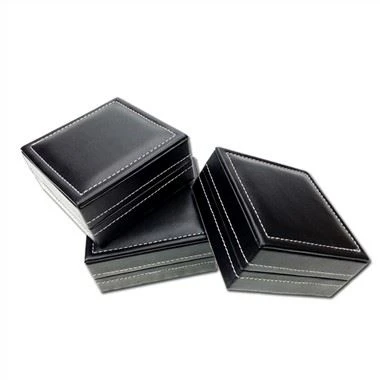
That story stuck with me. As someone who’s been supplying magnetic flip top boxes for over eight years, I’ve seen this mistake more times than I can count. People think choosing a box size is just picking the one that fits their product—there’s actually a lot more to it, from how the lid closes to how the box sits on a shelf, and even how it holds up during shipping. Today, I want to break down exactly how to choose the right size for your needs, whether you’re selling skincare, candles, jewelry, or any other product that would look great in a magnetic flip top.
Start with your core product: don’t just measure the contents first
I know it’s tempting to grab a ruler and measure the height, width, and depth of whatever you’re putting in the box. That’s important, but it’s not the whole picture. Let’s say you sell a 100ml glass candle jar. If you just measure the jar (let’s say it’s 6cm wide and 10cm tall) and order a box that’s exactly those dimensions, you’re going to run into two big problems. First, you’ll have no room for padding—glass can break during shipping, and even a small bubble wrap sheet needs an extra 0.5cm on all sides. Second, magnetic flip top boxes need a little extra space at the top of the lid to close properly. If the box is too tight, the lid won’t snap shut evenly, and the magnets won’t hold as well.
A few years back, I worked with a handmade soap maker who ordered boxes exactly the size of their 90g soap bars. They didn’t add any extra space, so when the soap was wrapped in paper, it didn’t fit. They ended up having to rewrap every single bar and send them back to our warehouse to exchange the boxes—costing them hundreds in shipping and lost time. The rule I give every new client is: add 0.3 to 0.5cm to each dimension for small, light products (like jewelry or lip balm) and 0.5 to 1cm for heavier or breakable items (like candles, glass bottles, or ceramic goods). That extra space isn’t wasted—it’s for protection, and it ensures the lid closes smoothly every time.
Think about the lid: magnet strength and clearance matter more than you think
The whole point of a magnetic flip top box is that lid. It’s not just a cover—it’s part of the unboxing experience. If the size is off, the lid will either hang over the edges too much (making the box look unprofessional) or sit too tight (so you have to force it shut, which wears out the magnets quickly).
Magnet size is tied directly to box size, too. Small boxes (like those for 10ml perfume vials, around 7cm wide) usually work best with 2 small disc magnets, each 1cm in diameter. Larger boxes, like those for a 200ml candle (10cm wide), need stronger magnets—often 2 1.5cm disc magnets, or even a thicker magnetic strip, to keep the lid closed during shipping and handling. If you order a box that’s too big for your product and use small magnets to save cost, the lid might pop open in transit. I’ve had clients tell me they lost half their shipment because boxes with lids that were too big and weak magnets popped open on a truck.
Another thing: the “flip” part of the top needs space to move. Some people measure only the base of the box and forget that the lid has to swing up past the edge. For standard flip top boxes, the lid is usually the same width as the base, so when you open it, it rests against the back of the box. But if you’re making a box that has a lid that extends a little (called a “lip”), you have to add even more space to the back so the lid doesn’t hit the product inside. I always recommend testing a sample box first—even if you measure perfectly, a 1cm difference in back clearance can make the lid feel cheap or break easily.
Shelf and display fit: your box size has to work where people will see it
I’ve walked past so many store shelves and seen beautiful products that get lost because their box is the wrong size. If you’re selling in retail stores, there are standard shelf dimensions to consider. Most retail shelves are 30cm deep, and the space between shelf levels is 15cm. If your box is too tall, it will hang over the front of the shelf and block the product next to it. If it’s too wide, it won’t fit in a standard retail display, and the store might not take your product at all.
I had a client who sold luxury face masks and ordered boxes that were 12cm wide, thinking they looked more premium. But most beauty display trays are 10cm wide, so those boxes had to be placed side by side with a gap between them—wasting shelf space, and the store told her they could only fit half as many units as they planned. She ended up switching to 10cm wide boxes, and her sales went up because her products fit better in the store.
Even if you’re selling online, display matters. When customers post unboxing photos on Instagram or TikTok, they want their box to look proportional to the product. A tiny ring in a huge box looks like you’re overpacking, and a huge candle in a tiny box looks cramped. The right size makes your product look balanced, and that’s what gets people sharing and buying more.
Shipping and packaging cost: bigger boxes mean higher bills, every time
This is one of the biggest mistakes new business owners make. They pick a box that’s just the right size for their product, but it’s too big, so they have to fill the extra space with bubble wrap or tissue paper. Not only does that add time to your packing process, but it also increases your shipping cost. Most courier services charge based on dimensional weight, which is calculated by multiplying the length, width, and height of the package. A box that’s 15cm wide instead of 10cm might add $2 to $5 to every shipping label—add that up over 1000 orders, and that’s $2000 to $5000 in extra cost.
I work with a lot of small e-commerce brands, and I always tell them: the smallest possible box that still fits your product and padding is better. Last year, a client sold custom playing cards. They originally ordered boxes that were 10cm wide, just a little bigger than the cards themselves. But when they added padding for shipping, they had to use bubble wrap that made the total size 11cm. They swapped to a box that’s 10.5cm wide, so the padding fit perfectly inside without extra space. Their dimensional weight dropped by 15%, and they saved over $1200 in shipping in the first three months. It’s a small change, but it adds up fast.
How to test sizes without wasting money on wrong orders
Now, I know what you’re thinking: this sounds like a lot, and I don’t want to order 100 boxes that don’t fit. That’s why at my company, we offer free sample kits for every size of magnetic flip top box we make. Here’s how to use them:
First, take your product and the padding you plan to use (whether that’s bubble wrap, tissue paper, or foam inserts) and put them together. Then, hold them loosely in your hand to get the total size you need. That’s the size you should test.
Second, order 3-5 sample boxes in the size you think works. Don’t buy 1000 right away. Put your product and padding inside, close the lid, and check three things: does the lid snap shut all the way without forcing it? Does the lid hang over more than 0.2cm on any side? Does the lid open smoothly and rest evenly on the back, without hitting your product?
Third, test it with shipping. If you can, pack the sample like you would for a real order, drop it off at a courier, and ask them to ship it to a friend. When it arrives, check if the lid is still closed, if the product is undamaged, and how the box looks on a standard shelf. I do this with every new client’s product, even if we measure perfectly, because nothing beats real-world testing.
Special cases: what if your product is not a standard shape?
Not every product is a rectangle, of course. I’ve worked with clients selling round candles, oval soaps, even irregularly shaped jewelry. For non-standard shapes, you have two options: either get a custom-sized box, or use a standard box with a custom insert made of foam or cardboard.
Custom boxes are great, but they cost more upfront. A standard box might cost $0.50 each for 1000 units, while a custom box can be $1.50 each or more. The tradeoff is that it fits your product perfectly. For irregular products, I usually recommend custom boxes if you’re ordering 500 units or more—smaller orders might be better off with standard boxes and inserts, which are cheaper for smaller quantities.
For round products like candles, a square box is usually fine, but make sure the diameter of the candle is at least 1cm smaller than the box width so it doesn’t rattle inside. I had a candle maker who bought round boxes for their 9cm diameter candles, and when we tested them, the candle bounced around and scratched the glass. We switched to square boxes that were 10cm wide, and added a small foam circle in the bottom to hold the candle in place. No more scratches, and the lid closed perfectly.
Final thought: it’s not just size—it’s what the size says about your brand
At the end of the day, the right magnetic flip top box size isn’t just about fit or cost. It’s about what your brand tells customers when they hold it. A box that’s too small feels rushed, too big feels wasteful, and one that’s just right feels intentional. When customers open a box that fits their product perfectly, with a lid that snaps shut crisply, they know you care about details—and that makes them more likely to buy from you again, and tell their friends.

The Toronto skincare owner I mentioned at the start? She followed my advice, ordered 5 sample boxes, tested them with her 15ml serums, and ended up going with a box that was 8cm wide by 5cm tall (adding 0.4cm to each dimension for padding). She told me later that her unboxing reviews went up 20% after she switched. “I didn’t realize how much a little extra space would make it feel more premium,” she wrote. “Now every order feels like a little gift, not just a product.”
Paper Box If you’re ready to find the right magnetic flip top box size for your product, the best way is to start with your exact needs, not the size you think you should use. We can walk you through measuring your product, testing samples, and even advise on the best size for your budget and shipping needs. Just reach out, and we’ll help you pick the size that works for you.
References
- Packaging Digest. (2022). "Dimensional Weight: How it Impacts E-Commerce Shipping Costs."
- The Balance Small Business. (2023). "How to Choose the Right Product Packaging Size."
- National Retail Federation. (2021). "Shelf Standards for Retail Merchandising."
- Flexible Packaging Association. (2022). "Product Protection in Shipping Packaging."
Humen Hengyue Paper Products Factory
As one of the most professional magnetic flip top box manufacturers and suppliers in China, we offer a wide range of products with superior quality. We warmly welcome you to buy premium magnetic flip top box at competitive price from our factory. If you have any enquiry about free sample, please feel free to email us.
Address: No.21, Lane 5, Xipan Road, Dongfeng Industrial Zone, Humen Town, Dongguan City.
E-mail: joe@hengyuanprinting.com
WebSite: https://www.hengyueprinting.com/
