If you’ve ever stood near a busy refueling station or watched a fleet of public transit buses pull up to pump in compressed natural gas (CNG) instead of gasoline, you’ve probably wondered about the flexible, heavy-duty hoses that connect those pumps to the vehicle’s fuel tanks. As a CNG hose supplier that’s been working with fleet operators, refueling station builders, and industrial plant managers for over a decade, I get asked this question all the time: What exactly is a CNG hose assembly? It’s not just a regular rubber hose. It’s a precision-built component that’s critical to keeping fuel flowing safely, reliably, and efficiently under some of the most demanding pressure conditions you can imagine. Let me break this down so you understand exactly what makes these assemblies different, why they matter, and how we build ours to outperform the competition. CNG Hose
First, let’s start with the basics: CNG is natural gas that’s been compressed to high pressure—usually between 2,000 and 3,600 pounds per square inch (psi) for most on-road vehicles and refueling station applications. That pressure is non-negotiable; compressing natural gas to that density is what allows a vehicle to travel the same distance as a gasoline-powered car without carrying a huge, bulky tank. But that high pressure puts enormous strain on every part of the system, and the hose assembly is the link between the high-pressure pump and the vehicle’s fuel tank, or between bulk storage and a refueling point. A regular garden hose or even a standard industrial air hose won’t come close to handling that kind of pressure, which is why CNG hose assemblies are engineered to exacting standards.
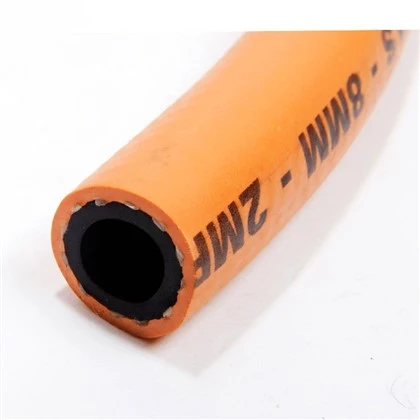
What goes into a CNG hose assembly? At its core, it’s a flexible hose core, reinforced layers, a protective outer cover, and precision fittings that crimp or bond to every end of the hose. Let’s dive into each part, because cutting corners on any of these components is a recipe for failure.
The innermost layer, the part that touches the CNG directly, is called the liner. This has to be made of a material that’s resistant to natural gas permeation, meaning the gas can’t seep through the walls of the hose. If gas permeates through, it’s not just a safety risk—you’re losing fuel, which cuts into operating costs for fleets. We use a high-density polyethylene (HDPE) liner for most of our standard assemblies, but for applications that deal with higher concentrations of impurities in the natural gas, we also offer thermoplastic liners like nylon 12, which is even more resistant to permeation and can handle slightly higher temperatures. That’s important because when a hose is in use, it can get hot—from sitting in the sun at a refueling station, from being near hot engine parts on a vehicle, or from the compression process itself. The liner has to stay flexible and intact across a temperature range that usually spans from -40°F all the way up to 180°F, so it doesn’t crack or become brittle in cold weather or melt in heat.
Next, the reinforcement layer. This is the part that takes on the high pressure. A CNG hose operating at 3,000 psi needs to hold up to more than twice that when it’s being filled, right? That means the reinforcement has to be strong, durable, and resistant to fatigue from repeated pressure cycles. Most quality CNG hose assemblies use braided steel or aramid fiber reinforcement, but not all reinforcement is the same. We use high-tensile steel wire braids, wound in two or four layers depending on the pressure rating of the assembly. Aramid fiber (the same material used in bulletproof vests) is lighter than steel, so it’s popular for on-vehicle assemblies where weight matters for fuel efficiency, but steel braids are non-negotiable for refueling station hoses that are exposed to more physical abuse, like being dragged across concrete or hit by equipment. The reinforcement is wrapped tightly around the liner, and sometimes a intermediate layer of plastic or rubber is added between the liner and the reinforcement to keep the steel from rubbing against the liner and causing damage over time.
Then there’s the outer cover. This is the first line of defense against external damage, and it has to be tough. CNG hose assemblies are used in harsh environments: refueling stations in desert heat, fleet depots in snowy, icy conditions, industrial sites with chemicals or debris flying around. The outer cover has to resist abrasion, chemicals, UV rays, and ozone. Most of our standard covers are made of a synthetic rubber called chlorinated polyethylene (CPE), which is far more abrasion-resistant than standard rubber and holds up well to UV exposure, so a hose sitting outside for years won’t crack or degrade. For applications that need extra resistance to chemicals, we also offer polyurethane covers, which are even more durable in industrial settings. The cover also has to be flexible enough to bend easily around refueling points or vehicle undercarriages, so it doesn’t kink or crack when it’s in use.
Last, but definitely not least, are the end fittings. These are the parts that connect the hose to the pump, tank, or other components, and they have to be precisely matched to the hose to prevent leaks. A bad fitting is one of the most common causes of CNG hose failures, because even a tiny gap or a poorly crimped connection can lead to gas seepage or a blowout. We use brass or steel fittings, depending on the application, and they’re either crimped to the hose (the most reliable method for high-pressure assemblies) or bonded with hydraulic adhesive. Every fitting is machined to exact tolerances, so it seals perfectly with the hose liner and reinforcement. We also test every assembly after it’s built to make sure the fittings aren’t loose, and we check for leaks with a pressure test that’s usually 1.5 times the maximum operating pressure of the hose. That means a 3,000 psi rated hose gets tested at 4,500 psi to make sure it can handle real-world conditions.
Now, you might be wondering: how do CNG hose assemblies differ from other high-pressure hoses? Let’s compare them to something like a hydraulic hose, which is another common high-pressure component. Hydraulic hoses are built to hold pressure, but they’re usually designed to handle oil or other hydraulic fluids, not natural gas. Hydraulic hose liners often aren’t resistant to gas permeation, which means they can seep gas over time, creating a safety hazard. Also, CNG hose assemblies have to be certified to specific industry standards, which hydraulic hoses aren’t. That’s a big point I want to emphasize: not all CNG hoses are created equal, and using an uncertified or wrong hose is a bad idea.
What standards are we talking about? The main ones for CNG hose assemblies are from organizations like the International Organization for Standardization (ISO), the American National Standards Institute (ANSI), and the Compressed Gas Association (CGA). For example, ISO 14467 sets standards for CNG hoses for vehicle refueling, and ANSI/CSA NGV.3 is the standard for natural gas vehicle fuel systems. All of the CNG hose assemblies we build are third-party tested and certified to these standards, because we know that our customers rely on these hoses to keep their operations running and their employees safe. I’ve seen too many cases where a fleet manager tried to save a few bucks by using a generic high-pressure hose, and it failed a few months later, leading to downtime, repair costs, and even safety incidents. The long-term cost of using a cheap, uncertified hose is way higher than investing in a quality assembly built to standards.
Another thing that sets CNG hose assemblies apart is their design for specific use cases. There are two main types of CNG hose assemblies: those for refueling stations, and those for on-vehicle use. Refueling station hoses are usually longer, thicker, and more durable, because they’re handled more often—flexing as vehicles pull up, being dragged, exposed to the elements. They typically have pressure ratings between 2,000 and 3,600 psi, and some even have a protective inner steel wire layer to prevent punctures from debris. On-vehicle CNG hoses are shorter, lighter, and more flexible, because they’re routed under the vehicle or between the fuel tank and engine. They have to withstand vibration from driving, temperature changes, and pressure cycles from refueling and using the gas. We even build specialized assemblies for bulk CNG transport, for industrial equipment like forklifts that run on CNG, and for backup power generators that use CNG. Each of these has different requirements, and we customize our assemblies to meet those needs.
As a CNG hose supplier, we also offer customization options, because every customer has unique needs. Some fleet operators need hoses with specific lengths to reach their vehicle’s tanks. Some refueling stations need swivel fittings so the hose can rotate as a vehicle pulls away, which reduces strain on the assembly and makes refueling faster. We can add end caps to protect the fittings when a hose is in storage, or mark hoses with specific pressure ratings or serial numbers for traceability—important for fleet maintenance programs that track hose replacement schedules.
I want to talk a little about safety too, because that’s the biggest reason CNG hose assemblies matter so much. Natural gas is highly flammable, and when it’s compressed to high pressure, a leak can be extremely dangerous. A properly built CNG hose assembly is designed to prevent leaks, resist ruptures, and handle the repeated pressure cycles that come with daily use. But even the best assemblies need regular maintenance. We always advise our customers to inspect their hoses every three to six months for signs of wear: cracks in the outer cover, bulges in the hose body, loose or corroded fittings, or any discoloration. If you see any of those signs, replace the hose immediately. CNG hoses have a finite lifespan—usually between 5 and 10 years, depending on use and environment—so it’s important to follow the manufacturer’s recommended replacement schedule, not just wait for a visible failure.
Let me give you an example of why this matters. A few years ago, I worked with a mid-sized transit fleet that had been using cheap, uncertified CNG hoses for their buses. They were saving a few dollars per hose, but after 18 months, three of the hoses developed small cracks in the outer cover, leading to gas seepage. One of the hoses was near a hot engine compartment, and the seeping gas ignited, causing a small fire that damaged the bus. The total cost of the fire was over $100,000 in repairs, plus downtime while the bus was out of service, not to mention the risk to the drivers. When they switched to our certified CNG hose assemblies, built to ISO standards, they haven’t had a single incident in five years. That’s the difference between a generic part and a quality, purpose-built assembly.
If you’re a fleet operator, refueling station builder, or industrial manager looking to replace or upgrade your CNG hose assemblies, you need to work with a supplier that understands the unique requirements of CNG applications. We don’t just sell hoses—we provide solutions tailored to your specific use case. We can help you choose the right pressure rating, length, fittings, and materials to match your vehicles or refueling setup, and we offer competitive pricing without cutting corners on safety or quality. Our team has years of experience in the CNG industry, so we can answer any questions you have about certification, maintenance, or customization.
Don’t take chances with your operations or safety. If you’re ready to discuss your CNG hose needs, reach out to our team to connect and learn more about how our assemblies can keep your business running smoothly and safely.
References
Fiber Hydraulic Hose Compressed Gas Association. (2020). Standard for Compressed Natural Gas Vehicle Refueling Hose Assemblies.
International Organization for Standardization. (2018). ISO 14467: Road vehicles — Compressed natural gas (CNG) refuelling connector systems.
American National Standards Institute. (2021). ANSI/CSA NGV.3: Natural Gas Vehicle Fuel Systems Code.
Ningbo Haidu Auto Parts Co., Ltd.
As one of the most professional cng hose manufacturers and suppliers in China, we’re featured by cheap products and good service. Please rest assured to buy durable cng hose at competitive price from our factory. Also, OEM service is available.
Address: No21 zhoujialupeng,Zhushan Village,Lizhousub-district Yuyao City.Ningbo City,Zhejiang Province
E-mail: sale6@cnsiliconehose.com
WebSite: https://www.cnsiliconehose.com/
