If you’re deep in the market for an aluminum die casting mold manufacturer, you already know this choice isn’t like picking a random supplier for office supplies—mess it up, and you’ll deal with delayed part runs, sky-high rework costs, or molds that wear out after 10,000 uses instead of 100,000. As someone who’s been on both sides (I’ve run mold projects as a product engineer, and now I work directly with a manufacturer that specializes in aluminum die casting molds), I’ve seen way too many people skip the nitty-gritty checks and end up regretting it. Let’s break down what actually matters, no industry jargon overload, just the stuff that’ll save you time and money. Aluminum Die Casting Mold
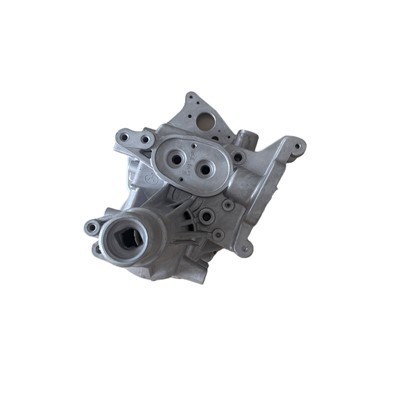
First off, stop chasing the lowest quote. I get it—budgets are tight, especially when you’re launching a new product and every dollar feels like it counts. But aluminum die casting molds aren’t something you cheap out on. A mold made with 100,000 PSI steel for $2,000 is way better than one with 50,000 PSI steel for $1,200, even if the initial cost is double. Why? Lower tensile strength means it’ll crack during the first high-volume run, and you’ll waste weeks waiting for a replacement on top of losing production days. I once watched a client go with the $1,200 mold for their automotive bracket part; they ended up paying three times that in rework and mold replacements within six months. Always ask: what’s the tensile strength of the mold steel they use? For aluminum, you want H13 tool steel at minimum—ask if they use pre-hardened or vacuum-remelted H13, because the latter resists heat checking way better. That’s the difference between a mold that lasts 50,000 shots and one that lasts 200,000.
Next, check their actual production setup, not just their website’s “state-of-the-art factory” blurb. A lot of suppliers will post photos of a fancy CNC machine and call themselves experts, but if that CNC is only for small parts, they can’t handle your 20-inch structural component mold. I always tell people to ask for a quick virtual tour (most manufacturers will do a 15-minute Zoom walkthrough if you’re serious) or, if you’re local, swing by unannounced. Here’s what to look for: do they have dedicated aluminum die casting mold machining, polishing, and heat treatment bays? Heat treatment is non-negotiable—if they farm that out to a third party without verifying the heat treater’s credentials, your mold will warp after the first few runs. Also, ask what quality control steps they have during machining. Do they use coordinate measuring machines (CMMs) to check mold cavity tolerances? For aluminum die cast parts, you need tolerances within 0.005 inches, and if the mold’s cavity is off by just a hair, your parts will have flash or be too small, leading to assembly issues later.
Then, talk about their design experience, specifically with aluminum, not just general plastic mold making. Aluminum reacts differently to the mold than plastic—it shrinks at a different rate, and it’s way more corrosive if the mold surface isn’t treated right. A plastic mold maker won’t know that they need to add slight draft angles for aluminum or that certain part geometries will cause hot spots (which lead to defects like shrinkage porosity). Ask them to share a case study of an aluminum mold they made for a part similar to yours. If they can’t point to a project with your part type (say, automotive underhood parts, consumer electronics housings, or industrial hardware), that’s a red flag. Last year, a client of mine was working on a smart speaker housing; a plastic mold supplier quoted 2 weeks for the mold design, but when they switched to us, we took 4 weeks because we added gating adjustments specifically for aluminum to avoid sink marks on the speaker’s curved face. It took a bit longer, but their final parts had zero sink issues, whereas the plastic mold maker’s design had a 15% defect rate.
Another big one: communication and responsiveness. You don’t want to be the client who emails a question at 3 PM on Friday and gets a response the following Tuesday. Aluminum mold projects have tight timelines, and a 2-day delay from a supplier can push your product launch back a month. How do you test this before committing? Send a couple of pre-quote questions—ask about lead times for a mold of your size, or if they can handle a last-minute design tweak. If they take more than 24 hours to reply (excluding weekends and holidays) with a vague answer like “we’ll get back to you soon,” that’s not the partner you want. A good mold manufacturer will assign a dedicated project manager to your account, not just a sales rep who disappears after the quote is signed. We have a rule here: any non-urgent question gets a reply within 1 business day, and urgent ones (like a mold issue that’s halting production) get a reply within 2 hours. It’s saved so many of our clients from launch delays.
Don’t sleep on post-mold support either. Once your mold is delivered, you’ll need maintenance—like polishing a cavity that’s showing wear, or replacing ejector pins that break. Some suppliers will charge you an arm and a leg for these services, or act like you have to send the entire mold back (which costs shipping and downtime). Ask their post-delivery process: do they offer on-site mold repair if you’re in North America or Europe? Do they stock spare parts (ejector pins, bushings) for common mold components? Our company, for example, keeps a 2-week stock of spare parts, and we offer mobile repair services for clients within 500 miles of our facility. Last quarter, a client’s mold had a broken ejector pin mid-run; we got a tech there in 24 hours, fixed it on the spot, and they lost less than 100 parts instead of thousands. That’s the kind of support that makes a good supplier great.
Wait, let’s touch on certifications too—though don’t fixate on every random certification out there. ISO 9001 is a baseline, it means they have a consistent quality management system. If your part is for a regulated industry like automotive or medical, ask if they have IATF 16949 or ISO 13485. But skip the “industry excellence” awards that you’ve never heard of; those are often just marketing. For example, if you’re making a part for a Tesla supplier, IATF 16949 is non-negotiable because it’s required for their components, so your mold supplier needs that to meet their standards.
Now, the real test: ask for a sample mold run. A lot of suppliers will send you a quote, but not let you test a small mold first. If you’re ordering a large, high-value mold (for example, a structural car part that costs $10k+), ask them to make a prototype mold (even if it’s a smaller version) to test the aluminum casting process. Or, if it’s a smaller part, ask for a test run of 50-100 parts to check for defects. We do this all the time for new clients; we’ll send a 100-part test run for a small fee so they can see the quality before committing to a full production mold. Last year, a client almost signed with a supplier that quoted $5k for a toy housing mold, but when we offered a test run, the test parts had major flash and dimensional inconsistencies. They ended up going with us, and we fixed the design issues for half the cost of what the first supplier would have charged for rework.
I should also mention hidden costs that people forget to ask about. Some suppliers will quote you a low price, but then add fees for mold testing, tooling modifications, or even shipping the mold to your facility. Ask the total all-in cost: does it include design, machining, heat treatment, testing, and shipping? For example, one client got a quote of $1,800 for a mold, but the fine print said testing would add $500, heat treatment another $300, so the final cost was $2,600—almost the same as the quote we gave them for $2,500 all-in. Always clarify what’s included in the price, no surprises.
At the end of the day, choosing the right aluminum die casting mold manufacturer is about balancing cost, quality, and support. You don’t need the fanciest factory or the most expensive quote, but you do need a supplier that knows aluminum molds inside and out, communicates clearly, and has your back long after the mold is delivered. If you’re currently scouting for a manufacturer, feel free to reach out to discuss your project—whether it’s a small consumer part or a large industrial component, we can walk you through the process, answer your questions, and help you get a mold that works for your budget and timeline.
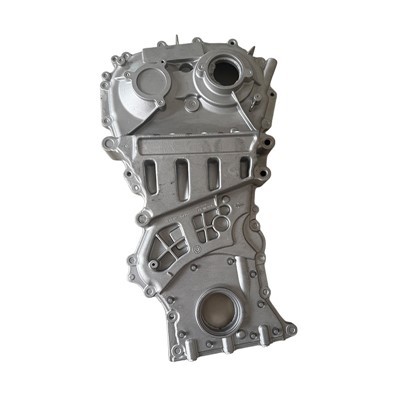
Now, here are the key points to recap: skip the lowest quote, prioritize H13 tool steel and proper heat treatment, check their actual production setup, verify their aluminum-specific design experience, test their communication skills, ask about post-delivery support, confirm necessary certifications, request a test run, and watch for hidden costs. Take your time here—this choice will impact your product’s quality, launch timeline, and bottom line for years.
Die Casting Mold References:
- Die Casting Engineering Society. (2022). Best Practices for Aluminum Die Cast Mold Design and Manufacturing.
- International Organization for Standardization. (2019). ISO 9001: Quality Management Systems Requirements.
- Automotive Industry Action Group. (2021). IATF 16949: Automotive Quality Management System Standard.
- Tool Steel Institute. (2020). Guide to H13 Tool Steel for Die Casting Molds.
- Society of Manufacturing Engineers. (2023. Post-Production Support for Die Casting Molds: Cost and Efficiency Analysis.
Suzhou Ruide Die-Casting Mold Co., Ltd.
As one of the leading aluminum die casting mold manufacturers and suppliers in China, we warmly welcome you to buy durable aluminum die casting mold made in China here from our factory. All customized products are with high quality and competitive price. Contact us for pricelist.
Address: No.2, Wanchen Road, Huayang Village, Wangting Town, Xiangcheng District, Suzhou City, Jiangsu Province
E-mail: mia@cnrdmj.com.cn
WebSite: https://www.cnrdmold.com/
