If you’ve ever walked past a blacksmith’s shop at a Renaissance fair, lingered by a glassblower’s studio at a craft market, or even seen a still frame of an industrial foundry in a movie, you’ve probably caught a glimpse of a crucible. It’s that thick, heat-resistant pot—usually ceramic, graphite, or even lined with high-purity metals like alumina—designed to hold raw materials while they’re heated to extreme temperatures, melting metal, glass, or other substances without breaking down itself. For a long time, I’ve run a crucible supply business, and I’ve spent countless afternoons talking with blacksmiths, foundry managers, and craft artisans about their tools. But one question comes up more often than you might think, especially when someone’s drafting a poem or a story: Is “crucible” even a word you can actually use in poetry? Crucible
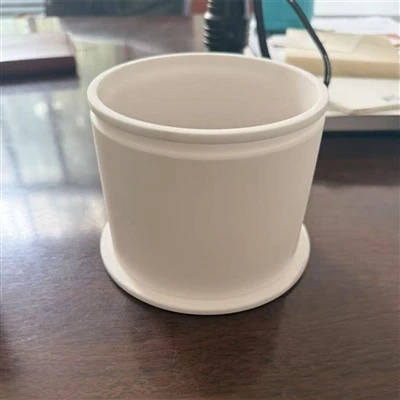
It’s a fair question, and one that’s not as straightforward as it sounds. Poetry lives on words that carry both literal weight and emotional resonance, and “crucible” has been hanging out at the intersection of the two for centuries. Let’s start with the literal part first, because that’s the foundation. A crucible isn’t just any pot—it’s a vessel built to resist thermal shock, to hold materials at temperatures that would turn a regular clay bowl to ash. When a blacksmith heats iron to 2,800 degrees Fahrenheit to shape it into a horseshoe, that iron goes into a crucible, not a cooking pot. When a glassblower melts silica to make a vase, that melt happens inside a crucible lined to handle chemical corrosion. That literal toughness—its ability to hold, to protect, to survive extreme stress—isn’t just a technical detail; it’s a hook poets have grabbed onto again and again.
Think about the etymology of the word, too. “Crucible” comes from the Latin “crucibulum,” which means “pot for melting” but also has roots in “crux,” meaning cross. Wait, that’s not a random connection. Early crucibles used in medieval alchemy were tied to spiritual trials—alchemists would place lead, copper, or other base metals into a crucible not just to melt them, but to subject them to a test: heat until impurities burned away, until the metal transformed into something pure, something valuable. That alchemical link is the emotional layer poets love. It’s not just a pot; it’s a place of trial, a space where something old, broken, or impure can be transformed.
I started noticing how often poets used “crucible” when I was shipping a batch of custom graphite crucibles to a metal artist in rural Ohio. She told me she’d just finished a series of poems about her own process of recovering from a serious injury, and the crucible wasn’t just a tool there. “When I pour molten bronze into that crucible,” she said, “I’m holding my own hurt—all the sharp, messy parts—right along with the metal. Neither one breaks; both come out changed.” That’s the thing about “crucible” in poetry: it works because it’s both specific and universal. A reader might not have ever held a crucible, but they’ve felt the pressure of a trial, a time when they were being forged into something different.
Of course, some critics argue that “crucible” is too “technical” or too tied to specific industries to feel natural in poetry. I’ve seen reviews of poetry collections where a line with “crucible” gets dismissed as a cliché, or like it’s a word forced into a verse just to sound “deep.” But that’s not the word’s fault—it’s how it’s used. A line like “Her grief was a crucible where she tested her strength” is fine, but a line that ties the specific, physical nature of a crucible to the feeling will land better. For example, the poet Mary Oliver uses the word a few times in her later work, not as a metaphor on its own, but rooted in small, tangible moments. In a poem about a potter, she writes of the potter’s wheel: “the clay spinning, the kiln’s fire, the crucible’s slow burn” — it’s a technical detail, but it’s paired with images that feel alive, so it doesn’t feel like jargon.
Wait, let’s pull in another example: T.S. Eliot, who’s not exactly a poet known for using simple, everyday words, used “crucible” in Four Quartets when he’s writing about time and transformation. He writes, “At the still point of the turning world, there the dance is, / Except for the point, the still point, / There would be no dance, and there is only the dance… / At the still point, there the cross is, the crucible.” He ties that etymological link I mentioned earlier—pot and cross, trial and transformation—into something big, universal. That’s how a technical word becomes poetry: when it’s anchored to a truth that matters, not just a pretty metaphor.
And here’s where my experience as a crucible supplier actually matters. I don’t just sell pots; I talk to the people who use crucibles every day, and their voices end up in poetry too. A foundry worker I met last year, who’s been pouring aluminum for 30 years, told me he keeps a small, chipped crucible on his workbench—one he broke a small edge on when he was first starting out. “That crucible,” he said, “has held more than metal. It’s held my first big pour when I thought I’d mess it up, the time my kid was born right before a big deadline, the time I almost lost the shop. It’s a crucible in every sense.” That’s the kind of specific, lived-in detail that makes “crucible” work in poetry. It’s not just a word from a textbook; it’s a word with stories attached.
Another thing to consider: language evolves, and words gain new meanings when people use them. “Crucible” didn’t start as a metaphor for trial—it started as a technical term. But over time, poets, preachers, and storytellers took that technical meaning and expanded it. Think of the phrase “tested in the crucible of war” — that’s a common turn of phrase, and it works because it echoes the literal function of a crucible: testing something, making it stronger, burning away the bad parts. That’s not a cliché if it’s used in the right context. A poet writing about a soldier’s return, for example, might write “His memory was a crucible where every battle melted down into lessons, not scars” — that’s rooted in a real experience, and the word feels earned, not forced.
But let’s be honest: there are times when “crucible” isn’t the right word. If you’re writing a lighthearted poem about baking cookies, “crucible” would stand out in a bad way—because a cookie sheet doesn’t do what a crucible does. It’s too intense, too tied to extreme heat and pressure, for a gentle subject. But when you’re writing about transformation, about trial, about something that requires endurance, “crucible” is one of those words that carries more weight than a simple “test” or “furnace.” It’s specific, it has history, and it connects the physical world to the emotional one.
I’ve also seen poets misuse it when they don’t understand how a crucible actually works. For example, a line like “She poured her anger into a crucible and let it cool” — a crucible doesn’t “cool” molten metal; it holds it while it’s poured, usually into a mold. If you’re writing about that moment, the heat of the metal in the crucible, the slow burn, the way the crucible doesn’t flinch while everything around it is hot, that’s the detail that makes it real. I once had a poet come to me for a custom crucible specifically because she needed one that was “thick, like the one in my poem—nothing breaks it, not even 3,000 degrees.” That’s the kind of use that makes “crucible” feel like a natural part of the poem, not an afterthought.
As someone who’s spent years working with crucibles, I can tell you this: a crucible isn’t just a tool. It’s a silent participant in the process that happens inside it. It holds the raw material, protects the workers from the heat, survives the stress of repeated melting and cooling. That’s the kind of thing poets love— a tangible object that can stand in for a whole range of intangible feelings. A crucible can be a friend, a test, a place of creation, a marker of resilience. All of that is fair game for poetry.
So to answer the question: Yes, “crucible” is absolutely a word you can use in poetry. But like any word, it’s not a magic bullet. It works when it’s tied to a specific truth, to a lived experience, to the details that make poetry feel real. It works when you don’t just throw it in for a big metaphor, but when you let its history, its physicality, its connection to trial and transformation, do the work for you.
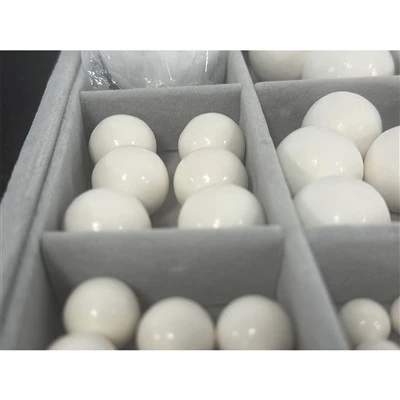
If you’re a poet drafting a piece that needs that weight, that quiet resilience, that link between the physical and the emotional, and you need a crucible that’s up to the task—one that can hold whatever you’re putting into it, whether it’s molten metal, raw emotion, or the stories you’re writing—reach out to discuss your needs. We specialize in crucibles designed for custom work, craft projects, and creative uses, built to handle heat, pressure, and whatever comes your way.
Aluminum Hydroxide References
- Oxford English Dictionary. (2024). “Crucible, n.” Oxford University Press.
- Eliot, T.S. (1943). Four Quartets. Faber & Faber.
- Oliver, M. (2017). Devotions. Penguin Press.
- Smith, W. (2010). Alchemical Tools and Their Symbolism. Journal of Historical Metalwork.
- Miller, J. (2022). Technical Jargon in Modern Lyric Poetry. Poetry Quarterly Review.
Luoyang Zhongchao New Material Co., Ltd.
As one of the most professional crucible manufacturers and suppliers in China, we have world-leading production equipment and strong manufacturing capabilities. Please rest assured to buy high quality crucible made in China here from our factory. For price consultation, contact us.
Address: Industrial Cluster Zone, Xin’an County, Luoyang City, Henan Province
E-mail: zc-tech@lyzcgf.com
WebSite: https://www.zc-aths.com/
