If you’ve ever trained for a marathon, you know that medal is way more than a hunk of metal—it’s the payoff for 26.2 miles of blisters, 4 a.m. runs, and the time you skipped happy hour to log miles. As someone who’s been supplying marathon medals for over a decade, I’ve seen firsthand what happens when QC (quality control) is an afterthought: a rusted edge, a faded logo, or a finish that chips after the first spin in a medal holder can kill a runner’s whole post-race high. So let’s pull back the curtain on the actual measures we use to make sure every medal that leaves our shop doesn’t just look good—stands up to being carried, displayed, and treasured for years. Marathon Medals

First, let’s start with the basics: the core material check, because cutting corners here is how medals end up falling apart. Most marathon medals are made from zinc alloy, right? It’s affordable, malleable enough for intricate designs, and durable if sourced right. But not all zinc is equal. When we get a batch from our smelter, we don’t just sign off on the invoice—we do a quick density test on every 50th piece of raw metal using a portable meter. I remember a few years back, a new supplier sent a batch that was 20% leaded zinc, a cheap shortcut that would’ve chipped in a year and been toxic too. We caught it before production even started. Now, every metal sheet or ingot gets tested for purity, plus a visual check for burrs or uneven thickness. A medal that’s too thin? It’ll bend if a runner shoves it in a gym bag with a water bottle. That’s a rookie mistake. We aim for a minimum thickness of 3mm for 10K+, and 2.5mm for 5K, because those still need to feel like a win, not a toy.
Next up, the die and molding process, where the design gets its shape. Runners love those detailed finisher medals with engravings of race logos, bib numbers, or even a photo of the course. But if the mold isn’t calibrated right, those details will be blurry, or worse—the metal won’t fill the crevices, leaving empty spots that get caught on clothes or skin. Here, we use a CNC (computer numerical control) machine to mill every new die before it’s even used. That means no hand-carved inconsistencies, no lopsided edges. But even a perfect die can mess up if the molding temperature is off. We’ve got a dedicated temp gauge that we check mid-run every 2 hours; zinc needs to be molten at 380-420°F (193-216°C) to flow smoothly into the mold, not too hot that it bubbles, not too cold that it’s lumpy. Once the medals are pressed, we do a “feel test” with our fingers—run a nail along the edges to catch any sharp burrs, because no runner wants a medal that cuts their neck when they wear it to the post-race party. Last year, a client tried to skip this step to cut costs, and we had to rework 1,200 medals that had sharp edges. They learned their lesson, and we stuck to our QC guns.
Then comes the coating, which is where most medals get ruined—scratching, fading, or turning a weird dull gray within a few months. Marathon medals usually use plating: gold for first place, silver for second, bronze for third, or sometimes soft enamel for colorful designs. But plating thickness is non-negotiable here. We don’t just dip medals into the plating tank and call it a day. We use a magnetic gauge to check that the gold plating is at least 2 microns thick, silver 3, bronze 5. Wait, bronze needs thicker plating? Yep, because it’s more prone to tarnishing. If a medal has a matte color block, that’s soft enamel, right? We use a 2-component epoxy over the enamel to seal it—no cracking when the medal is dropped on a concrete floor. We even do a scratch test with a standard coin: drag it across the medal’s surface, and if the coating comes off, it goes back for re-plating. I’ve seen medals from other suppliers where the logo peels off after one race—total garbage. We’ve had runners message us 3 years later saying their medal still looks new, and that’s the win we care about.
Another big one is rust resistance. A lot of marathons are in rainy cities, or runners sweat through their medals right after finishing. That’s why after plating, we do a salt spray test—accelerated corrosion testing, basically. We hang 10 random medals from every production batch in a chamber that sprays a 5% salt solution at 95°F (35°C) for 48 hours. If a single spot of rust shows up before the 48 hours is done, the whole batch gets re-plated. We had a batch from 2019 that failed this test—turns out the plating tank had a trace amount of oil that made it porous. We pulled the entire 5,000 medals, replaced the plating, and sent them a week late (oops) but the client was so grateful they used us for their 2020 marathon. That’s the kind of trust you build with consistent QC.
Then there’s the finishing touches: ribbons, attachments, and packaging. I know, runners don’t think about the ribbon, but a cheap ribbon fraying before they even get home is a bummer. We test every ribbon for pull strength: pull it with 10 pounds of force, and if it breaks, we switch suppliers. We use nylon or polyester ribbons, not that cheap satin that stretches. Also, the medal attachment— the split ring or the hook that connects the medal to the ribbon. It sounds small, but if that hook is flimsy, the medal will fall off mid-run while they’re crossing the finish line. We test each ring by yanking it gently, plus check that it’s not sharp or too tight to slide onto the ribbon. For marathons with custom inserts (like bib numbers printed on the back), we use a UV-resistant ink that doesn’t smudge, and a pressure test to make sure the ink doesn’t rub off after 10 times running a towel over it.
Wait, let’s talk about random checks too—we don’t just test batches, we do random sampling throughout production. Every hour, a worker pulls 5 medals off the line, marks them with a tiny code, and we check them after the shift. No cutting corners on human checks either—machines catch consistency, but humans catch small stuff, like a logo that’s off-center or a tiny dent from the molding process. We also let clients do their own pre-shipment inspections. If they want a third party to check 10% of the batch, that’s no extra cost for us. Transparency is key here.
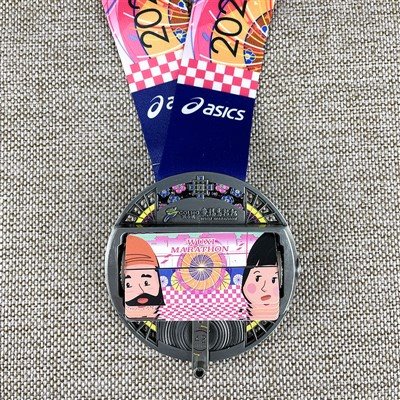
I get it, for event organizers, budgets are tight. They might want to rush production or skip a test to save a few bucks. But here’s the thing: a cheap medal that falls apart is bad PR for their marathon. A runner who gets a quality medal will post about it, tag the race, and come back next year. That’s why we stand by our QC process—we’ve had marathons that use our medals for 7+ years straight, because they know we won’t ship something that lets them down.
Martial Arts Medals If you’re an event organizer looking for medal suppliers who actually care about quality (not just cranking out as many as possible), shoot us a message. We can send samples, walk you through our full QC process, and work within your budget without cutting corners. Let’s make sure every finisher gets a medal they’ll actually keep and display, not toss in a drawer because it looks cheap.
For more details on metal corrosion resistance, this 2021 study from the Journal of Materials Engineering and Performance covers zinc alloy plating standards for commemorative medals. And the International Marathons Association’s 2020 guidelines for race finisher medals outline common QC pitfalls to watch for.
Global Art Gifts Co., Ltd.
Global Art Gifts Co., Ltd. is one of the most professional marathon medals manufacturers and suppliers in China. We are committed to providing high quality customized products with competitive price. Welcome to buy bulk durable marathon medals in stock here from our factory. Also, pricelist is available.
Address: Hushan Tech Park, Shiwan, 516127 Huizhou China
E-mail: nicole@globalartgifts.com
WebSite: https://www.globalartgift.com/
