When you walk into a room, the first things that catch your eye often aren’t the walls or the furniture—they’re the small, polished details that tie everything together. For as long as I’ve been in the decorative moulding business, customers have asked me the same question: “What’s the real difference between simple and elaborate moulding?” It’s not just about how many pieces are carved, either. Simple moulding is functional yet refined, while elaborate moulding is a story carved into wood, plaster, or resin—and choosing the right one can make or break a design. Decorative Moulding
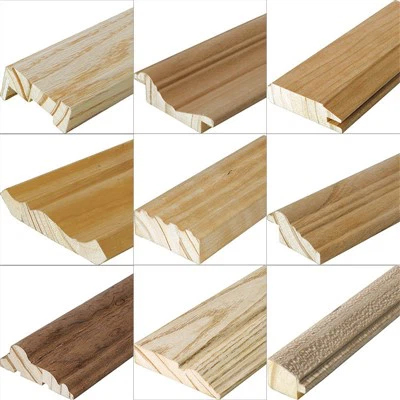
Let me start with simple moulding. This is the kind you often see in modern homes, small apartments, or historic buildings being restored with a focus on subtlety. At its core, simple decorative moulding is defined by clean lines, minimal ornamentation, and a narrow focus on function rather than flash. Most simple moulding profiles fall into two categories: the basic ones like the ovolo (a soft, quarter-circle shape) or cove (a concave curve), and the flat, straight pieces used for baseboards, casings around doors, or crown moulding that doesn’t demand attention.
When I worked on a 1950s bungalow restoration last year, the homeowner wanted to preserve the space’s mid-century charm without overwhelming the small, open floor plan. We went with 3-inch simple crown moulding: it had a single, subtle cove at the top edge, a flat central surface, and a narrow, straight lower edge that met the wall. What made it simple wasn’t that it was unfinished or cheap—we used solid pine, milled to a tight tolerance so it fit seamlessly against the ceiling and walls. The homeowner told me later that this choice let their vintage Eames chair and built-in bookshelves be the focal points, not the moulding. That’s the magic of simple moulding: it elevates a space without competing with its existing design.
The science behind simple moulding’s appeal lies in negative space. Unlike elaborate moulding, which fills every inch of its surface with detail, simple moulding leaves intentional gaps to create visual breathing room. It’s also far more versatile for spaces with low ceilings or small rooms—bulky, detailed moulding would make an 8-foot ceiling feel cramped, but a 3-inch simple crown adds just enough definition to make the transition between wall and ceiling feel intentional, not unfinished. For contractors, simple moulding is a workhorse: it’s faster to cut, install, and paint, which keeps project timelines on track and costs lower. I stock over a dozen simple moulding profiles at my warehouse because they’re the first choice for 60% of the residential and small commercial clients who walk through my door.
Now, let’s talk about elaborate decorative moulding. This is the stuff that adorns grand ballrooms, historic mansions, and upscale custom homes. Elaborate moulding is defined by dense, layered ornamentation, multiple profiles, and a focus on narrative or style-specific detail. It’s not just a functional trim piece—it’s a decorative element that adds depth, history, and personality to a space. Think of the gilded crown moulding in a French chateau, carved with scrollwork, acanthus leaves, and small rosettes, or the plaster frieze above a fireplace in a Victorian home, etched with scenes from nature or classical mythology.
I recently supplied elaborate moulding for a historic mansion renovation in the city’s downtown district. The original 1890s dining room had lost all its crown moulding in a 2010 fire, and the owner wanted to restore it to its original grandeur. We worked with a local artisan who recreated the original profile, which featured three distinct layers: a lower band carved with continuous acanthus leaves, a central band with small circular rosettes, and an upper band with curved scrollwork that wrapped around the room’s corners. Each piece was hand-carved from solid oak, sanded smooth, and finished with a hand-applied gold leaf that caught the light when the chandeliers were on. The owner told me that this moulding wasn’t just trim—it made the dining room feel like a space for celebration, a place where family gatherings and formal events felt meaningful.
The key differences between simple and elaborate moulding boil down to three core areas: detail, function, and application. Let’s break this down. First, detail: simple moulding has 1-2 profiles, with no additional ornamentation—its beauty is in its clean lines. Elaborate moulding has 3+ profiles, plus carved, molded, or etched details like leaves, scrolls, or figures. Second, function: simple moulding primarily transitions between architectural elements (wall to ceiling, wall to floor) while providing a subtle frame for doors, windows, or artwork. Elaborate moulding does that, but it also serves a decorative purpose, acting as a focal point that draws the eye upward and adds visual weight to a space. Third, application: simple moulding works in nearly any space, from tiny apartments to open-concept modern homes, especially where the goal is to keep the space feeling airy. Elaborate moulding is reserved for larger spaces with high ceilings (10 feet or more) and a design style that embraces ornate details—think Victorian, French Country, or Beaux-Arts.
Wait, but there’s a common misconception here: simple moulding doesn’t have to be cheap, and elaborate moulding isn’t always better. I’ve seen clients spend thousands on elaborate moulding in a small bedroom, and it ends up making the space feel cluttered and overwhelming. On the flip side, I’ve had customers choose a custom simple moulding profile (milled to match their home’s original trim) for a historic property, and it adds just as much character as a more ornate piece would, without feeling out of place.
Another big difference is customization. Simple moulding is mostly a standard product—we mill it in consistent sizes and profiles because it works for most spaces. You can get it in pine, MDF, or resin, and it’s easy to cut to fit any wall length. Elaborate moulding, though, is almost always custom. Most of the elaborate pieces I supply are made to order: a client will send a photo of their original trim, or a designer will share a sketch, and our team works with master artisans to replicate it. That’s why elaborate moulding costs more—each piece takes time to carve, sand, and finish, and it’s made specifically for one space.
Let’s also talk about durability. Both simple and elaborate moulding are durable when made from the right material, but simple moulding often holds up better in high-moisture areas like bathrooms or basements. MDF simple moulding, for example, is resistant to warping when painted, and its flat surface makes it easy to wipe clean. Elaborate moulding, especially hand-carved wood, needs a bit more care: the tiny crevices in the scrollwork or leaf details can trap dust and moisture, so it’s best suited for low-moisture areas like living rooms or formal dining rooms where it can be admired without much cleaning.
I’ve seen clients get stuck between the two, too. A few months ago, a designer client came to me with a renovation plan for a 12-foot ceiling living room. She loved the look of elaborate crown moulding, but she didn’t want it to feel too busy. We compromised: we used a 6-inch moulding with a simple ovolo profile, but added a single row of small, subtle rosettes every 2 feet. It’s not elaborate enough to feel overwhelming, but it adds a touch of personality that makes the room feel special. That’s the nice thing about decorative moulding—there’s no hard line between simple and elaborate. You can mix elements, adjust the size, or add small details to fit any space.
If you’re still not sure which is right for your project, here’s a quick rule of thumb: if you’re working with a space under 1,000 square feet, or a ceiling under 9 feet, go simple. It will keep the space feeling open and cohesive. If you’re working with a space over 1,500 square feet, or a ceiling over 10 feet, and your design style is ornate, elaborate moulding will elevate the space in a way simple moulding can’t. And if you’re somewhere in between, talk to me—we can create a custom profile that fits your needs.
At the end of the day, decorative moulding is all about intention. Simple moulding says “this space is thoughtful, uncluttered, and welcoming.” Elaborate moulding says “this space is grand, memorable, and full of history.” Neither is better than the other—they’re just tools, and the best choice depends on the space you’re working in.

If you’re planning a renovation, build, or restoration and want to learn more about how simple or elaborate moulding can work for your project, get in touch. Our team can help you choose the right material, profile, and finish, whether you’re looking for a standard simple baseboard or a custom hand-carved elaborate crown moulding. We’re here to make sure your details are as perfect as your main design elements.
Edge Banding References
- American Wood Council. (2021). Wood Moulding: Selection, Installation, and Maintenance Guidelines.
- National Association of Home Builders. (2020). Architectural Trim Trends for Residential Construction.
- Historic Preservation Education Foundation. (2019). Matching Historic Moulding Profiles: A Guide for Restoration.
- Woodwork Manufacturers Association of Canada. (2022). Decorative Moulding Material Standards and Specifications.
Yongkang City Dashu Decorative Materials Co., Ltd.
As one of the most professional decorative moulding manufacturers and suppliers in China, we have world-leading production equipment and strong manufacturing capabilities. Please rest assured to buy bulk customized decorative moulding at low price from our factory.
Address: No. 1199, Huajie West Avenue, Huajie Town, Yongkang City
E-mail: m13506791251@163.com
WebSite: https://www.dashutrim.com/
