If you’ve ever worked with chemical processing, natural gas treatment, pharmaceutical manufacturing, or even carbon capture projects, you know the absorption column isn’t just a tall metal cylinder—it’s the workhorse that makes or breaks separation efficiency. For as long as I’ve run an absorption column supply business, the question I get most often isn’t about column height, internal packing, or tray design: it’s about what material the column shell should actually be. Pick the wrong one, and you’re looking at premature corrosion, unplanned shutdowns, or even safety hazards. Pick the right one, and you’ve got a unit that lasts 20+ years with minimal maintenance. Absorption Column
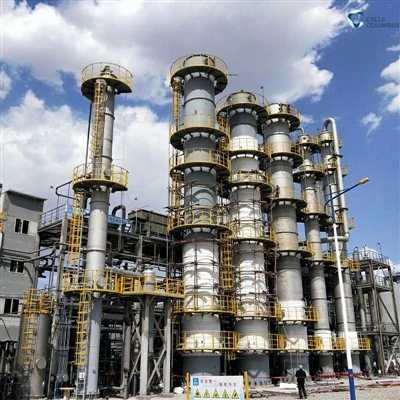
Today, I’m pulling back the curtain on how my team and I make material selections for our absorption column shells—based on 15 years of working with operators across 20+ industries, and real-world lessons from jobs gone right (and the ones that taught us never to cut corners).
First, let’s start with the non-negotiables that rule every material choice, no matter the application. Absorption columns don’t work in a vacuum: the shell has to hold up to two types of stress, usually at the same time. There’s mechanical stress—high operating pressure (anywhere from atmospheric to 300+ psi), thermal cycling that can range from sub-zero to 500°F, and the weight of the column itself plus internal components like packing or trays. Then there’s corrosive stress, the big wildcard here: the process fluid being absorbed, the solvent used to capture it, and even trace impurities in feed streams like hydrogen sulfide, hydrochloric acid, or amines can eat through material faster than you’d think. We never skip three pre-selection steps before even considering an alloy or plate.
Step one: map the full process fluid chemistry, not just the main component. I learned this early on from a 2018 natural gas treatment job. The client initially told us their solvent was monoethanolamine (MEA) at 120°F, under 150 psi, so they thought standard carbon steel would work. When we pulled their full fluid spec, we found trace amounts of 0.2% hydrochloric acid from upstream pipeline corrosion, and the MEA was cycling up to 180°F during regeneration. Standard carbon steel would have corroded through the shell in less than three years. That’s why we always ask for full compositional data, including trace impurities, operating temperature swings, and even pH levels at every stage of the process—from the inlet feed to the overhead outlet. If your solvent’s pH is consistently below 7, that’s a red flag; above 10, another. We even factor in how the solvent reacts with oxygen if there’s any air ingress into the system, because amine degradation can create more corrosive compounds you didn’t plan for.
Step two: calculate the pressure and temperature rating requirements, plus safety margins. No one builds an absorption column to operate exactly at its maximum pressure limit. We always add a 25% safety buffer for pressure, especially for systems that operate in batch mode or have sudden load fluctuations. For temperature, we look at both the maximum continuous operating temperature and the occasional peak—like when a unit starts up or a solvent regeneration cycle spikes. For example, carbon steel starts to lose its tensile strength at around 650°F, so if you’re working with regeneration temperatures above that, you’re already in a different material category. We also factor in thermal expansion: when a shell heats up and cools down repeatedly, different materials expand and contract at different rates, which can cause stress at welds or flanges. A good example here is carbon steel vs. 316L stainless steel: carbon steel has a higher thermal expansion coefficient, so if you pair a carbon steel shell with 316L internal trays, you can get warping over time. That’s a detail we flag early to avoid compatibility issues.
Step three: don’t forget about external conditions. The shell isn’t just exposed to process fluid—it’s sitting outdoors in a refinery’s salt air, or indoors in a pharmaceutical plant with high humidity, or even underground if it’s part of a natural gas storage system. Atmospheric corrosion, UV exposure if it’s not painted, and even stray electrical currents from nearby equipment can affect material choice. We always ask clients about their site conditions, including local climate, proximity to saltwater or industrial pollution, and any cathodic protection systems already in place for other process equipment.
Now, with those three basics sorted, let’s break down the most common materials we use for absorption column shells, and when to pick each one. I’ll be honest: we don’t use fancy alloys unless they’re absolutely necessary, because higher material costs translate to higher project costs for our clients. It’s all about matching the material to the job, not overengineering.
The first and most common is carbon steel. It’s the workhorse of the process industry for a reason: it’s cheap, easy to fabricate, weld, and repair, and it has excellent mechanical strength for pressure and temperature. When is carbon steel the right call? For low-corrosivity, neutral pH systems operating below 400°F, and under pressure up to 200 psi. Examples: water absorption columns, crude oil pre-treatment units, or columns for removing carbon dioxide from flue gas with simple amine blends that don’t have trace corrosive impurities. Wait—you might be thinking, “But I thought amines corrode steel?” They can, but if you have properly inhibited amines, and the pH is maintained between 8.5 and 9.5, carbon steel works perfectly. That’s why we always specify amine inhibitors as part of the project, not just the shell material. The downside of carbon steel? It rusts if not properly protected, both internally and externally. For internal protection, we usually line carbon steel shells with a glass flake epoxy or a phenolic lining when needed, to create a barrier between the steel and the process fluid. For external protection, we apply a two-part epoxy paint with zinc-rich primer, and for offshore or coastal sites, we add a cathodic protection system to extend the shell life. We had a 12-foot diameter carbon steel absorption column go into operation in 2017 for a municipal water treatment plant, and with proper lining and external coating, it’s still going strong with less than 0.1 mil of corrosion per year. That’s the kind of longevity we aim for.
Next up, stainless steel, specifically 304L and 316L. These are the go-to when carbon steel’s corrosion resistance falls short. The “L” suffix is critical here—it means low carbon content, which prevents intergranular corrosion (that’s the cracking that can happen at welds when high carbon steel is heated during welding, leaving chromium carbides that attract corrosive compounds). 304L is the more affordable option, with good corrosion resistance for mild acids, salt solutions, and organic compounds. We use 304L for absorption columns handling food-grade solvents, low-concentration acetic acid, or mild brine solutions. But when do we step up to 316L? When there’s chlorides present, higher concentrations of acids, or trace hydrogen sulfide. 316L has molybdenum added to its alloy, which makes it resistant to pitting and crevice corrosion—two of the most common failure modes for stainless steel in process applications. For example, a 2020 carbon capture project we worked on used 316L stainless steel for their absorption column shell because the MEA solvent had a small amount of chloride contamination from the feed flue gas, and operating temperatures hit 160°F. If we’d used 304L, we would have seen pitting corrosion in the shell within 5 years. We also use duplex stainless steel (like 2205) for more severe applications: higher pressure, higher chloride levels, or temperatures up to 600°F. Duplex is a mix of austenitic and ferritic stainless steel, so it has twice the strength of standard 304L or 316L, and better corrosion resistance for harsh environments. We used duplex stainless steel on a natural gas sweetening project in Alaska, where the column had to handle high hydrogen sulfide and cold ambient temperatures, and the shell needed to withstand both process corrosion and external frost heave stress. It’s more expensive upfront, but it paid for itself in reduced maintenance over 8 years so far.
Then there are the specialty alloys, which we only recommend for extreme applications. Things like Hastelloy, Inconel, or titanium. Titanium is a big one for absorption columns handling highly corrosive acids like hydrochloric or sulfuric acid at high temperatures. It’s lightweight, has excellent corrosion resistance, but it’s also 5-10 times more expensive than carbon steel, so we only use it when nothing else works. A 2019 pharmaceutical project came to us with an absorption column handling concentrated acetic acid at 250°F and pH 2—standard stainless steel would have corroded through in a year, and Hastelloy C-276 would have been extremely costly, so titanium was the perfect middle ground. Specialty alloys are also used for unique process conditions: if you’re working with solvents that cause stress corrosion cracking in stainless steel, or high-temperature gases that oxidize standard metals. But we always make sure clients understand the tradeoff: the upfront cost vs. the longer service life. For example, titanium might cost 4 times as much as carbon steel, but it can last 30+ years in that acetic acid application, vs. 5 years for stainless steel. It’s a calculation we walk through with every client, no pressure—we want them to make the best choice for their budget and long-term operations.
Wait, there are two more materials we can’t ignore, even if they’re less common for large industrial absorption columns: fiberglass-reinforced polymer (FRP) and concrete. FRP is lightweight, highly corrosion-resistant, and cheap for smaller columns. We’ve used FRP for small absorption columns for water treatment plants that handle low-concentration chlorine, and it’s worked well for 10+ years. The downside is it can’t handle high pressure (above 150 psi) or temperatures above 250°F, and it’s not as strong for large diameter columns (anything over 8 feet) because of structural limitations. Concrete absorption columns are rare, but they’re used in very large, low-pressure applications for flue gas desulfurization. They’re extremely affordable for large-scale projects, but they have to be lined with a polymer or rubber liner to prevent the corrosive flue gas from seeping into the concrete. We’ve installed concrete columns for power plant flue gas treatment, but we always warn clients about the need for regular liner inspections—if the liner cracks, the concrete will corrode from the inside out, and it’s hard to repair.
Now, I want to share a mistake we made early on, because that’s the best way to learn. Back in 2010, we had a client with a biogas upgrading project who insisted on using carbon steel for their 10-foot diameter absorption column shell, saying their MEA solvent was “standard.” We didn’t push back enough. Six years later, the column started leaking from the welds at the bottom—inspection showed that trace hydrogen sulfide in the biogas had reacted with the MEA to form a corrosive sulfide compound that caused pitting and cracking in the carbon steel. We had to replace the shell, and the client lost two weeks of production. That’s when we updated our material selection process: now we don’t just rely on the client’s “standard” solvent specs—we ask for independent lab analysis of process fluid samples, we run corrosion rate calculations for every candidate material, and we document every step so there’s no guesswork.
Another key point: material selection isn’t a one-time choice. Even after the column is built, regular inspections matter. We include inspection protocols with every column we supply, including testing wall thickness at key points, checking welds for corrosion, and monitoring pH levels of the solvent. For example, if a client’s process chemistry changes down the line—say they switch to a new solvent, or their feed stream has more impurities—we can help assess if the shell material is still suitable, or if upgrades are needed. We don’t just sell a column and disappear; we’re here for the long haul.
Let’s wrap this up with a quick cheat sheet, because I know how easy it is to get bogged down in details:
- Pick carbon steel with lining for: Low pressure (<200 psi), temp <400°F, neutral pH, low corrosion.
- Pick 316L stainless steel for: Moderate corrosion, trace chlorides or acids, temps up to 600°F.
- Pick duplex stainless steel for: High pressure, high chloride levels, harsh environments (cold, salt air).
- Pick specialty alloys (titanium, Hastelloy) for: Extreme corrosion, high temps, harsh chemicals.
- Pick FRP for: Small columns, low pressure, low temp, low corrosion.
- Pick lined concrete for: Very large, low-pressure flue gas applications.
At the end of the day, the best material for an absorption column shell is the one that balances upfront cost, long-term reliability, and compatibility with your specific process. I’ve seen columns last 30 years and others fail in 3, and the difference almost always comes down to whether the material was selected with the full picture in mind, not just the lowest price tag or the flashiest alloy.

If you’re currently planning an absorption column project, or you’re dealing with a unit that’s underperforming or showing signs of corrosion, we can help. Our team has decades of experience working across every major industry, and we’ll walk you through the material selection process step by step, no jargon, no pressure—just honest advice tailored to your project’s needs. Reach out to discuss your requirements, and we’ll put together a custom solution for you.
Wastewater Treatment System References:
- Kohl, A. L., & Nielsen, R. B. (1997). Gas Purification (5th ed.). Gulf Professional Publishing.
- Shreir, L. L., Jarman, R. A., & Burstein, G. T. (Eds.). (1994). Corrosion: Materials and Methods (3rd ed.). Butterworth-Heinemann.
- American Petroleum Institute. (2020). API 650, Welded Tanks for Oil Storage (12th ed.). API Publishing Services.
- Manufacturing Chemists Association. (2018). Material Selection Guidelines for Chemical Process Equipment. MCA Press.
- National Association of Corrosion Engineers. (2021). NACE SP0170, Corrosion Control for Absorption Columns. NACE International.
Beijing Cycle Columbus Environmental Science & Technology Co., Ltd.
Beijing Cycle Columbus Environmental Science & Technology Co., Ltd. is one of the most professional absorption column manufacturers and suppliers in China. We are committed to providing high quality customized products with competitive price. Please feel free to buy advanced absorption column made in China here from our factory. Also, quotation is available.
Address: 1201, 12/F, Tower B, Bldg 8, Guancheng Garden, Haidian District, Beijing, China
E-mail: Info@saikekanglun.com
WebSite: https://www.cycle-columbus.com/
