Hey there, T Shaped Bulbs
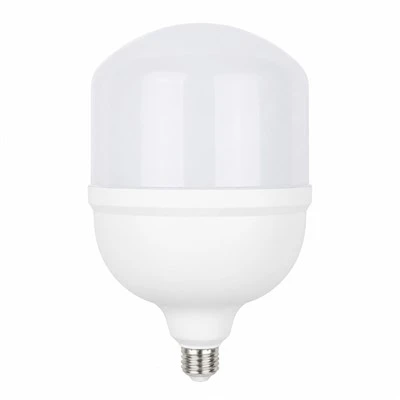
If you’ve ever stepped into a top-tier art gallery—think the ones with those jaw-dropping Renaissance masterpieces or the hyper-modern installations that make you lean in like you’re sharing a secret—you’ve probably noticed something: the lighting isn’t just bright. It’s intentional. Dim enough to keep the art (and the visitors’ eyes) from getting strained, but precise enough to make every brushstroke, every layer of a ceramic sculpture, every tiny detail in a print pop perfectly. For years, galleries relied on metal halide bulbs or old incandescents, but now more curators and gallery managers are asking: are T-shaped bulbs the right call here? And as someone who’s been supplying T-shaped bulbs for over 8 years now, I’ve fielded this question way too many times to count. Let’s break this down like we chat over a coffee, no stuffy jargon, just real talk about what works (and what doesn’t) for gallery spaces.
First, let’s get one thing straight—T-shaped bulbs aren’t just those long, skinny bulbs you used to stick in under-cabinet lights in the 90s. Wait, okay, they were once that, but today’s T-shaped bulbs are designed with purpose, and their slim, linear form is a huge part of why they’re a game-changer for galleries. Let’s start with the big one: color rendering. Art isn’t just shapes—it’s color. A Van Gogh sunflower isn’t just yellow; it’s that specific, warm golden hue that makes the whole painting glow. If your lighting messes up that color, you’re turning a $10 million masterpiece into something that looks like a cheap poster.
Here’s the science bit (I’ll keep it chill, I promise): color rendering index (CRI) is the number that tells you how accurately a light source shows an object’s true color, compared to natural sunlight. Natural sunlight is 100, right? For gallery work, you want a CRI of 90 or above—anything lower, and colors get washed out or skewed. Our top-tier T-shaped bulbs have a CRI of 95, and that’s not just a random number. I’ve had a curator from a contemporary art space tell me that they switched to our bulbs after noticing their old LED bulbs made a collection of abstract paintings by Mark Rothko look flat—you couldn’t see the subtle shift from burnt orange to deep red that was the whole point of the pieces. Once they swapped in our T-shaped bulbs, that depth came back. That’s the kind of thing that makes gallery managers pay attention.
Then there’s the way T-shaped bulbs distribute light. Their linear design means they cast light evenly, no weird hot spots or dark patches. Old round bulbs (like traditional incandescents or even some round LEDs) would create those bright circles on walls, which aren’t just distracting—they can actually damage art, especially if it’s exposed to too much concentrated light over time. Wait, damage is a big one I don’t see talked about enough. Galleries have to follow strict guidelines to prevent fading, right? UV radiation is the enemy here—sunlight and some older bulb types emit UV rays that eat away at pigments, turning blues green or yellows brown.
Our T-shaped bulbs are UV-free, and they also have a lower heat output than those old metal halides. I’ve had a gallery owner tell me that before they switched, some of their older bulbs would get so hot that a small oil painting in the same room would start to curl at the edges after a year. With T-shaped bulbs, that’s not an issue—they run cool enough that you don’t have to worry about heat-related damage to delicate artworks. That’s a huge win for long-term preservation, which is way more important than saving a few bucks on electricity short-term.
Now, let’s address the elephant in the room: performance in large spaces. A lot of people assume T-shaped bulbs are only for small under-cabinet stuff, but no—we make T-shaped bulbs in sizes up to 8 feet long, and when you mount them in linear fixtures, they cover entire gallery walls without gaps. I recently supplied a group of bulbs for a 2,000 sq ft exhibition space for a local art fair, and the curator reached out a week later saying that the lighting made the mixed-media sculptures look like they were 3D in a way no other bulb could pull off. The light wraps around the sculptures evenly, so you don’t have to adjust the angle every two minutes to make a side of a sculpture visible. That’s a time-saver for gallery staff, who are already juggling tons of tasks.
But wait, it’s not all sunshine and sunflowers. There are a few things you have to get right to make T-shaped bulbs work for galleries. First, Kelvin temperature. Kelvin (K) measures how warm or cool a light is—warm is 2700K to 3000K, cool is 5000K to 6500K. For most gallery spaces, you want something in the 3000K to 4000K range—warm enough to feel inviting, but not so warm that it makes colors look yellowish. Too cool, and everything looks harsh, like a doctor’s office. Our bulbs have adjustable Kelvin settings, so you can tweak it exactly to match the art type: 3000K for Renaissance oil paintings, 4000K for modern photography, whatever works. That flexibility is a big deal—no one wants a one-size-fits-all light when you have 10 different collections in one space.
Another thing: fixture compatibility. T-shaped bulbs are linear, so you can’t just screw them into any old round socket. But here’s the thing—galleries already use linear fixtures all the time, right? For track lighting, for wall-mounted fixtures, for recessed lighting. Our T-shaped bulbs fit into all standard linear T8 and T5 fixtures, which means you don’t have to rip out all your existing wiring to swap them in. That’s a huge upfront cost saver. I had a small community gallery reach out last year saying they were on a super tight budget for a new exhibition, and they couldn’t afford to rewire the whole space. Swapping out their old fluorescent T-bulbs (the cheap kind that gave off a weird green tint) for our high-CRI T-shaped bulbs cost them half what a full fixture replacement would have, and the difference in the art’s appearance was night and day.
Now, let’s talk about cost, because that’s always a factor. T-shaped bulbs used to be pricey, right? But with LED technology getting better and more accessible, our top T-shaped bulbs are actually comparable in long-term cost to those old metal halide bulbs. LED T-shaped bulbs last around 50,000 hours, compared to 10,000 hours for metal halides. That means you’re not replacing bulbs every six months—you’re changing them every 5 years or so. And lower heat output means lower AC bills, too, because you’re not cooling a room that’s being heated by 50 100W bulbs. For a gallery that runs 10 hours a day, 6 days a week, that adds up to thousands in savings over a year. I’ve done the math for a client who had a 3,000 sq ft space: switching to our T-shaped bulbs cut their lighting and AC costs by 42% in the first year alone. That’s money they can put toward buying more art, or better security, or whatever else they need.
But wait, should every gallery switch to T-shaped bulbs? Let’s be real here. If you’re a tiny local gallery with a single watercolor collection in a 10×10 room, maybe a cheaper round LED would work. But if you’re a mid-sized or large gallery with multiple collections, rotating exhibitions, and strict preservation rules? T-shaped bulbs are absolutely worth considering. I’ve worked with everything from community art spaces to national museums, and the feedback has been consistent: once you go T-shaped for gallery lighting, you don’t go back.
Another point that’s personal to me— I’ve been in the game long enough to see galleries struggle with lighting that doesn’t do their art justice. I remember a small gallery in Brooklyn a few years ago that had a show of Indigenous textiles. Their old lights made the woven patterns look faded, like the colors had shifted. We supplied them with a batch of our 95-CRI T-shaped bulbs, and the owner told me later that the show sold out 80% of its pieces because the lighting made the details pop—buyers could see the tiny, intricate stitches in a way they never had before. That’s the impact good lighting has, and T-shaped bulbs can make that happen.
Now, let’s touch on sustainability, because more and more galleries are prioritizing eco-friendly practices. T-shaped LED bulbs use 75% less energy than incandescent bulbs, and they don’t have any of the toxic materials that old fluorescent bulbs have (you know, the mercury that you have to dispose of properly). So they’re better for the environment, which is a big plus for galleries that want to position themselves as responsible cultural institutions. That’s another talking point I bring up when I chat with new clients— it’s not just about how the art looks now, it’s about leaving a legacy for future visitors and future art lovers.
But here’s the thing— it’s not just buying any T-shaped bulb. There are a lot of cheap knockoff T-shaped bulbs out there that have low CRI, emit UV rays, and die after a few thousand hours. I’ve had a client come to me after buying generic T-shaped bulbs online, saying that their colors were so off that their photography collection looked like it was taken on a vintage phone. We went through our top-tier bulbs, and immediately the colors were accurate, no more washed-out blues or yellows. So when you’re picking T-shaped bulbs for your gallery, make sure you’re going with a supplier that tests their bulbs for CRI, UV output, and lifespan. That’s where we come in— every batch of our T-shaped bulbs goes through rigorous testing, so you don’t have to worry about that kind of hassle.
At the end of the day, gallery lighting is about one thing: putting the art first. If a bulb makes the art look its best, is safe for preserving it, and doesn’t break the bank, it’s a no-brainer. T-shaped bulbs check all those boxes. They’re not just a trend— they’re a practical, effective solution for any gallery that wants to elevate their space and protect their collections.
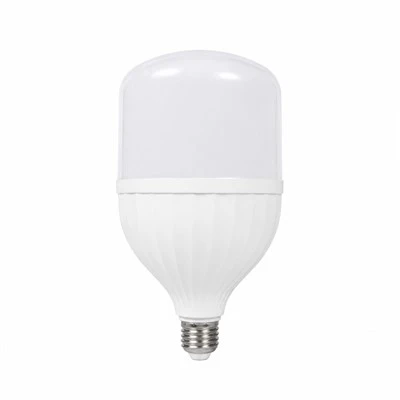
If you’re a gallery manager, curator, or lighting designer and you’re curious about switching to T-shaped bulbs, or you want to chat about what would work best for your specific space, feel free to reach out to connect for a sourcing discussion. Whether you need a small batch for a temporary exhibition or bulk orders for a permanent space, we’ve got you covered.
Type T Bulb References
- International Association of Lighting Designers. (2021). Lighting Guidelines for Artwork Preservation and Display. IALD Publications.
- Illuminating Engineering Society. (2020). Recommended Practice for Lighting Museums, Galleries, and Cultural Institutions. ANSI/IES RP-27-20.
- U.S. Department of Energy. (2022). LED Lighting for Commercial Applications: Performance and Cost Analysis. DOE Office of Energy Efficiency & Renewable Energy.
- The American Alliance of Museums. (2019). Environmental Guidelines for Collections Care: Lighting and Display Standards. AAM Best Practices Committee.
Hangzhou Lin’an Mingfeng Electric Parts Co., Ltd.
We are one of the most experienced t shaped bulbs manufacturers and suppliers in China since 1996. We warmly welcome you to wholesale customized t shaped bulbs made in China here from our factory. If you have any enquiry about pricelist and quotation, please feel free to email us.
Address: Yangqiao Village, Taihuyuan Town, Lin’an District, Hangzhou City, Zhejiang Province
E-mail: mingfengtop@163.com
WebSite: https://www.mingfengtop.com/
