What is the rolling resistance of solid tires?
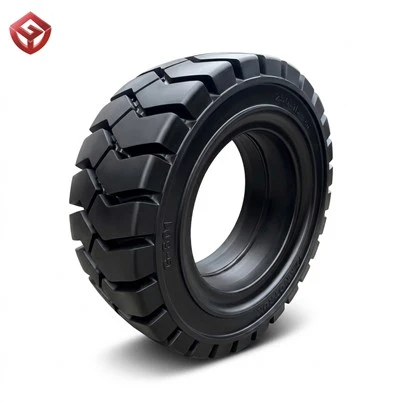
As a supplier of solid tires, I’ve encountered numerous inquiries from customers regarding rolling resistance. Understanding this concept is crucial for anyone looking to optimize their vehicle’s performance and efficiency. In this blog post, I’ll delve into what rolling resistance is, its significance, and how it relates to our solid tires. Solid Tire
Understanding Rolling Resistance
Rolling resistance is the force that opposes the motion of a rolling object, such as a tire, on a surface. It is primarily caused by the deformation of the tire and the surface it rolls on. When a tire rotates, it is constantly being compressed and re – expanded. This deformation process dissipates energy in the form of heat, and the energy required to maintain this deformation is what we call rolling resistance.
There are several factors that influence rolling resistance. One of the most significant factors is the material of the tire. For solid tires, the rubber compound used plays a crucial role. Different rubber compounds have different viscoelastic properties. Viscoelastic materials exhibit both elastic and viscous behavior. When a tire deforms, the elastic part of the material tries to return to its original shape, while the viscous part dissipates energy as heat. A rubber compound with lower hysteresis (a measure of how much energy is lost as heat during deformation) will result in lower rolling resistance.
The design of the tire also affects rolling resistance. Tires with a larger contact area with the ground will generally have higher rolling resistance because more of the tire material is being deformed. The tread pattern of the tire is another aspect. A more aggressive tread pattern may provide better traction but can also increase rolling resistance due to the increased deformation of the tread blocks as they come into contact with the ground.
Significance of Rolling Resistance
The importance of understanding rolling resistance cannot be overstated. From an economic perspective, lower rolling resistance means better fuel efficiency. In the case of electric vehicles or battery – powered equipment, it translates to longer battery life. For example, in a forklift operation, a solid tire with lower rolling resistance will require less energy to move the same load, resulting in cost savings over time.
From an environmental standpoint, reducing rolling resistance helps in cutting down on greenhouse gas emissions. Since vehicles with lower rolling resistance consume less fuel or energy, the overall carbon footprint is reduced. This is in line with the global trend towards sustainability and eco – friendly practices.
In terms of performance, lower rolling resistance allows vehicles to accelerate more easily and reach higher speeds with less effort. It also reduces wear and tear on the tires and the vehicle’s drivetrain, which leads to longer service life and fewer maintenance requirements.
Rolling Resistance in Solid Tires
As a solid tire supplier, I can attest to the unique nature of rolling resistance in our products. Solid tires are known for their durability and puncture – resistance, which makes them ideal for applications where flat – free operation is essential, such as in industrial and construction settings.
Our solid tires are engineered to strike a balance between low rolling resistance and other performance factors. We use advanced rubber compounds that are specifically formulated to minimize hysteresis while maintaining the necessary strength and abrasion resistance. For instance, in our manufacturing process, we carefully select the raw materials and control the curing conditions to ensure that the rubber has the optimal viscoelastic properties.
In terms of design, we carefully consider the contact area and tread pattern. Our solid tires are designed with a contact area that is sized to provide sufficient traction while keeping rolling resistance in check. The tread patterns are optimized to provide good grip on various surfaces without causing excessive deformation of the tire.
Measuring Rolling Resistance
Rolling resistance is typically measured in terms of the coefficient of rolling resistance (Crr). The Crr is a dimensionless quantity that represents the ratio of the rolling resistance force to the normal force (the weight of the vehicle on the tire). It is usually determined through laboratory tests using specialized equipment.
There are two main types of tests used to measure rolling resistance: indoor drum tests and outdoor track tests. In indoor drum tests, the tire is rolled on a large drum, and the rolling resistance force is measured using a load cell. This method allows for precise control of the test conditions, such as speed, load, and inflation pressure (although solid tires do not require inflation). Outdoor track tests, on the other hand, are conducted on a real – world track, which provides a more realistic assessment of the tire’s performance in actual operating conditions.
How Our Solid Tires Compare
Our company is committed to providing solid tires with low rolling resistance. Through continuous research and development, we have been able to improve the performance of our tires in this regard. When compared to traditional tires or even some of our competitors’ solid tires, our products often offer a lower coefficient of rolling resistance.
This advantage is not only beneficial for our customers’ wallets but also for their operations. For example, in a busy warehouse where forklifts are constantly in motion, our low – rolling – resistance solid tires can significantly reduce the energy consumption of the forklifts, leading to increased productivity and reduced operating costs.
Conclusion
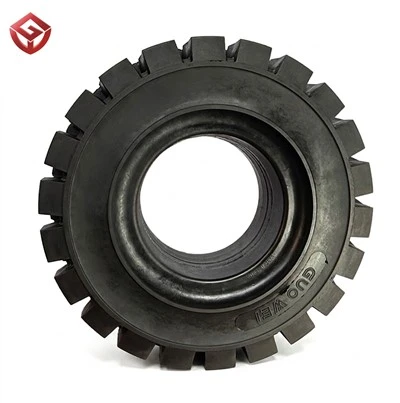
In conclusion, rolling resistance is a critical factor to consider when choosing solid tires. It affects fuel or energy efficiency, environmental impact, and overall vehicle performance. As a solid tire supplier, we are dedicated to providing our customers with high – quality tires that offer low rolling resistance without compromising on other important aspects such as durability and traction.
Solid Tire If you are in the market for solid tires and want to learn more about how our products can benefit your operations, we encourage you to reach out to us. Our team of experts is ready to assist you in selecting the right tires for your specific needs and to answer any questions you may have. Let’s work together to optimize your vehicle’s performance and efficiency.
References
- "The Physics of Tires" by Tire and Rubber Association of Canada
- "Rolling Resistance: A Review" in the Journal of Tire Science and Technology
- Automotive Industry Standards on Tire Performance and Testing
Zhejiang Guowei Rubber Co., Ltd.
Zhejiang Guowei Rubber Co., Ltd. is one of the most professional solid tire manufacturers and suppliers in China. With abundant experience, we warmly welcome you to buy advanced solid tire in stock here and get pricelist from our factory. Quality products and reasonable price are available.
Address: No. 10, Nanyang 4th Road, Duqiao Town, Linhai City, Taizhou, Zhejiang Province, China
E-mail: gwsolid@gmail.com
WebSite: https://www.forkliftsolidtires.com/
