Hey there! I’m a supplier of resistance furnaces. You know, these furnaces are super important in a bunch of industries, like metalworking, ceramics, and heat treatment. One of the key factors that can really mess with how a resistance furnace works is the voltage. So, in this blog, I’m gonna chat about how voltage affects the operation of a resistance furnace. Resistance Furnace
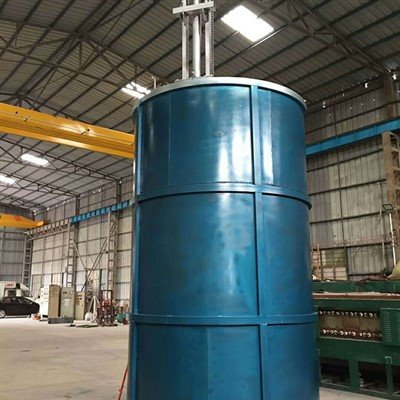
1. Basics of Resistance Furnaces
First off, let me give you a quick rundown of how resistance furnaces work. They use the principle of Joule heating. When an electric current flows through a resistive material, it generates heat. In a resistance furnace, the heating elements are usually made of materials with high resistivity, like nichrome or molybdenum disilicide.
The heat generated in the furnace is given by the formula (Q = I^{2}Rt), where (Q) is the heat energy, (I) is the current, (R) is the resistance of the heating element, and (t) is the time. According to Ohm’s law, (I=\frac{V}{R}), where (V) is the voltage. Substituting (I) in the heat – energy formula, we get (Q=\frac{V^{2}t}{R}). This shows that the heat generated is directly proportional to the square of the voltage.
2. Impact of Voltage on Temperature
Voltage Increase
When the voltage supplied to a resistance furnace goes up, the heat generated in the heating elements increases significantly because of the (V^{2}) relationship in the heat – energy formula. As the heat builds up, the temperature inside the furnace also rises.
For example, let’s say we have a furnace with a heating element of resistance (R = 10\Omega). If the initial voltage (V_1 = 100V) and the time (t = 1) hour ((t= 3600s)), the heat generated (Q_1=\frac{V_1^{2}t}{R}=\frac{100^{2}\times3600}{10}= 3.6\times10^{6}J).
If we increase the voltage to (V_2 = 200V) (double the initial voltage), then (Q_2=\frac{V_2^{2}t}{R}=\frac{200^{2}\times3600}{10}=1.44\times10^{7}J), which is four times the heat generated at the lower voltage.
This rapid increase in heat can cause over – heating in the furnace. Over – heating can damage the heating elements. If the temperature gets too high, the element might melt or its structure could change, reducing its lifespan. It can also affect the materials being processed in the furnace. In metalworking, for instance, over – heating can lead to changes in the metal’s microstructure, like grain growth, which can reduce the mechanical properties of the final product.
Voltage Decrease
On the other hand, if the voltage supplied to the furnace decreases, the heat generated in the heating elements goes down. A lower heat output means the furnace will struggle to reach and maintain the desired operating temperature.
Let’s go back to our example with (R = 10\Omega) and (t = 3600s). If we reduce the voltage to (V_3 = 50V), then (Q_3=\frac{V_3^{2}t}{R}=\frac{50^{2}\times3600}{10}=9\times10^{5}J), which is only a quarter of the heat generated at (V_1 = 100V).
In a heat – treatment process, if the furnace can’t reach the required temperature, the material won’t undergo the proper phase transformations. For example, in the annealing of steel, if the temperature is too low, the internal stresses in the steel won’t be relieved properly, and the steel will remain brittle.
3. Voltage and Power Consumption
Power Formula
The power (P) consumed by a resistance furnace is given by (P = VI). Since (I=\frac{V}{R}), we can also write (P=\frac{V^{2}}{R}). So, power consumption is directly proportional to the square of the voltage.
Higher Voltage
When the voltage is high, the power consumption of the furnace increases rapidly. This means higher electricity bills for the users. In an industrial setting, where resistance furnaces are used for long periods, a small increase in voltage can lead to a big jump in power costs over time.
For example, if a furnace normally operates at (V = 220V) and consumes a power (P_1=\frac{V^{2}}{R}), and then the voltage goes up to (V’= 240V), the new power (P_2=\frac{V’^{2}}{R}). The ratio (\frac{P_2}{P_1}=\frac{240^{2}}{220^{2}}\approx1.19), which means the power consumption increases by about 19%.
Lower Voltage
When the voltage is low, the power consumption decreases. But as we discussed earlier, a lower voltage can lead to the furnace not being able to reach the required temperature. To compensate for the low heat output, the furnace may need to run for a longer time, which can also increase the overall power consumption in the end.
4. Voltage Stability
Fluctuations
Voltage fluctuations are a common problem in many power grids. These fluctuations can be caused by various factors, such as changes in the load on the grid, lightning strikes, or problems with the power generation equipment.
In a resistance furnace, voltage fluctuations can cause inconsistent heating. If the voltage suddenly increases, the temperature inside the furnace will spike, which can damage the heating elements and the materials being processed. If the voltage drops suddenly, the temperature will decrease, and the process may not be completed properly.
Importance of Voltage Regulation
To ensure the proper operation of a resistance furnace, voltage regulation is crucial. We, as resistance furnace suppliers, often recommend using voltage regulators or stabilizers. These devices can maintain a constant voltage supply to the furnace, regardless of the fluctuations in the grid voltage.
A good voltage regulator can keep the voltage within a narrow range, say (\pm 5%) of the rated voltage. This helps in maintaining a stable temperature inside the furnace, which is essential for consistent and high – quality processing of materials.
5. Our Role as a Resistance Furnace Supplier
As a resistance furnace supplier, we understand the importance of voltage in the operation of our furnaces. When we sell a furnace to a customer, we always provide information about the recommended voltage and the importance of voltage stability.
We also offer a range of options to help with voltage management. For example, we can supply furnaces with built – in voltage regulation features or recommend external voltage stabilizers that are compatible with our furnaces.
Moreover, our technical support team is always ready to assist customers if they face any voltage – related issues. We can help diagnose problems, provide solutions, and even offer on – site maintenance if needed.
6. Conclusion
In conclusion, voltage has a huge impact on the operation of a resistance furnace. It affects the temperature, power consumption, and overall performance of the furnace. High voltage can lead to over – heating and increased power costs, while low voltage can cause under – heating and inconsistent processing.
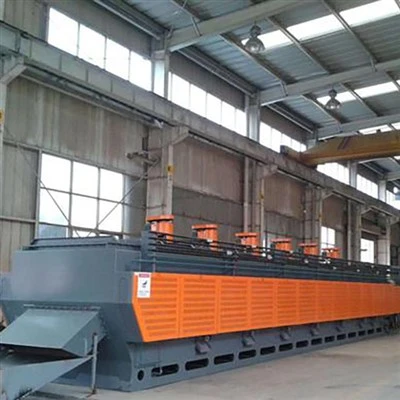
Voltage stability is key to ensuring the proper and efficient operation of resistance furnaces. As a resistance furnace supplier, we’re committed to helping our customers understand these voltage – related issues and providing them with the best solutions to keep their furnaces running smoothly.
Quenching Furnace If you’re in the market for a resistance furnace, or if you’re having trouble with your existing furnace due to voltage issues, don’t hesitate to get in touch. We’re here to help you make the right choices and ensure your operations are as efficient as possible. Contact us to start a conversation about your furnace needs and find out how we can assist you.
References
- Principles of Electric Heat Technology, author unknown.
- Handbook of Industrial Heating, various contributors.
Danyang Dingfeng Industrial Furnace Co., Ltd.
Danyang Dingfeng Industrial Furnace Co., Ltd. is one of the most experienced resistance furnace manufacturers and suppliers in China, also supports customized service with low price. Please feel free to wholesale high quality resistance furnace made in China here from our factory. For pricelist, contact us now.
Address: Lizhuang Economic Development Zone, Danyang City
E-mail: saleszk@dffurnace.com
WebSite: https://www.dffurnace.com/
