Hey folks, if you’re running a steel livestock building—whether it’s a beef barn, sow farm, or grow-finish hog facility—you know firsthand how much of a headache manure management can be. You’ve got steel panels that hold up against wind and snow, but if your waste system is a mess, you’re dealing with stinky air, pesky pests, and legal headaches from run-off. I’m part of the team that builds these steel livestock structures every day, and over the years, we’ve installed hundreds of manure systems that actually work with our steel barns, not against them. Today, I’m breaking down how to hook one up yourself (or with our team, if you want backup) so your barn stays clean, compliant, and way less smelly. Let’s dive in. Steel Livestock Buildings
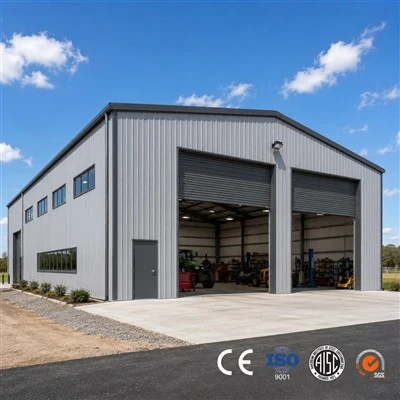
First off, why start with the barn’s steel layout? I’ve seen too many guys hack a manure system after building the steel skeleton, and it causes way more problems than it fixes. Our steel livestock buildings have pre-punched columns and wall channels for a reason—they’re designed to align with standard manure system specs. If you wait till the barn’s done, you might have to chop up steel beams that were supposed to support your gutter or pump lines. Trust me, that’s a nightmare. For example, our standard 40ft-wide beef barn has 10ft bays that line up perfectly with 10ft sections of a slat gutter system. So when you’re marking your steel floor trusses (or concrete slab, if you already have that), make sure the gutter’s center runs dead center between two trusses. That way, you can bolt the steel framing directly to the truss’s bottom chord without drilling extra holes—saves time and keeps your structure’s integrity intact.
Now, pick the right manure system for your steel barn size and livestock type. Not all systems are created equal, and I’ve heard stories of guys putting a tiny gravity-flow system in a 600-head grow-finish barn—total disaster. Let’s keep it simple. If you’ve got a small operation (under 100 head of beef or 50 sows), a gravity-flow gutter system works great. It’s cheap, easy to install, and fits right under our steel side rails. For medium to large operations (200+ head), a mechanical scraper system is non-negotiable. Scraper blades pull waste from every corner of the barn’s floor to a collection pit, and since our steel barns have smooth, level steel floor panels (or reinforced concrete, if you prefer), the blades glide without catching on debris. If you’re dealing with liquid manure (like dairy cows), a pit system with a submersible pump is your call—but you’ll need to make sure your steel barn’s foundation is rated for the extra weight, which our pre-engineered steel buildings are, by the way. Pro tip: Don’t skip the load calculation. Our team can send you a free spec sheet for your steel barn’s weight capacity, so you don’t end up with a pit that sinks or a pump that can’t handle the volume.
Next step: prep the steel barn space before installing anything. This is where a lot of first-timers mess up. First, clear the area where the manure system will go—no leftover steel scraps or old insulation lying around. Then, check your steel panels for any dents or loose bolts. A warped steel wall could throw off a scraper’s alignment, so fix that now. If you have a concrete floor (most barns do), you’ll need to lay down a layer of sand or gravel where the gutter or pit will go to prevent moisture from seeping under the slab and rusting your steel framing. Wait—rust? Yeah, that’s a big one. Our steel buildings are galvanized, but if you let manure moisture sit against the bottom edge, it can cause corrosion. So when you’re installing the gutter, leave a 1-inch gap between the steel’s bottom and the floor. Small detail, but it saves you from replacing steel beams in 5 years. Also, mark your utility lines—water, electricity, gas—before you dig for the pit. Nothing kills a workday like cutting a power line because you didn’t call the local utility locator. Most places do that for free, so use it.
Now, the fun part: installing the system to work with your steel barn. Let’s start with gutters, since they’re the most common. First, line up the gutter sections with your steel truss marks. Our gutters have pre-drilled holes that match the steel truss bottom chords, so you just bolt them in—no measuring twice (okay, maybe measure once). If you’re using a scraper system, install the guide rails first. These bolt directly to the steel wall posts, and again, our steel posts have pre-punched holes that fit the rail brackets. Make sure the rails are perfectly level—use a laser level, not a bubble level, unless you want a scraper that gets stuck halfway. Once the rails are up, attach the scraper cable to the winch, and test it a few times before you put any livestock in. For the collection pit: if it’s inside the barn, dig it first, then line it with concrete, and attach the pump’s electrical line through a steel conduit mounted to the barn’s wall. If it’s outside the barn (which we recommend, to keep smell out), build the pit right against the steel barn’s end wall, so you can run the discharge line through a pre-cut hole in the steel panel—no cutting extra holes, just use the ones we pre-marked during installation. That’s one of the perks of working with our steel livestock buildings; we leave all those utility holes pre-sized for manure lines, electric, and water.
Wait, what about ventilation? Steel barns already have great natural ventilation, but your manure system can mess that up if you don’t plan for it. The collection pit will release gases—ammonia, methane—that can build up in the barn, which is bad for your animals’ lungs and yours. So install a vent pipe from the pit up through the steel barn’s roof. We use a 6-inch pipe that bolts to the roof’s rib, no sealing mess. The vent should stick at least 3ft above the roof line, so the gases disperse instead of coming back down. Also, if you’re using a mechanical scraper, make sure the winch motor is mounted outside the barn, on the steel side wall, with a weatherproof cover. We supply those covers as an add-on, so they don’t get rusted or damaged by rain. Another quick win: install a small exhaust fan near the manure pit inside the barn, tied to your steel barn’s power system. Keeps the air circulating and cuts down on that fresh farm smell (the bad kind).
Testing the system is non-negotiable before you move in livestock. I’ve seen guys skip this and end up with manure overflow on day one. Here’s what to do: for gravity systems, pour a bucket of water in each gutter section and make sure it flows steadily to the pit—no pooling, no leaks. For scrapers, run the cycle 5 times empty, then once with a few buckets of sand (to simulate manure weight) to make sure the blades don’t stall. For pumps, run it for 10 minutes and check for leaks around the steel conduit and pit seal. Also, check your steel barn’s bolts during testing—vibration from the scraper or pump can loosen them, especially the ones holding the manure system parts. Tighten any that are loose, and add a thread lock if you want extra security. I learned that the hard way when a scraper bolt fell off mid-cycle and left a pile of manure in the middle of a 200-head barn. Not fun to clean up.
Maintenance tips specific to steel barns and manure systems. Once the system is installed, you don’t want to do this every week, but a little goes a long way. First, every month, inspect the steel parts that touch manure—the gutters, rails, and conduit. Wipe them down with a mild detergent to remove manure residue, which prevents corrosion on the galvanized steel. We recommend a zinc-based touch-up paint for any small scratches you find, since manure moisture can get into scratches and cause rust. Second, grease the scraper rails every 3 months—use a heavy-duty grease that works in cold weather, since steel barns can get freezing in winter. Third, check the pit’s level sensor regularly—most are mounted on a steel pole, so make sure the pole isn’t leaning or bent, which would make the sensor give a wrong reading. And don’t forget your steel barn’s regular maintenance: every 6 months, tighten all bolts, inspect the roof for damage, and make sure the ventilation is working. A well-maintained steel barn paired with a well-maintained manure system will last 20+ years, no problem.
Wait, what if you’re not super handy? No shame in that. Our team specializes in installing manure systems that fit perfectly with our steel livestock buildings, so we can handle the whole project from start to finish—we’ll prep the barn, install the steel skeleton, set up the manure system, and even train you how to use it. We know the ins and outs of both steel structure design and waste management, so we won’t give you a system that strains your barn’s steel. That’s why so many of our repeat customers come back—we don’t just sell you a steel barn, we make sure every part works together.
Now, a quick note on compliance. Most states have rules about manure storage and runoff, and your steel barn’s design matters here too. The EPA and local ag departments require that waste doesn’t contaminate groundwater, so if you’re building a new barn, the system has to match the barn’s size and livestock count. Our steel structures are designed to meet all those regulations, and when we install a manure system with them, we make sure it’s compliant too. A lot of guys get fined because they tried to save money on a cheap system that doesn’t meet codes—don’t be that person.

At the end of the day, installing a manure system in a steel livestock building isn’t rocket science, but it does need to align with your barn’s design to avoid headaches later. The key is to plan ahead, pick the right system for your operation, and make sure every part—steel and manure—works together. If you’re in the market for a steel livestock building and a matching manure system, or just need help tweaking the one you have, reach out to our team. We’re here to make your farm run smoother, less smelly, and way more efficient. Don’t wait till the next manure pile is sitting in your barn—let’s get this set up right.
Steel Warehouse References
- American Society of Agricultural and Biological Engineers. Manure Management for Livestock Facilities. ASABE Standard EP386.4, 2021.
- Steel Building Manufacturers Association. Pre-Engineered Steel Structures for Agricultural Use. SBMA Technical Report AG-002, 2022.
- U.S. Environmental Protection Agency. Nutrient Management Standards for Livestock Operations. EPA 832-F-20-005, 2020.
- National Pork Producers Council. Manure System Installation Best Practices for Swine Facilities. NPPC Guide 12-01, 2021.
Liaoning Zhongbei Steel Structure Engineering Co., Ltd.
Liaoning Zhongbei Steel Structure Engineering Co., Ltd. is one of the most professional steel livestock buildings manufacturers and suppliers in China, also supports customized service. We warmly welcome you to buy advanced steel livestock buildings made in China here from our factory. Also, quotation is available.
Address: No. 239 – 1, Shenbei West Road, Yuhong District, Shenyang, Liaoning.
E-mail: Info@cnssgroup.cn
WebSite: https://www.cnssprefabbuildings.com/
