If you’ve ever shopped for a feed pellet mill or asked us (your go-to feed pellet mill supplier) to quote equipment, odds are the first question you’ll ask after seeing a machine’s specs isn’t “how much does it cost to buy?” It’s “how much will it cost to run?” — because buying a pellet mill is only half the battle; calculating its actual production cost means the difference between a profitable monthly operation and one that bleeds money, especially for small to mid-sized livestock and aquaculture producers. Feed Pellet Mill
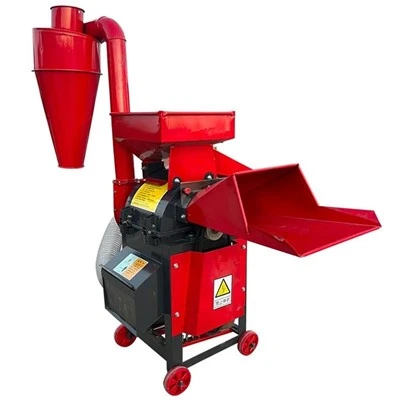
I’ve spent 12 years working with producers across North America and Europe, testing our feed pellet mills on dairy farms, pig operations, and small aquaculture facilities, and I’ve seen firsthand how skipping these calculations leads to costly surprises. Last year, a 80-cow dairy farm in Iowa bought a used pellet mill without running the numbers properly, only to realize their power and feed waste costs ate 30% of their monthly profit. They reached out to us after six months, and we reworked their cost breakdowns to get them back in the black. That’s why today, I’m walking you through the exact, science-backed process to calculate feed pellet production cost with a mill — no fluff, just the real numbers you need, straight from a supplier that’s on your side, not just selling equipment.
First, let’s get clear on what production cost actually means. It’s not just the price of raw materials. It’s every dollar that goes into turning grain, soy, or byproducts into uniform, shelf-stable pellets ready for feeding. Split into fixed and variable costs, this two-part structure ensures you don’t miss hidden expenses that pop up month after month.
Fixed Costs: The Costs That Stay The Same (Even If You Don’t Run The Mill)
Fixed costs are non-negotiable, no matter how many tons of pellets you produce. For a feed pellet mill, these are the costs you’ll pay every year, even if you only run the mill once. This is where many new producers slip up — they forget that depreciation, rent or mortgage for the space housing the mill, and annual maintenance are real line items, not just “miscellaneous fees.”
Let’s break each down with numbers you can plug into your own operation. First, equipment depreciation. Every mill has a lifespan, and this is calculated by dividing its total purchase cost by its useful operational life. For our heavy-duty feed pellet mills, the useful life is 10 years under regular use (3,000 hours of operation annually, per industry standards from the American Feed Industry Association (AFIA)). If you buy a $15,000 small-scale flat die pellet mill (ideal for 1-2 tons per hour production), your annual depreciation is $1,500. For a large ring die mill running 10+ tons per hour, the $75,000 model has an annual depreciation of $7,500. This isn’t a made-up number — we stand by this lifespan because we test our mills to operate at full capacity for 30,000 hours before major overhauls are needed.
Next, facility costs. If you have a dedicated space for your feed mill, this is the portion of your overall rent or mortgage allocated to that space. For example, if you have a 1,000 square foot shed for your mill and your total annual rent for the whole farm is $12,000, the mill’s space is $1,200 per year (10% of total square footage). If you don’t own dedicated space, don’t skip this — even if you’re using a corner of your barn, allocate a portion of your overhead to the mill; otherwise, you’ll underestimate costs come tax time.
Then, annual fixed maintenance and insurance. Fixed maintenance includes routine checks, replacing small parts (like belt tensioners, which wear out regardless of use), and annual electrical inspections for the mill. Our team recommends setting aside 5% of your mill’s purchase price annually for this. That means the $15,000 flat die mill needs $750 per year for fixed maintenance, and the $75,000 ring die mill needs $3,750. Insurance is another must: most small business insurance policies cover feed processing equipment for roughly 0.5% of the mill’s value annually, so $75 for the small mill, $375 for the large one.
Add all fixed costs together for your annual total, then divide by the number of hours you run the mill per year to get your hourly fixed cost. For the small flat die mill, that’s ($1,500 + $1,200 + $750 + $75) / 3,000 hours = $1.23 per hour. For the large ring die mill, that’s ($7,500 + $6,000 (if the mill uses 50% of a 2,000 sq ft barn space) + $3,750 + $375) / 3,000 hours = $5.99 per hour. This is your baseline cost just to have the mill up and running, before you even produce a single pellet.
Variable Costs: The Costs That Change With Every Ton Of Pellets Produced
Variable costs are where the real action happens — these are costs that rise or fall with how many tons you make, and they account for the majority of production expenses. Most variable costs are broken into four categories: raw material costs, power (electricity or diesel) to run the mill, labor, and consumable parts (the ones that wear out from use, like dies and rollers). This is where we spend most of our time with new customers, because optimizing these numbers is where you’ll save the most money.
First, raw material costs. This is the largest variable cost for any feed producer, making up 70-80% of total production cost, per AFIA data. To calculate this, you need to know two things: the cost of your raw ingredients, and the pellet yield rate (how much finished pellets you get from every ton of mixed raw material). Pellet yield depends on the mill type, the moisture content of your raw materials, and the type of feed you’re making (for example, high-protein aquafeed has a lower yield than basic cattle feed). For our feed pellet mills, yield ranges from 92-95% for most livestock feeds, meaning 50-80 lbs of material is lost as fines (unpelletized powder) during processing, which can sometimes be reused in subsequent batches.
Let’s use a common example: a 1-ton per hour batch of dairy feed, made from 60% corn ($0.12/lb), 25% soybean meal ($0.28/lb), and 15% alfalfa ($0.08/lb). First, calculate the cost per pound of raw mix: (0.600.12) + (0.250.28) + (0.15*0.08) = $0.152 per lb. With a 93% yield, that means 1,000 lbs of raw mix makes 930 lbs of pellets, so raw material cost per ton of pellets is ($0.152/lb * 2,000 lbs per ton) / 0.93 = $326.88 per ton. If you can improve yield by just 2% to 95% (by adjusting moisture to 12-14% — the sweet spot for pelleting, per our mill techs), that drops raw material cost to $320 per ton, a $6 savings per ton, which adds up to $4,800 per year for a 10-ton daily operation. That’s the kind of optimization we help customers with when they buy our mills.
Next, power costs. Power is the second biggest variable cost, and it depends directly on your mill’s motor size. Every feed pellet mill has a motor rated in horsepower (HP), and motor size is tied to production capacity: a 10 HP flat die mill runs at 0.5-1 ton per hour, while a 50 HP ring die mill runs at 3-5 tons per hour. To calculate power use, use this formula: (motor HP * 0.7456 kW/HP * operating hours) * electricity rate. For example, a 10 HP flat die mill running 8 hours a day, at a $0.12 per kWh electricity rate: (10 * 0.7456) * 8 hours * $0.12 = $7.16 per day, or $2,577 per year. For a 50 HP ring die mill running 10 hours a day: (50 * 0.7456) * 10 hours * $0.12 = $44.74 per day, or $16,200 per year. Notice that power cost per ton drops as mill size increases — that’s why larger operations can spread power costs over more product, a key point for deciding which mill is right for you.
Labor costs are next, and these are often underestimated. For small-scale operations, labor might be your own, but you still need to pay yourself a fair wage for the time spent loading raw materials, monitoring the mill, and packaging pellets. The Bureau of Labor Statistics reports that feed mill operators earn an average of $18 per hour. If you run the small 1-ton per hour mill 8 hours a day, that’s 8 hours of labor, plus 2 hours for prep and cleanup, totaling 10 hours per day: 10 * $18 = $180 per day, or $65,700 per year. For the larger 5-ton per hour mill running 10 hours a day, you might need two operators, so that’s 20 hours of labor per day: 20 * $18 = $360 per day, or $129,600 per year. The good news here is that labor per ton drops with higher output: the small mill’s labor is $22.50 per ton (8 hours / 1 ton per hour), while the large mill’s labor is $7.20 per ton (10 hours / 5 ton per hour). That’s another major advantage of matching your mill size to your production volume.
Finally, consumable parts costs: dies and rollers. These are the most replaceable parts on any feed pellet mill, and their lifespan depends on how often you run the mill, the type of feed you make, and the quality of the parts. For our premium hard chrome-plated dies and rollers (which we recommend for durability), a die for the small 10 HP flat die mill lasts roughly 50 tons of pellets, and a set of rollers lasts 100 tons. A die for the 50 HP ring die mill lasts about 200 tons, and a set of rollers lasts 400 tons. The cost for a small die is $250, so per ton cost is $5; a set of small rollers is $400, so per ton cost is $4. That’s $9 per ton in consumable parts for the small mill. For the large mill, a die is $1,200, so per ton cost is $6; a set of rollers is $2,000, so per ton cost is $5. That’s $11 per ton for the large mill. If you choose cheaper, uncoated parts, the lifespan drops by 50%, so you’ll double that cost — that’s why we always recommend investing in quality consumables to keep long-term costs low.
Putting It All Together: Calculating Total Production Cost Per Ton
Now that you have fixed and variable costs, let’s crunch the full numbers for two common mill sizes to see how it works. We’ll use annual production volume to make this concrete: the small flat die mill runs 3,000 hours a year at 0.75 tons per hour, so 2,250 tons annually. The large ring die mill runs 3,000 hours a year at 4 tons per hour, so 12,000 tons annually.
First, small 1-ton per hour flat die mill:
- Fixed costs annual total: $1,500 (depreciation) + $1,200 (facility) + $750 (fixed maintenance) + $75 (insurance) = $3,525
- Fixed cost per ton: $3,525 / 2,250 tons = $1.57 per ton
- Variable costs per ton: $326.88 (raw materials) + $3.18 (power: $2,577 annual power / 2,250 tons) + $29.20 (labor: $65,700 annual labor / 2,250 tons) + $9 (consumable parts) = $368.26 per ton
- Total production cost per ton: $1.57 + $368.26 = ~$369.83 per ton
Large 5-ton per hour ring die mill:
- Fixed costs annual total: $7,500 (depreciation) + $6,000 (facility) + $3,750 (fixed maintenance) + $375 (insurance) = $17,625
- Fixed cost per ton: $17,625 / 12,000 tons = $1.47 per ton
- Variable costs per ton: $326.88 (raw materials, same feed mix) + $1.35 (power: $16,200 annual power / 12,000 tons) + $10.80 (labor: $129,600 annual labor / 12,000 tons) + $11 (consumable parts) = $349.03 per ton
- Total production cost per ton: $1.47 + $349.03 = ~$350.50 per ton
See the gap? Even though the large mill has higher fixed costs, its variable costs drop so much that total production cost per ton is nearly $20 lower, a huge savings for high-volume operations. That’s why it’s critical to align mill size with your needs — running a large mill below capacity wastes money on unused fixed costs, while a small mill can’t match the efficiency of a properly sized large mill.
Pro Tips To Lower Your Feed Pellet Production Cost
Over 12 years, I’ve picked up tricks that cut production costs by 10-15% for our customers, and they all tie back to how you use your mill, not just which mill you buy. First, optimize raw material moisture. As I mentioned earlier, 12-14% moisture is the sweet spot for pelleting — too dry and you’ll get more fines, too wet and you’ll clog the mill and increase power use. Our mill technicians can help you test your raw material moisture for free, even if you haven’t bought a mill from us yet. Second, batch run your mill instead of small, frequent runs. Running 8-hour batches instead of 1-hour runs cuts down on startup time (a big power drain) and reduces die wear, since dies last longer when they run continuously. Third, reuse fines. The fines that come off during pelleting aren’t wasted — you can blend them back into the next batch of raw material, adding 5% to your yield and cutting raw material costs by that amount.
If you’re sitting here thinking, “that’s great, but how do I know which numbers apply to my operation?” that’s exactly why we offer free, no-obligation production cost assessments for anyone shopping for a feed pellet mill. We’ll ask about your feed type, raw material costs, annual production goals, and current setup, then plug all those numbers into our data-backed calculator to give you an accurate, personalized breakdown. No sales pitches, no fine print — just real numbers to help you make the best decision for your farm or business.
Ready to stop guessing at your feed pellet production costs and start running your operation at maximum profit? We’d be happy to work with you to walk through your specific needs, answer any questions about mill performance, or provide a custom cost calculation tailored to your business. Reach out to our team today to get started.
References
Branch Shredder American Feed Industry Association. (2022). Feed Manufacturing Cost Benchmark Report. AFIA Publications.
U.S. Bureau of Labor Statistics. (2023). Occupational Employment and Wage Statistics: Farm and Food Processing Workers. BLS Government Printing Office.
Feed Pellet Mill Technical Guide. (2021). Commercial Feed Processing Equipment Association. CPEMA Standards.
Zhengzhou Xinyihaotong Machinery Manufacturing Co., Ltd.
As one of the most professional feed pellet mill manufacturers in China, we also support custom service. We warmly welcome you to buy high quality feed pellet mill for sale here from our factory. For price consultation, contact us.
Address: Rooms 2301–2312, Jiayi Building, Xinxiang City, Henan Province, China
E-mail: zhaoyixuan5566@gmail.com
WebSite: https://www.xyhtmachinery.com/
