Hey there! As a supplier of Cut To Length Lines, I often get asked about the maximum width of material these machines can handle. So, I thought I’d take a few minutes to break it down for you. Cut To Length Line

First off, let’s talk about what a Cut To Length Line actually is. In simple terms, it’s a piece of equipment used in metal processing plants. Its main job is to take long, continuous strips of metal and cut them into smaller, more manageable lengths. These lines are used in all sorts of industries, from automotive manufacturing to construction.
Now, about that maximum width. The answer isn’t as straightforward as you might think. It depends on a bunch of different factors, and I’m gonna walk you through the most important ones.
The Design of the Cut To Length Line
The first thing that affects the maximum width is the design of the line itself. When we’re building these machines, we have to think about all the different parts that make it work. The roll stands, the shear, and the conveyor systems all need to be able to handle the width of the material.
Roll stands are used to support and guide the metal strip as it moves through the line. If the rolls aren’t wide enough, the material can’t pass through properly. Shears, on the other hand, are what actually cut the metal. The cutting blade has to be long enough to make a clean cut across the entire width of the strip. And then there are the conveyors, which need to be wide enough to carry the cut pieces away.
Most standard Cut To Length Lines are designed to handle widths between 24 inches (about 610 mm) and 72 inches (about 1,829 mm). But we can also build custom lines for wider materials. I’ve seen some really big setups that can handle materials up to 10 feet (about 3,048 mm) wide! Of course, these custom lines are more expensive and take longer to build, but if you need to process wide materials, they’re definitely worth it.
The Type of Material
The type of material you’re working with also plays a big role in determining the maximum width. Different metals have different properties, like hardness and thickness, which can affect how they move through the line.
For example, aluminum is a relatively soft and lightweight metal. It’s easy to cut and handle, so we can usually process wider strips of aluminum compared to other metals. Steel, on the other hand, is much harder and heavier. If you’re working with thick steel, you might need a more robust Cut To Length Line to handle it.
Another thing to consider is the material’s surface finish. Some materials have a smooth surface, while others are rough or coated. A rough or coated surface can cause friction as the material moves through the line, which can make it more difficult to handle wider strips.
The Thickness of the Material
Thickness is closely related to the type of material, but it’s an important factor on its own. In general, the thicker the material, the narrower the maximum width we can handle. That’s because thicker materials require more force to cut and move through the line.
If you’re cutting thin materials, like sheet metal that’s less than 1/8 inch (about 3 mm) thick, you have more flexibility in terms of width. You can usually process wider strips without any problems. But when you start working with thicker materials, like plate steel that’s over 1 inch (about 25 mm) thick, the maximum width will be more limited.
The Machine’s Capacity and Power
The capacity and power of the Cut To Length Line are also crucial. These machines need a certain amount of power to operate, especially when handling wide and thick materials.
The motor that drives the line has to be powerful enough to move the material through the rolls, operate the shear, and run the conveyors. If the motor isn’t powerful enough, the machine might stall or not be able to cut the material cleanly.
We also have to consider the capacity of the shear. The shear needs to be able to apply enough force to cut through the material. If the material is too wide or thick for the shear’s capacity, it won’t be able to make a proper cut.
Industry Standards and Applications
Industry standards can also influence the maximum width. Different industries have different requirements for the size of the metal parts they use. For example, the automotive industry often uses smaller, more precise parts, so they might not need a Cut To Length Line that can handle extremely wide materials.
On the other hand, the construction industry often works with large sheets and plates of metal. They might need a line that can handle wider widths to meet their project requirements.
So, as you can see, there’s no one-size-fits-all answer to the question of the maximum width of material that a Cut To Length Line can handle. It all depends on the design of the line, the type and thickness of the material, the machine’s capacity and power, and the specific industry requirements.
If you’re in the market for a Cut To Length Line and you’re not sure what maximum width you need, don’t worry. That’s where we come in. We have a team of experts who can help you figure out the best solution for your needs. We can take into account all the factors I’ve mentioned and recommend a line that’s just right for you.
Whether you’re a small business looking to process narrow strips of aluminum or a large industrial plant in need of a custom line for wide steel plates, we’ve got you covered. We’ve been in the business for years, and we know how to build high-quality Cut To Length Lines that can handle a wide range of materials and widths.
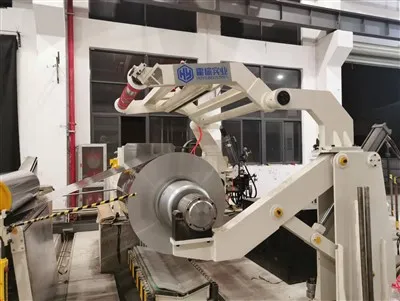
If you’re interested in learning more about our Cut To Length Lines or want to discuss your specific requirements, just reach out to us. We’d love to have a chat and see how we can help you take your metal processing to the next level.
Slitting Lines References:
- Metal Processing Handbook: Covers general knowledge about metal processing equipment, including Cut To Length Lines.
- Industry Reports on Metal Manufacturing: Provide insights into industry standards and common practices regarding the use of Cut To Length Lines.
Shanghai HOYO Industries Co., Ltd.
Shanghai HOYO Industries Co., Ltd. is one of the most professional cut to length line manufacturers and suppliers in China, featured by quality products and competitive price. Please rest assured to buy cheap cut to length line for sale here from our factory. Contact us for customized service.
Address: No.8, Jianding Road, Fengjing Town, Jinshan District, Shanghai, China
E-mail: info@hoyomachinery.com
WebSite: https://www.hoyomachinery.com/
