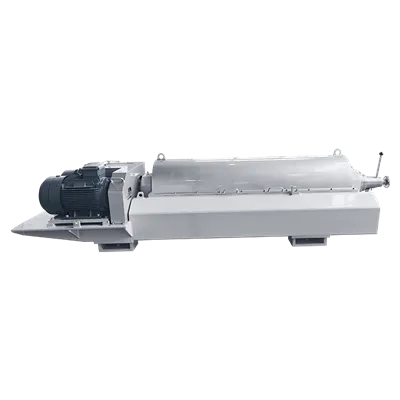
As a seasoned provider of dewatering centrifuges, one question that frequently arises in my discussions with clients, engineers, and industry enthusiasts is: "What is the maximum G – force of a dewatering centrifuge?" This topic is not only critical for understanding the capabilities of these machines but also for optimizing their performance in various applications. Dewatering Centrifuge
Understanding G – force in Dewatering Centrifuges
Before delving into the maximum G – force, it’s essential to understand what G – force means in the context of a dewatering centrifuge. G – force, or gravitational force, is a measure of the acceleration experienced by an object relative to the acceleration due to gravity on Earth (approximately 9.81 m/s²). In a centrifuge, the G – force is generated by the rapid rotation of the drum or bowl. The centrifugal force created by this rotation is what allows the centrifuge to separate solids from liquids.
The formula to calculate the G – force in a centrifuge is (G=\frac{r\times(2\pi n)^2}{g}), where (r) is the radius of the centrifuge bowl in meters, (n) is the rotational speed in revolutions per second, and (g) is the acceleration due to gravity (9.81 m/s²). From this formula, we can see that the G – force is directly proportional to the radius of the bowl and the square of the rotational speed.
Factors Affecting the Maximum G – force
Several factors influence the maximum G – force that a dewatering centrifuge can achieve.
Structural Limitations
The first and most significant factor is the structural integrity of the centrifuge. As the rotational speed increases, the mechanical stress on the centrifuge components, such as the bowl, bearings, and drive system, also increases. If the G – force exceeds the design limits of these components, it can lead to mechanical failure, including cracks in the bowl, bearing damage, or even catastrophic disintegration of the centrifuge. Therefore, engineers must carefully design the centrifuge’s structure, selecting high – strength materials and optimizing the geometry of the components to withstand the maximum expected G – force.
Power Requirements
Generating a high G – force requires a significant amount of power. The motor must be able to overcome the increasing inertia and friction as the rotational speed rises. Higher G – forces mean higher centrifugal forces, which in turn require more energy to maintain the rotation. This can lead to increased energy consumption and operating costs. Additionally, the power supply and electrical infrastructure must be able to support the high – power demands of the centrifuge, which can be a limiting factor in some applications.
Material and Process Considerations
The nature of the material being dewatered can also affect the maximum G – force. Some materials, such as those with high abrasiveness or high viscosity, may require lower G – forces to avoid excessive wear on the centrifuge components or to ensure proper separation. For example, if the G – force is too high for a viscous material, it may cause the material to form a solid mass that is difficult to discharge from the centrifuge. On the other hand, some materials may require higher G – forces to achieve the desired level of dewatering.
Typical Maximum G – force Values
The maximum G – force of dewatering centrifuges can vary widely depending on their design and application. In general, industrial – grade dewatering centrifuges can achieve G – forces ranging from 1000 G to 3000 G or even higher in some specialized models.
For small – scale laboratory centrifuges, which are typically used for research and testing purposes, the maximum G – force may be in the range of 500 G to 1500 G. These centrifuges are designed for handling small volumes of samples and do not require the high – power and heavy – duty construction of industrial models.
In the wastewater treatment industry, where large – scale dewatering is required, centrifuges often operate at G – forces between 2000 G and 3000 G. This high G – force allows for efficient separation of solids from the liquid phase, reducing the volume of sludge and minimizing the cost of disposal.
In the food and beverage industry, where product quality and safety are of utmost importance, dewatering centrifuges may operate at lower G – forces, typically between 1000 G and 2000 G. This is to avoid damage to the delicate food particles and to ensure that the final product meets the required quality standards.
Importance of Maximum G – force in Dewatering Applications
The maximum G – force of a dewatering centrifuge plays a crucial role in determining its performance and efficiency in various applications.
Dewatering Efficiency
A higher G – force generally leads to better dewatering efficiency. The increased centrifugal force allows for more effective separation of solids from liquids, resulting in drier solids and clearer liquids. This can significantly reduce the volume of the waste material, lower disposal costs, and improve the overall productivity of the dewatering process.
Throughput Capacity
The maximum G – force also affects the throughput capacity of the centrifuge. A centrifuge operating at a higher G – force can handle larger volumes of material in a shorter period of time. This is particularly important in industries where large – scale dewatering is required, such as mining, wastewater treatment, and industrial manufacturing.
Product Quality
In some applications, such as the food and pharmaceutical industries, the maximum G – force can impact the quality of the final product. By carefully controlling the G – force, it is possible to achieve the desired level of dewatering without damaging the product’s physical or chemical properties.
Selecting the Right Dewatering Centrifuge Based on G – force
When selecting a dewatering centrifuge, it is crucial to consider the maximum G – force required for the specific application. Here are some guidelines to help you make the right choice:
Analyze the Material
First, analyze the properties of the material to be dewatered, such as its particle size, density, viscosity, and abrasiveness. This will help determine the appropriate G – force range for efficient dewatering.
Consider the Application Requirements
Think about the specific requirements of your application, such as the desired throughput capacity, the level of dewatering required, and the quality of the final product. For example, if you need to achieve a very high level of dewatering in a large – scale industrial process, you may need a centrifuge with a higher maximum G – force.
Consult with Experts
As a dewatering centrifuge provider, I recommend consulting with experts in the field. Our team of engineers and technicians can help you evaluate your needs, recommend the most suitable centrifuge model, and provide guidance on optimizing its performance.
Conclusion
In conclusion, the maximum G – force of a dewatering centrifuge is a critical factor that determines its performance, efficiency, and suitability for various applications. It is influenced by factors such as structural limitations, power requirements, and material properties. By understanding the maximum G – force capabilities of different centrifuge models and selecting the right one for your specific needs, you can achieve optimal dewatering results, reduce costs, and improve the overall productivity of your process.
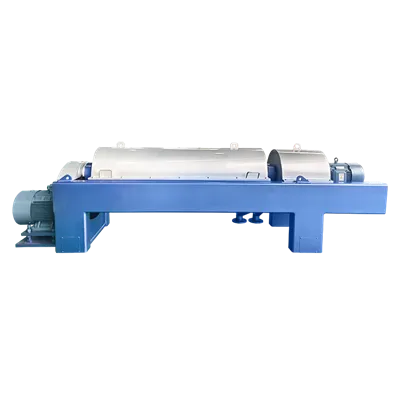
2 Phase Decanter Centrifuge If you are in the market for a dewatering centrifuge and have questions about the maximum G – force or other technical specifications, I encourage you to reach out to us. Our team of experts is ready to assist you in finding the perfect solution for your dewatering needs. We can provide detailed technical information, conduct on – site demonstrations, and offer customized solutions based on your specific requirements. Don’t hesitate to contact us for a discussion on procurement.
References
- Goldberg, D. E. (1989). Genetic algorithms in search, optimization, and machine learning. Addison – Wesley.
- Kutzbach, G. R. (1979). Analysis and design of mechanisms. McGraw – Hill.
- Perry, R. H., & Green, D. W. (Eds.). (1997). Perry’s chemical engineers’ handbook. McGraw – Hill.
Lishui Yuanrong Environmental Protection Equipment Co., Ltd.
As one of the most professional dewatering centrifuge manufacturers and suppliers in China, we have world-leading production equipment and strong manufacturing capabilities. Please feel free to buy customized dewatering centrifuge from our factory. Also, quotation is available.
Address: Lot 6-1, Block 15, Wanyang Zongchuang City, Lishui, Zhejiang, China
E-mail: 361184920@qq.com
WebSite: https://www.yrhdc.com/
